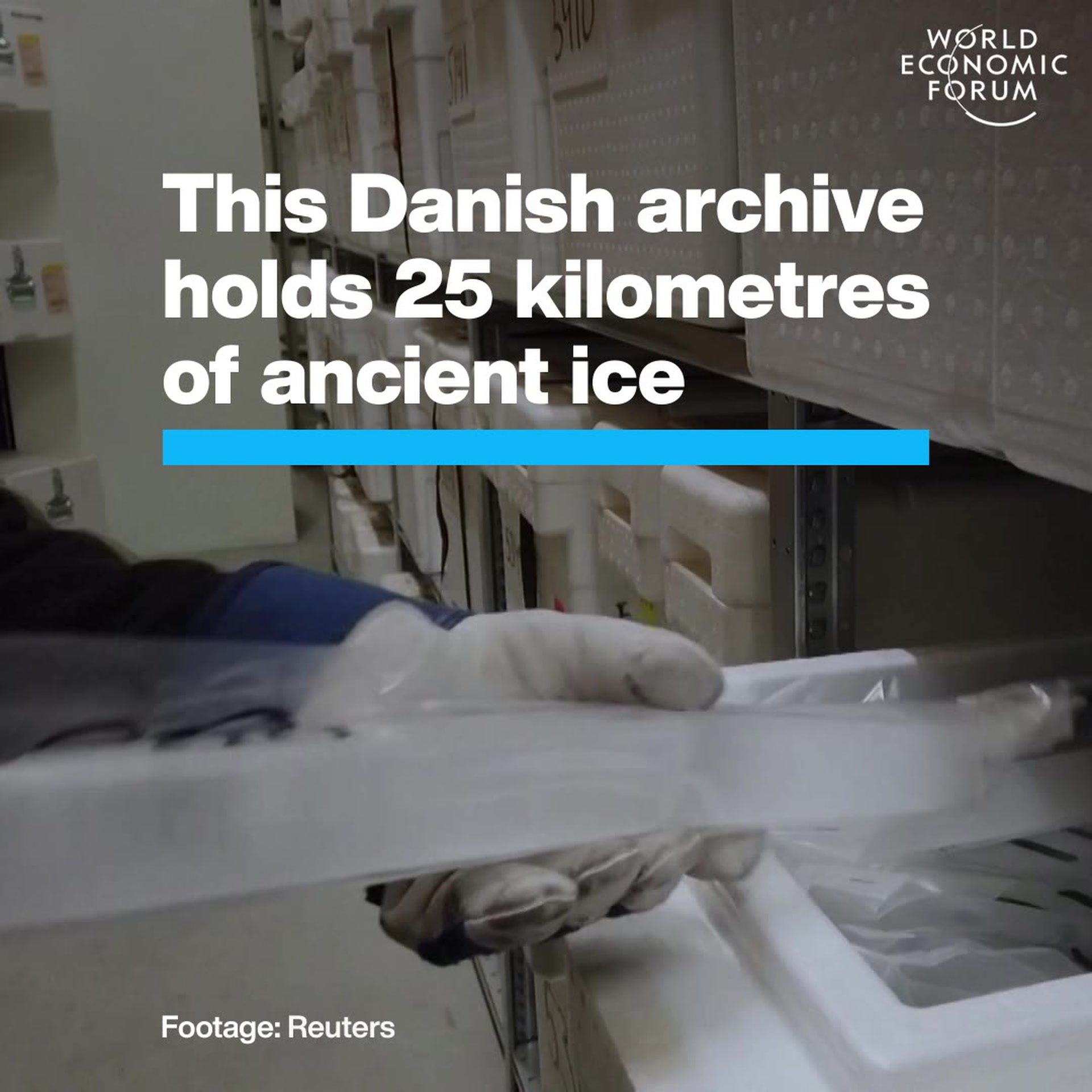
Algunas de las muestras tienen cientos de miles de años. Pueden ayudar a los científicos a comprender la historia del clima del planeta y también a predecir el futuro del cambio climático. Las muestras se conservan en 2.000 cajas en la Universidad de Copenhague. Se extrajeron de capas de hielo del Ártico y la Antártida, y de glaciares de Europa y Sudamérica.
En la Universidad de Copenhague se esconde un tesoro extraordinario: 25 kilómetros de hielo antiguo, parte del cual se remonta a cientos de miles de años. Este archivo helado, guardado en 2.000 cajas, es mucho más que un vestigio frío del pasado. Es la clave para desentrañar la historia climática del planeta y predecir el futuro de su delicado equilibrio.
Archivo danés: captura de la atmósfera en el hielo
Cuando se forman los glaciares y las capas de hielo, atrapan diminutas burbujas de aire que conservan instantáneas de la atmósfera de aquella época. Estas burbujas, junto con otras pistas como las partículas de polvo y el ADN vegetal, crean registros en capas, como los anillos de un árbol. Cada capa cuenta una historia y susurra secretos sobre las temperaturas, las erupciones volcánicas e incluso los vientos antiguos.
Isótopos: el termómetro de la naturaleza
En el hielo se esconden pistas: isótopos de oxígeno e hidrógeno. Estos elementos naturales actúan como diminutos termómetros y revelan las temperaturas del pasado con una precisión sorprendente. Al estudiar estas proporciones isotópicas, los científicos pueden retroceder en el tiempo y conocer el clima de la Tierra en épocas pasadas.
Usar datos antiguos para predecir el futuro
Este hielo antiguo no es solo un vestigio del pasado; es una herramienta esencial para comprender el presente y predecir el futuro. Al comparar muestras de aire preindustriales con la atmósfera actual, los científicos pueden medir el impacto de la contaminación humana en el clima.
Estos datos de incalculable valor ayudan a perfeccionar los modelos climáticos y a pronosticar los posibles efectos del calentamiento continuo en el nivel del mar, los patrones meteorológicos y los ecosistemas.