Technology Convergence: The New Logic for Competitive Advantage


Section 1: The 3C Framework as an interconnected system
Combination, convergence and compounding are always active in parallel cycles, shaping how organizations approach scaling and value creation.
The 2025 Technology Convergence Report introduced the 3C Framework: combination, convergence and compounding. A natural reading treats these as sequential stages. Technologies combine, value chains converge around them and capabilities compound through adoption. This reading is intuitive but incomplete. The 3Cs operate as an interconnected system, not a linear sequence.
Figure 1: The 3C Framework as a dynamic system
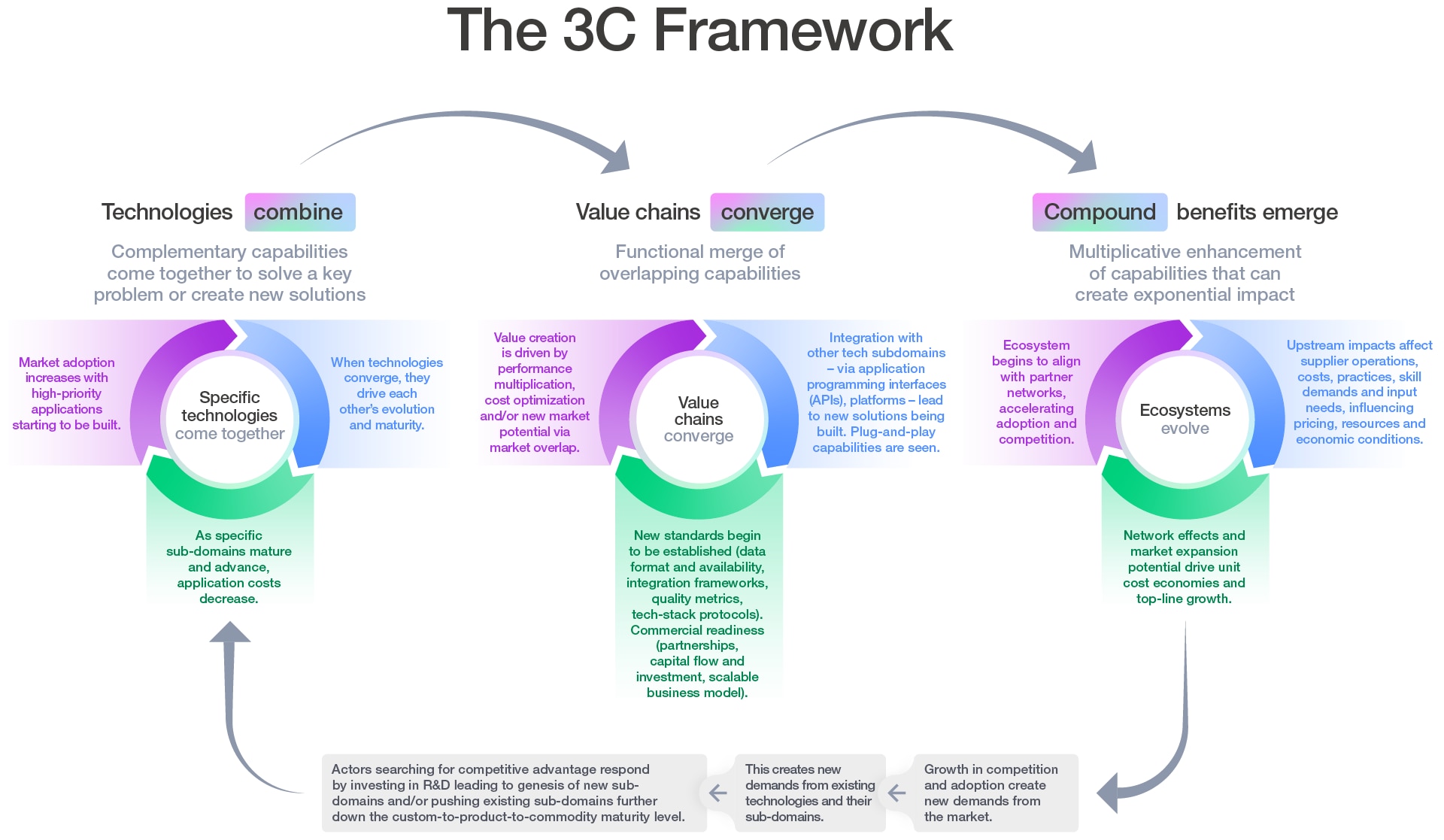

Today’s ecosystem is already a result of historical compounding. For example, over the last decade, cloud and internet of things (IoT) edge have combined to make industrial connectivity economically viable at scale, fuelling a proliferation of enterprise and industrial operating systems that integrate, standardize and operationalize machine and process data. As these platforms have spread, their benefits have compounded and connecting assets have increasingly become a commodity. Now, the competitive frontier is shifting to the extraction of intelligence, which is pulling the ecosystem back into a new combinatorial phase where domain-specific models enter as a new capability. Copilots and agents are set to translate fragmented operational data into decisions, instructions and automated actions across engineering, maintenance and procurement to shift differentiation from possession of data in the cloud to how an enterprise actions it.
The last “C” is never an endpoint, but the start of a new cycle. Thus, the complexity for organizations is navigating multiple time horizons of change at once, as all three dimensions of combination, convergence and compounding reinforce each other. Stalling occurs when any of these combinations encounter value chain resistance or ecosystem fragmentation. Neglecting any dimension creates vulnerabilities that complicate over time.
1.1 Identifying combinations revisited
High-potential combinations happen when pairing mature technologies that are stable and widely deployable with earlier-stage technologies that can unlock differentiated breakthrough innovations.1
Figure 2: Simon Wardley's four-stage classification framework
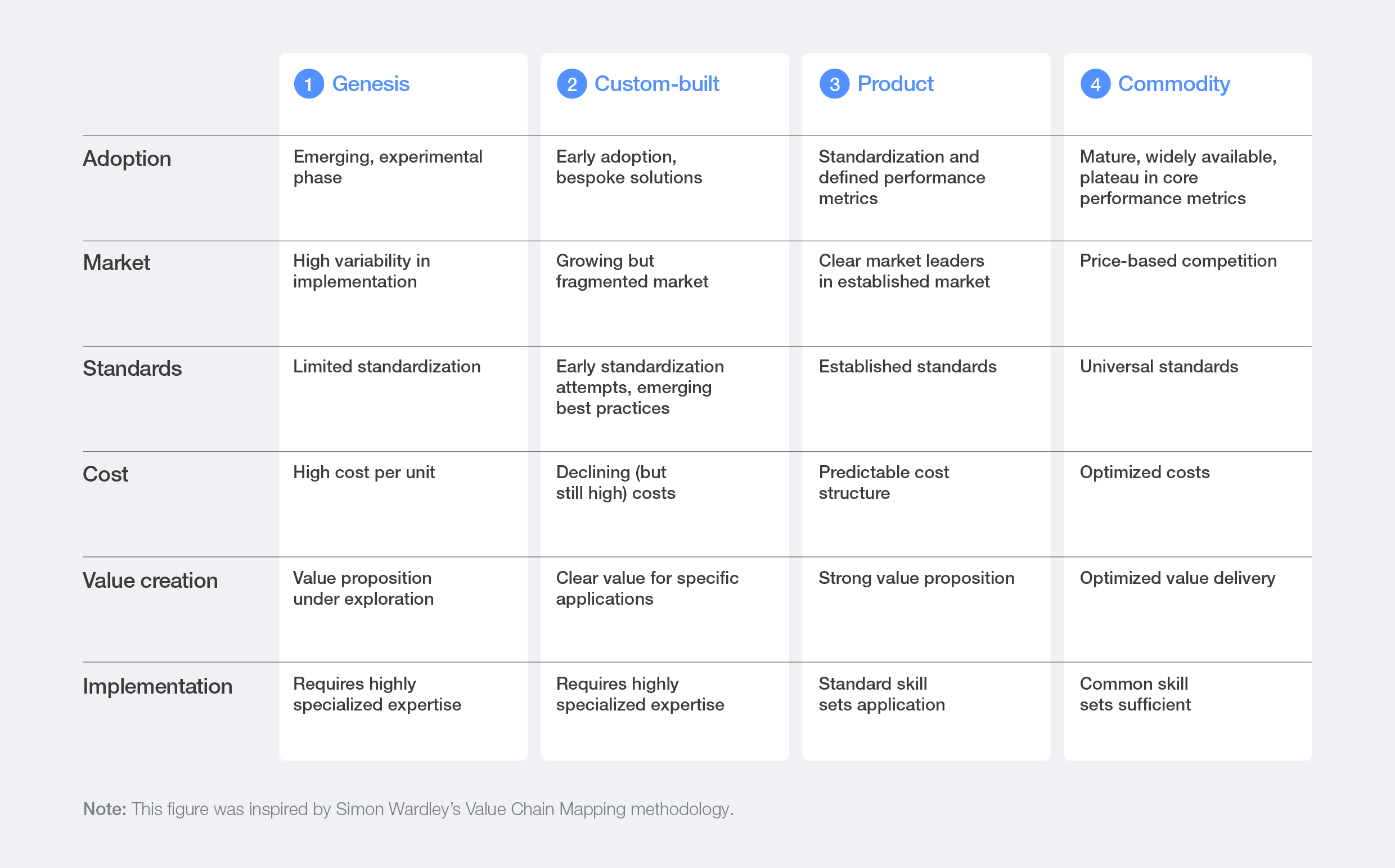

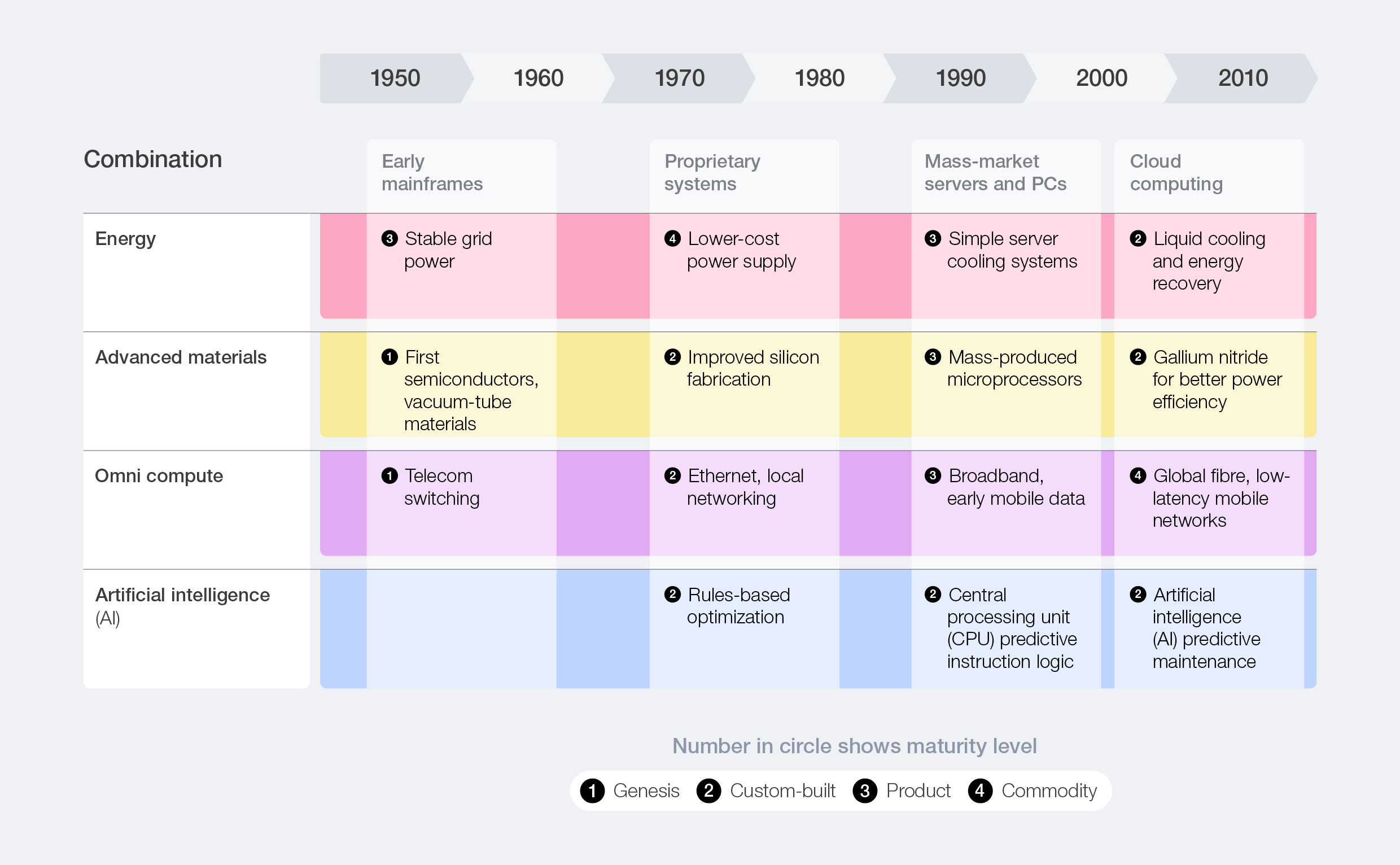
Looking back, combinations of novel technologies (stage 1–2) layered on to mature and commoditized foundations (stage 3–4) have propelled every major computing wave and commoditized foundations (stage 3–4), though the underlying components shift from generation to generation.
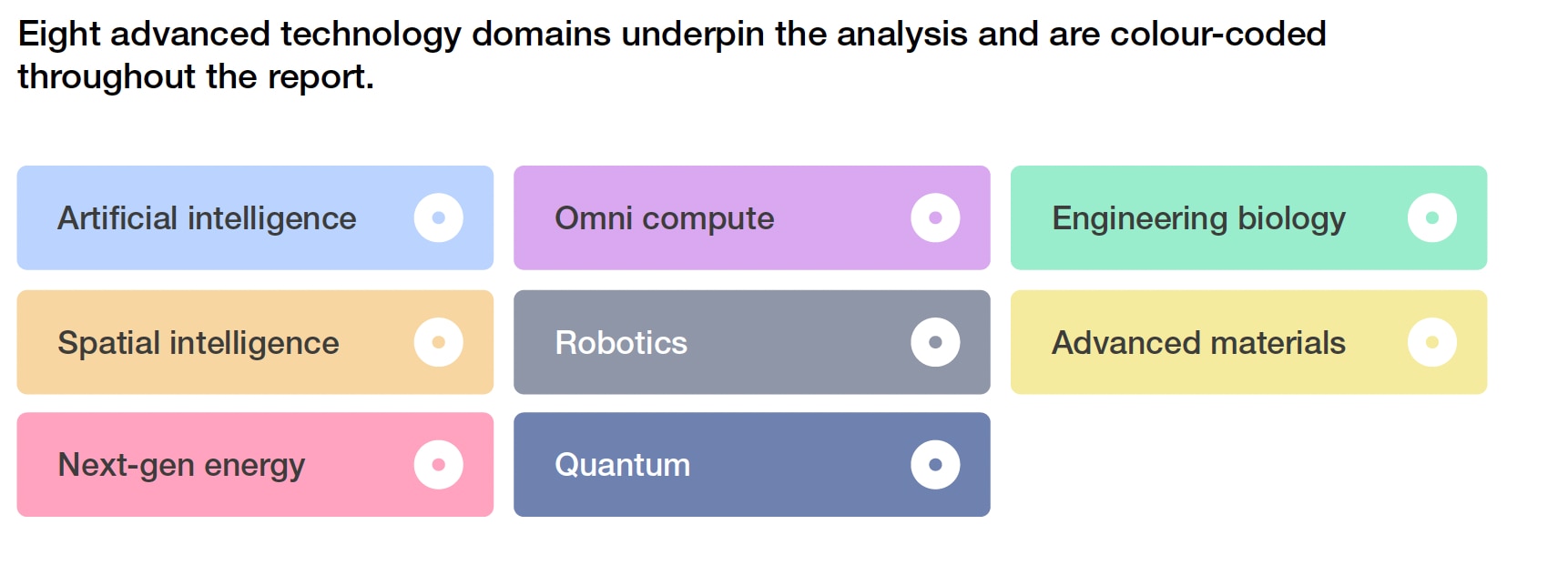

Figure 3: Technology combination over different compute generations

Today, convergence is taking place across eight advanced technology domains. Charting their developments can help organizations layer the possibilities against their own technological infrastructure or identify where peers or adjacent organizations may innovate.
Considerations
- What is the maturity level of the technologies across the organization? (Use the World Economic Forum’s Tech Maturity Index for guidance)
- Can novel technologies (stages 1–2) be combined with mature technologies (stages 3–4)?
- Can these new combinations compound in capabilities and improve over time?