Chief Economists' Outlook: September 2026


The September 2026 Chief Economists’ Outlook opens on a more stable note than the May edition. Drawing on consultations and survey responses from the Forum’s Chief Economists' Community, the report examines potential sources of disruption and resilience. Respondents highlight geopolitical conflict and asset-price corrections among prominent concerns, while the outlook for AI-related investment is uncertain. Fiscal support is considered the key source of resilience since 2020, but is expected to play a smaller role as governments have less room to respond.
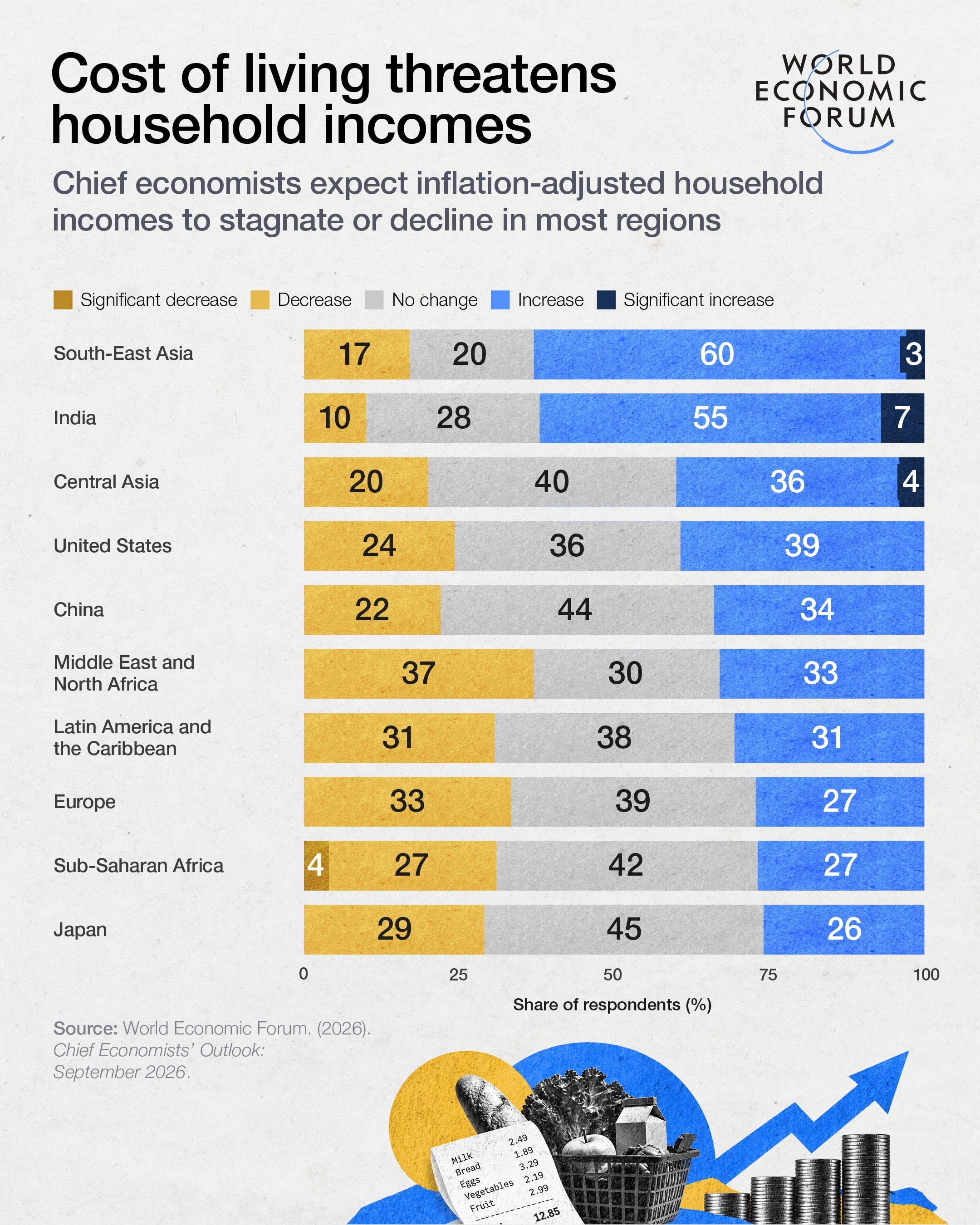
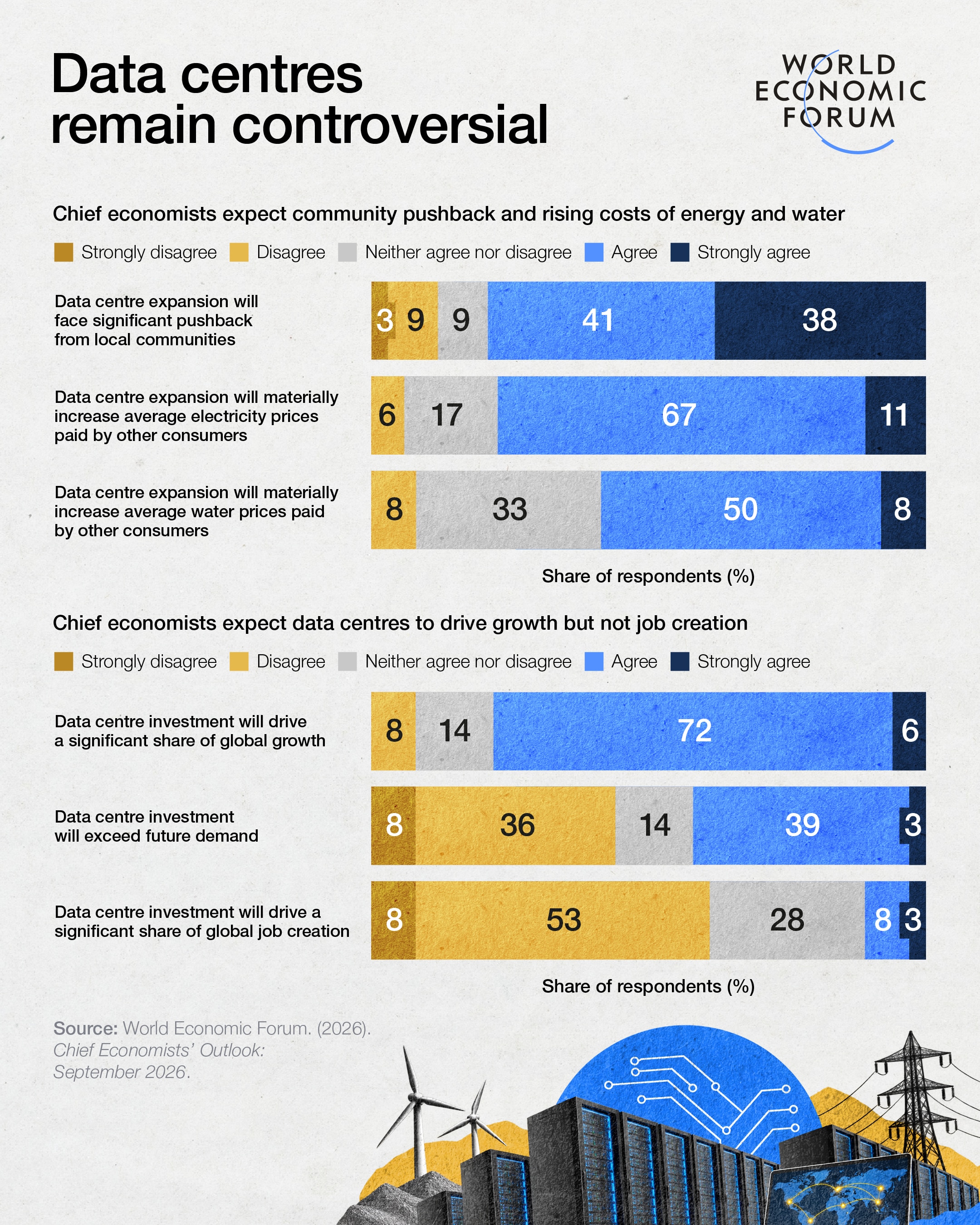
Regional growth prospects have strengthened but remain uneven. India and South-East Asia receive the strongest assessments, and the US points to moderate growth, while China’s outlook has weakened, and Europe remains the region with the lowest growth expectations despite modest improvement. The report also highlights persistent cost-of-living pressures, with stagnant or falling real incomes across most regions. Trade and investment continue to adapt even as geoeconomic fragmentation deepens. Artificial intelligence remains the leading source of optimism, although data centre expansion is expected to face local pushback and bring higher utility costs and limited job creation.
The September 2026 Chief Economists’ Outlook opens on a more stable note than the May edition. Drawing on consultations and survey responses from the Forum’s Chief Economists' Community, the report examines potential sources of disruption and resilience. Respondents highlight geopolitical conflict and asset-price corrections among prominent concerns, while the outlook for AI-related investment is uncertain. Fiscal support is considered the key source of resilience since 2020, but is expected to play a smaller role as governments have less room to respond.
Regional growth prospects have strengthened but remain uneven. India and South-East Asia receive the strongest assessments, and the US points to moderate growth, while China’s outlook has weakened, and Europe remains the region with the lowest growth expectations despite modest improvement. The report also highlights persistent cost-of-living pressures, with stagnant or falling real incomes across most regions. Trade and investment continue to adapt even as geoeconomic fragmentation deepens. Artificial intelligence remains the leading source of optimism, although data centre expansion is expected to face local pushback and bring higher utility costs and limited job creation.