Nasmat Alamal: Annual Ramadan Project
Problem Statement
Ramadan is a month of giving, community, and compassion. Yet many low-income families and underserved communities struggle to access basic needs such as daily meals and festive gifts for children. For families facing poverty, the spiritual and communal essence of Ramadan is often overshadowed by financial hardship.
Food insecurity touches on dignity, belonging, and the ability to celebrate traditions that bring people together. Children, in particular, often miss out on the joy of Eid, highlighting the need for initiatives that go beyond food to uplift spirits and restore hope.
Recognizing this gap, Global Shapers Jeddah Hub launched Nasmat Alamal (“Winds of Hope”), which is named after one of the neighborhood’s names that we provide meals to.
Our goal is to provide Iftar meals and also a sense of care, joy, and shared community during the holy month.
Project Overview
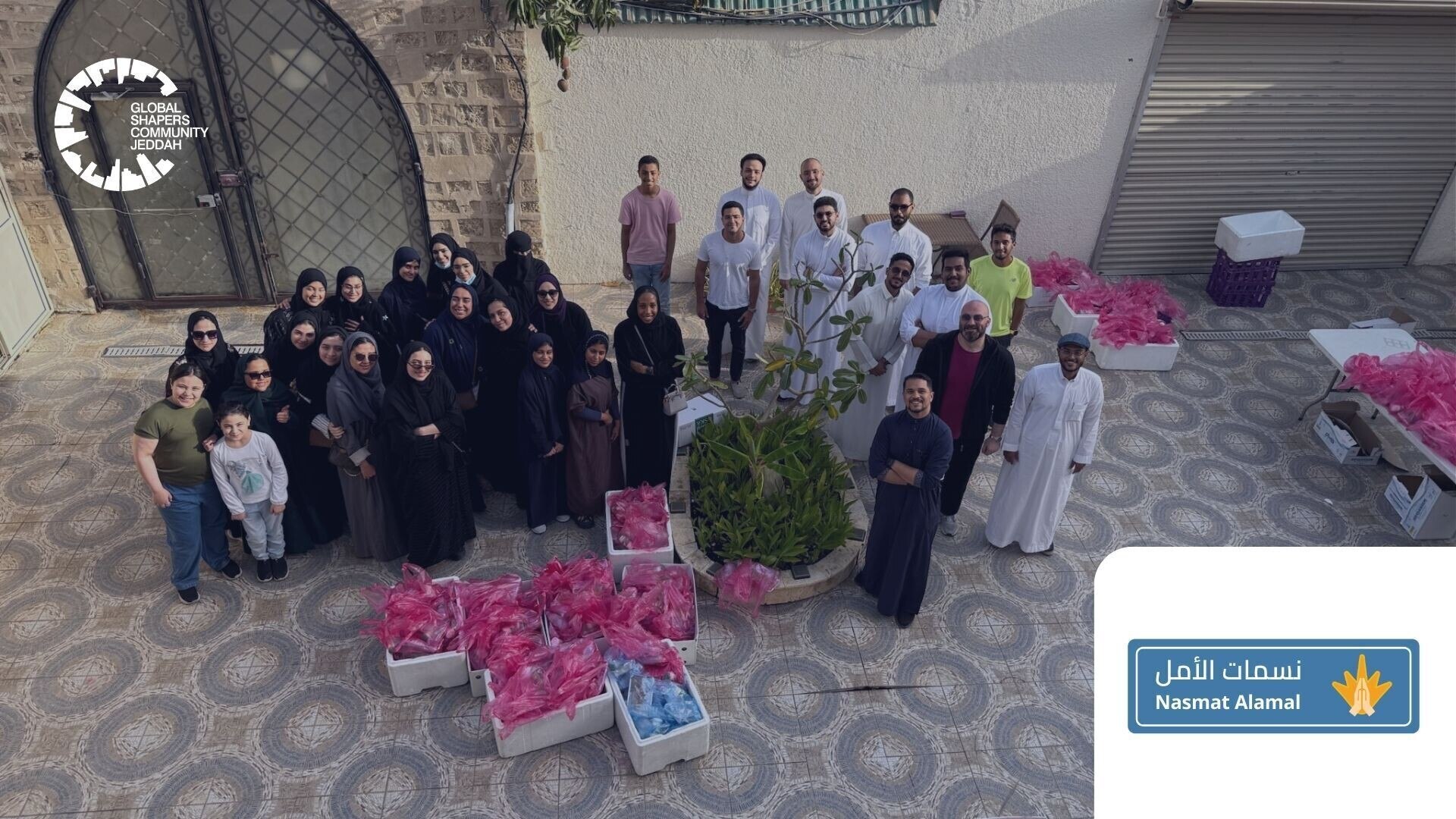
Launched in 2023, Nasmat Alamal is Jeddah Hub’s annual Ramadan initiative. It is centered around two main activities:
1. Iftar Meals Distribution
On alternating days throughout Ramadan, Shapers and community volunteers come together to package and distribute meals for families and individuals living in poverty. This consistency ensures that those in need receive support throughout the month.
2. Eid Gifts for Children
A special day is set aside where volunteers purchase, wrap, and distribute gifts to children in hospitals and underserved neighborhoods. This tradition brings joy to children who would otherwise not have the chance to celebrate Eid with new toys or clothes.
While the project once experimented with additional activities (such as clothes donation drives and plogging at the Jeddah Corniche), its core focus remains the meals and gifts, which continue to grow year after year.
Impact & Metrics (2023 - 2025)
Since its inception, Nasmat Alamal has become one of Jeddah Hub’s most impactful community projects:
- +10,000 Iftar meals distributed across Jeddah neighborhoods.
- +800 Eid gifts delivered to children in hospitals and impoverished neighborhoods.
- +200 volunteers & participants engaged in Ramadan activities.
- +100,000 SAR raised in donations from individuals and partners.
- +10 partners & collaborators including CreativeMornings Jeddah, Mawakib Alajer, Aljon Restaurant, Resal, Mena7i Restaurant, Pristine, Rawan Stationery, and the University of Business and Technology (UBT).
Beyond numbers, many participants have described the experience as transformative. For some, it was their first time directly witnessing the living conditions of communities in need, an encounter that inspired them to continue volunteering and supporting social causes.
Future Outlook
Looking ahead, Jeddah Hub aims to make Nasmat Alamal a sustainable and enduring tradition. The priority is to:
- Strengthen fundraising and operations to ensure consistency year after year.
- Deepen community engagement by involving more local partners and volunteers.
- Preserve the spirit of giving by continuing to combine food aid with joyful moments for children.
While the project is rooted in Jeddah, there is potential for other hubs in Saudi Arabia and the gulf to replicate our model in their local communities during Ramadan.
How to Get Involved
Nasmat Alamal thrives through collaboration. There are several ways to join:
- For local partners: Contribute through sponsorship, in-kind donations, or volunteering.
- For hubs: Replicate the initiative in your own cities during Ramadan.
- For Visiting Shapers: If you are in Jeddah during Ramadan, reach out! We will gladly welcome you to join one of our Iftar meal distribution days.
Together, we can make Ramadan a time of shared giving, compassion, and dignity for all.