

Transcripción del podcast
This transcript has been generated using speech recognition software and may contain errors. Please check its accuracy against the audio.
Robin Pomeroy: Welcome to Radio Davos coming to you on Day 2 of the World Economic Forum's Annual Meeting 2026. It's Tuesday the 20th of January. Give us a few minutes and we'll give you the rundown of what's happening in Davos today.
It's on your favourite podcast platform, on the Forum Live app. This is Radio Davos.
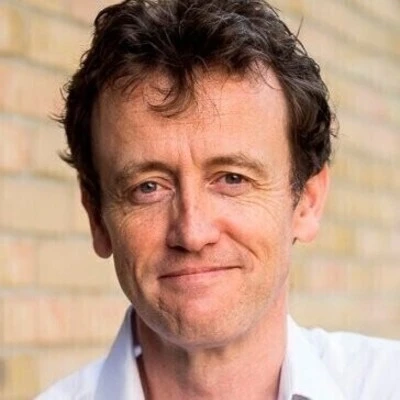
I'm Robin Pomeroy and joining me to look forward to Day 2 here in Davos is organisational psychologist and best-selling author Adam Grant. Adam, how are you?
Adam Grant: I am good, how are you?
Robin Pomeroy: Very well, thank you. Thanks for joining us on our daily show.
Adam Grant: Don't thank me yet, we'll see what happens.
Robin Pomeroy: Okay we'll see what happens. I'm going to go through some of the highlights and get you to comment on them but first just give us your impression of Davos because I know you've been here many times before. What is Davos to you?
Adam Grant: I think Davos is the place where people from basically every field come together to try to figure out how to solve problems. And I think this year, the two big topics I'm already hearing more than anything else are one, AI, and two, political polarisation.
Robin Pomeroy: Absolutely, and I should explain to people every day on these daily shows I'm joined by an amazing podcaster and remind our listeners of what your podcasts are where they can find you
Adam Grant: I host a podcast called Rethinking and you can find it wherever you listen.
Robin Pomeroy: Okay, let's have a look at Day 2. Things are really getting started today. In fact, we have the opening plenary at 10.30. Borge Brende,the president and CEO of the World Economic Forum, has welcoming remarks along with the two interim co-chairs of the World Economic Forum and our host, the President of the Swiss Confederation, Guy Parmelin.
And I'm just going to go through, there are lots of heads of state and government tomorrow. We've got the head of government of Morocco, we have the vice-premier of China. We have the president of France, we have the prime minister of Qatar, the prime minister of Canada, we also have the president of the European Commission. You can find all of those if you look at the website, you can just search by name.
Interestingly, here's one who's not a head of state or government but it's a very important political figure. At 2.30 this afternoon there is a conversation with Scott Bessent, the US Secretary of the Treasury. Adam, there's a big US delegation coming here, you're an American, right?
Adam Grant: Guilty as charged.
Robin Pomeroy: How are Americans seeing Davos, maybe for a lot of Americans, maybe they weren't even aware of Davos before. I think this will be a big news story in America.
Adam Grant: I think both the Biden and previous Trump administration had some trepidation about Davos. They didn't want to be seen as fraternising with the elites. And I think my hope is that this is a chance to engage conversations that the world is having. I think that you know America ought to be at the table. I don't think we should be running an isolationist regime. And if you're not here, it kind of stands out like a sore thumb.
My conversations with Americans about this have mostly revolved around, what is someone like Scott Bessent going to do to reassure people about the economy? There's been a lot of chaos in the last year. And it doesn't seem to be stabilising. So that's something I'll be listening for, for sure.
Robin Pomeroy: That's 2.30pm, you can follow it live, it will be live streamed on our website, then you can watch it on catch up as well, 2. 30 this afternoon.
Now, you said you've picked out two things, I'm glad because they're absolutely on message from what I'm looking at. You talked about the kind of political, geopolitical, the polarisation, we'll park that there.
The other thing you mentioned, wasn't it, AI and technology? So let's look back at the programme. At 9.30 this morning, there's a conversation with Satya Nadella, the CEO of Microsoft. He'll be talking with Larry Fink, who is the CEO for the investment firm BlackRock, and he's also one of the interim co-chairs of the World Economic Forum 9. 30 today. Don't miss that. At 1.30 this afternoon there is a session, a panel discussion, called The Day After AGI. Define what that means in a moment. I'll just tell you who's going to be on the panel Demis Hassabis, the co-founder and chief executive of Google DeepMind, Dario Amodei, CEO and co- founder of Anthropic. They'll be speaking to the editor-in-chief of The Economist The Day After AGI. AGI of course is Artificial General Intelligence. What do you understand by that term?
Adam Grant: It gets thrown around a lot. I think the most common meaning of it seems to be it's when computers can basically reason better than humans can in any domain, not just in a specific data set they've been trained in.
Robin Pomeroy: Right, and some people see this as a gradual evolution. Some people see it as there'll be a singularity, something, you know, the light bulb will suddenly come on and those machines will just be better humans than pretty much anything. The title of this session, The Day After AGI, I mean, it could be a B-movie, sci-fi film from the 50s, couldn't it? There's a lot of fear about this.
Adam Grant: Rightfully so.
Robin Pomeroy: Are you in the fear camp or the excitement camp?
Adam Grant: You know, actually neither. I think what I would say about AI at the moment is humans are much better at explaining things that have already happened than we are at predicting what's going to happen. And I think both the optimists and the pessimists are probably getting ahead of themselves. I think if we take the evolution idea seriously, there may not be just a radical phase shift where everything is different. And if that's the case, then we're going to have a chance to adapt to it. If there is a singularity, I don't think there's much we can do about it. We don't know what it's going to look like or what it will mean for us. And so I don't think we should spend a whole lot of time fretting about it.
Robin Pomeroy: Is that your advice, kind of as a psychologist, if, imagine I'm in anxiety, people do, a lot of people get chronic, immobilising anxiety at things like climate change, at things, like, we all went through a pandemic. And now we've got, all of a sudden, we've got AI and AGI to worry about. Give us a word of wisdom to, how can I start worrying and start enjoying my life again?
Adam Grant: Well, Robin, there's actually an important distinction in psychology between worrying and ruminating.
Rumination turns out to be very unhealthy. It's when you're stuck in a loop where you're just cycling through the same distressing thoughts over and over again. That's a recipe for depression.
Worrying is not necessarily bad. Some psychologists actually see worrying as attempted problem solving, where if you anticipate something that could go wrong, you get better at seeing around corners and then being either prepared to change it or adapt to it.
And I think that's where I want people's anxious energy to go around AI right now. To say, okay, there are some skills that we can already recognise are becoming either obsolete or less useful. So if you are, for example, a lawyer who used to do a lot of research to back up your cases and all of a sudden, you have access to a tool that can synthesise an entire history of case law, your skill set is not so much going to be information finding. It's going to finding the signal in the noise and trying to figure out, okay, what's the key trend there? Okay, that's a shift that you can make, right? That's a skill set you can develop.
In the realm of creativity, one of the things we're seeing is there was a Shark Tank or Dragon's Den style pitch competition that some colleagues of mine ran where they had both humans and AIs generate new business ideas. And then venture capitalists evaluated them, not knowing which ideas were submitted by who. And my hope was that humans were gonna outperform AI. We did worse by a lot. Of the top 40 rated ideas, 39 of them were AI-generated. I don't know who that one other person was who succeeded.
But if you actually stop and think about this, creativity really requires two basic ingredients. One is variety, the other is volume. ChatGPT or Claude or Gemini has access to, I mean billions of bits of information and the range is so much greater than what a human can access. So if you think you're going to generate more ideas or a wider variety of ideas than an AI, good luck.
That's a shift you can control. What is AI not good at yet? Judgement. Deciding which of those ideas are promising. Which one should we actually pursue? So if you're in a creative field, you may actually spend a little bit less time on idea generation and more time on idea selection. And that's another example of, okay, if you are worried, that's something you can actually do.
Robin Pomeroy: Later today you'll be doing podcasts in this beautiful podcast recording booth with Davos An Air written on it. If you're at Davos you'll see this at the bottom of the stairs just next to the plenary hall in the Congress Centre. Tell us what podcasts you're going to be recording in there because people will be looking through the window. They'll even be, did you know this Adam, they'll be listening to you on headphones. There are wireless headphones. People will be listening to you do that live. Tell us what you'll be doing.
Adam Grant: I've heard it's a one-way mirror though. I can't see them. They can hear me.
Robin Pomeroy: I got bad news for you. You can see them.
Adam Grant: Can I? Oh, OK, that's interesting. All right. I'll try not to be too distracted.
Well, thanks in large part to the help of you and your team and colleagues, I'll have a chance to sit down with David Beckham. I'm excited to talk with him about motivation, resilience in the face of failure, regret, managing disappointment. And then I'll have Matt Damon and Gary White. We'll be talking to them about collaboration, how they're going to get clean water and what are the Hollywood lessons for running a successful charity?
Robin Pomeroy: Right. So if those names are unfamiliar to anyone, that's David Beckham, the England footballer. Fascinating. And Matt Damon. Yes, that is the Hollywood A-lister. And Gary White, listeners of Radio Davos may remember some time ago, they work together on this water foundation. Very, very interesting work they're doing. I'm sure he'll give you a Hollywood anecdote as well.
Adam, thanks very much for joining us looking ahead to the day.
You can find all of those speeches and conversations with heads of state and government. Look for those on the website. There are loads of really great panels discussing all the big issues in the world. Find that on the website.
You can follow Radio Davos wherever you get your podcasts. If you're coming to us new here in Davos, we actually publish every single week. We bring you stories about the big issues, the big problems facing the world and how we might solve them. Please follow Radio Davos wherever you get podcasts.
And we'll be back tomorrow morning with a briefing on day three, when my guests will be two podcasters. The co-hosts of The Rest Is Politics US, Katty Kay, who's the US special correspondent for the BBC, and Anthony Scaramucci, the mooch, former White House Director of Communications and Wall Street financier. Follow Radio Davos so you Don't miss that. Or listen to it on the Forum Live app.
For now, thanks to Adam Grant, and thanks to you for listening, and goodbye.
Welcome to Radio Davos coming to you on Day 2 of the World Economic Forum's Annual Meeting 2026. It's Tuesday the 20th of January. Give us a few minutes and we'll give you the rundown of what's happening in Davos today.
Adam Grant, organisational psychologist, best-selling author and podcaster, joins us to look at the day's highlights.

Una actualización semanal de los temas más importantes de la agenda global


