

Transcripción del podcast
This transcript has been generated using speech recognition software and may contain errors. Please check its accuracy against the audio.
Robin Pomeroy: It's Monday, 19th January. And with your look-ahead to all of the action at the World Economic Forum Annual Meeting 2026, this is Radio Davos Daily.
Give us a few minutes and we'll give you the rundown of what's happening in Davos today.
On Spotify, Apple, YouTube, wherever you get podcasts and on the Forum Live app, this is Radio Davos Daily.
I'm Robin Pomeroy here in Davos and joining me to look forward to Day 1 and the rest of the week is Francine Lacqua, she is an anchor and editor-at-large at Bloomberg TV. Is that your correct title, Francine?
Francine Lacqua: It is, Robin. Well done. And podcaster.
Robin Pomeroy: That's what I was about, that was my next point. Every day this week, I'm going to have a different podcaster. I know you, you've been on the show before. We were trying to remember when it was and what we talked about, but you're best known as a TV presence on Bloomberg TV. But you're also, you've just launched a podcast, right? Tell us about that.
Francine Lacqua: I love podcasts and actually I've been trying to do a podcast for quite some time. I had one for a couple of years focused on the UK and now we're branching out to talk about leaders. So it's the economy and geoeconomics and geopolitics through the lens of big leaders and some of their decision making, some of the pitfalls and what actually they see longer term happening.
Robin Pomeroy: Are you going to be recording any interviews for that here in Davos?
Francine Lacqua: I will, but then we're launching actually in about six, seven weeks, so we're keeping everything under wraps. Podcasters are famously kind of...
Robin Pomeroy: Shady.
Francine Lacqua: Cloak and dagger..
Robin Pomeroy: What's the name of the podcast so people can find it?
Francine Lacqua: So it's Leaders with Francine Lacqua, The Podcast.
Robin Pomeroy: OK, look out for that in a few weeks' time.
But here on Monday morning, we're looking forward to the day. Actually, it's a very quiet day. Francine, you've been to Davos many times. And the Monday is when a lot of people are arriving. Really, there are one or two things going on. Something's going on probably behind the scenes, behind closed doors. In terms of the official programme, really that's the opening concert this evening.
But tell us, we'll talk a bit about that in a second, but tell us just about Davos. What does it mean to you? Why do you come here every year?
Francine Lacqua: So I come here every year because it's just a great place to see the mood for the rest of the year. You meet interesting people, you speak to chief executives in a kind of informal background.
And I think this year is really different because Donald Trump has upended the world economy and he's coming here with such a big delegation.
And I've spoken to a lot of chief executives that are, I think, half nervous and half excited about meeting him to try and understand what he wants on Greenland, what he wants on Iran and Venezuela, and so I think there's a little bit of anticipation. The mood feels a little different than in past years.
Robin Pomeroy: Different because of Donald Trump or because the world has changed and maybe those two things are connected, right?
Francine Lacqua: Yeah, so the two things I think are connected - and because of AI changes. So if you look at the big disruptors for 2025, it was tariffs, it was geopolitics, and I think this year will probably be the same, but on steroids. Certainly, if you looked at what we've lived through since the beginning of the year, it's just been a lot, and Davos is always a good place to kind of take stock of what people think will happen in the next 12 to 13 months.
Robin Pomeroy: If you walk down the promenade here, the road just outside the Congress Centre, where all the shop fronts are turned into meeting rooms for various companies or countries even, famously there's a U.S. House, there's a church that's been converted to that, but most I would say probably 80% of those, it's all about AI, they're AI companies. So it's really going to be a big topic of discussion.
Francine Lacqua: Yeah, AI and quite a lot of crypto as well. I think there are a lot of the big crypto agencies that were here also last year.
Look, AI, we cover it, and I think we'll cover it on my podcast at length, for two different reasons. First, you have these massive valuations. You have these companies that can command premiums. OpenAI is looking to, for example, IPO for more than 1.3 trillion. But then you also need to try and understand the impact that has on the economy. And this is completely unclear, right?
We've talked about the jobs of the future, and we're not 100% sure what kind of impact this has on productivity yet. We're seeing it at certain companies, but you're not seeing it macro level. So it'd be really interesting to try to figure out some of the new products that they come out and when they're expecting to be really profitable, but also to change the economies and the way we hire.
Robin Pomeroy: We had a Radio Davos, on Sunday, we had an episode about the chief economist outlook, which is a survey that the World Economic Forum does every four months. And we interviewed Christian Keller of Barclays. And he was talking about how the AI optimism, should we say, has offset the downside to the economy.
Economists, nine months ago, were saying there'd be a real big slowdown because of trade wars and tariffs and various other things, but that hasn't really happened. The global economy, the GDP, actual and forecast, has pretty much stayed the same. He's saying a lot of that is due to that massive investment in AI. But of course there's a risk, isn't there, as well?
Francine Lacqua: There's a risk because when you speak to chief executives, more and more they say, look, I'm not going to hire as much.
So we're not talking about job losses yet. Although certain big banks will fire 1,000 people here and there, which is nothing compared to the number of people they have on the books. But you hear a lot of chief executives saying, look. I'm spending so much to upgrade my systems because of AI. I'm just going to higher a little bit less, or the minimum.
So this is a worry for entrants in new jobs. And also, at what point do you start firing, because the AI jobs do a lot for you?
What's interesting, and this was a phenomenon that we had in 2025, is that a lot of chief executives will say, well, I'm fine, but I'm really worried about my neighbour. And you hear that for AI as well. They say, I am fine. I'm not firing anyone. But I worry that my competitor will.
And it's a little bit of a misnomer, where you think, well, it's funny that it won't really impact you. But again, it changes the mood music if you think that your neighbour has to do something about it.
Robin Pomeroy: And if you're a listed company and your competitor has made those reductions and it's improved the share price, you're under pressure, even if maybe at that point in time it doesn't make strategic sense, it might feel the pressure to do that.
Francine Lacqua: Yeah, and I think 2026 could be the year that we really start seeing it in the economy. For the moment, we're seeing it in companies and companies' productivity probably feeds into what Christian was telling you. But this year you could see a big shift in just much wider adoption and much more cost savings.
Robin Pomeroy: I think we're going to hear a lot about this subject on the programme here in Davos.
Let's talk about the programme a little bit. The theme of this, the 56th Annual Meeting, is 'A Spirit of Dialogue'.
Let me just give you some figures here. There's around 3,000 participants here in the Congress. Obviously, there's a lot of things that go on around the official conference as well. Among those participants, 400 top political leaders, including around 65 heads of state and government, nearly 850 of the world's top chief executives and company chairs.
Francine Lacqua: And it's humbling for everyone because we're all in the snow in snow boots. And so you kind of have to, you know, I've helped chief executives trying to get up a slope, right And so it's like only in Davos because you're kind of in the same boat
Robin Pomeroy: It's funny, isn't it? You talk about Davos moments. I'm going completely off track here at the minute. A couple of years ago, we had Jane Goodall speaking. The late Jane Goodall, who died a few months ago, who was the famous expert on chimpanzees. Just a wonderful force. And when you saw her speaking, she was so strong and charismatic. But I saw her at night out on the street trying to get over a big mound of snow. And that's what we're all doing. So there is, you do see people through a slightly different lens out on the streets in the snow here.
There are five, I should test you on this, Francine, there are five main themes for this conference. I'm not going to ask you what they are because I have them listed right in front of, unless you want to dive in. Okay, I'll take your silence as permission to go ahead.
Okay, here they are. How can we cooperate in a more contested world? How can unlock new sources of growth? How can we better invest in people? How can deploy innovation at scale and responsibly? That's probably the AI one we were talking about. And number five, how can we build prosperity within planetary boundaries?
That's covering quite a lot of ground. I mean, I guess your show is fairly business oriented, right, so you'll be looking at growth, but what else.
Francine Lacqua: Yeah, but also the contested world, remember, I mean, we're recording this on Sunday. On Saturday, Donald Trump threatened a 10% duty beginning in February on all U.S. imports from Denmark, Norway, Sweden, France, Germany, the UK, the Netherlands, and Finland. This is a huge deal. I mean, if you look at what tariffs have been doing, there are many question marks. Is he going to go ahead? Is this just blustering talk? How can he do it? Because they're all part of a union, so how do you identify some countries?
But I think this is why a lot of chief executives show up here. Because the fact that there's a big U.S. delegation, and you talk about the contested world, I think a lot people want to have a chance to meet with the president, maybe tell him what they think about what he should do.
Robin Pomeroy: A lot of those countries, the heads of the government will be right here. They're going to meet. Those probably won't be, you know, live streamed, those conversations. Those are the conversations that...
Francine Lacqua: Well, there are a couple of interesting panels.
Robin Pomeroy: There's certainly very many interesting panels. And also, there are addresses by a lot of those heads of state, including Donald Trump, who will be coming up on Wednesday. I mean, everything will, the world will come to a stop to listen to that, I think.
Francine Lacqua: I agree. And again, the dilemma for Europe and the dilemma for a lot of, you know, chief executives, business executives is, you know, if tariffs are implemented, do you retaliate or de-escalate? And you can say that about everything. You can say that about anything that's going on. It's like actually do retaliate, do fight back or you just keep calm and stay cool. A lot of 2025, a lot of companies and countries stayed cool. I don't know if we get the same this year, but it will change again.
The idea that we need to talk more to try and make sure that nothing gets worse is, I think, the foundation of Davos.
Robin Pomeroy: That's the whole point. As I said, a spirit of dialogue is the overriding theme.
But yeah, there's huge rivalry. We had the Global Risk Report also. Look back in your Radio Davos feed, we had an episode on that where Saadia Zahidi, a managing director of the World Economic Forum, talked about us entering a new era, an age of competition and competition in many different ways. This feeds into what you were saying, Francine. The world is a different place than it was maybe 12 months ago.
Francine Lacqua: It was and then we, so I went back a little bit because we try and put everything in a historical context given how fast everything's going. One of my favourite questions to ask a lot of chief executives is how do you put the noise to one side and actually focus on what's important. It's the same questions that we ask head of state and it's interesting when you look at, for example, the outlook for 2055 in terms of the longer term, you know, growth, it's fairly uninspiring, but you see these massive shifts in terms of power between, for example, emerging economies and G7, the rise of China that you can pinpoint to 20, 30 years ago.
And so again, it kind of puts everything into perspective, that it was accelerated and exacerbated over the last 12 months, but these massive ships actually started way before this.
If you look at back in the 1990s, advanced economies accounted for about 60 percent of global activity. Last year it was more like 40 percent. By 2055 will be less than a quarter.
So again, if you look at these long-term forecasts, the shifts of power are clear to see. It just depends on how everybody reacts.
Robin Pomeroy: Right. Whose forecasts are those?
Francine Lacqua: Bloomberg Economics, actually.
Robin Pomeroy: Are there interviews, I know you want to keep it under your hat, but other interviews you'll be doing this week, you're particularly looking forward to.
Francine Lacqua: So we're putting the spotlight on a lot of the big AI companies. So it's Demis Hassabis, we'll have Dario Amodei, and that's interesting, again, to get their perspective on both valuations, but also on how these are used for the good or the worst of humanity. But it could be for, for example, protein folding with AlphaFold. And it could be for productivity, and I think they have some new announcements to make.
Then the other focus, of course, is geoeconomics. So we have a couple of heads of states. To try and understand all of the security question. Germany for us is a big focus because of all of the defence spending there and that should roll out into the 2026, end of 2026 GDP. So that should help a little bit.
And then really, I mean, we're speaking to a lot of chief executives, you know, there's a lot of the big chief executives on Wall Street. It's different, we try and broaden because everything's linked at the moment and everything's impacted by everything else.
Robin Pomeroy: And you had mentioned to me before we were recording, because you do a lot of live things, all my shows are recorded and then edited. And the phrase you used was, you're discovering the news along with your audience. Is that what you said?
Francine Lacqua: Yeah, there's something special, I think, about live TV is that you don't really know what happens, but there's a sense of discovery with the people that watch you, which is why there's this familiarity that people think they know you when they watch you on TV. So it's a privilege. Like doing a podcast, it's just a little bit of a different experience.
Robin Pomeroy: And I just wonder if this year, at this Davos, compared to all the others you've been to, there's a feeling now, as we look, the whole week is in front of us, kind of anything could happen. There are deals could be announced. The geopolitical landscape changes so quickly. You mentioned just a couple of days ago, the news that broke. Things are likely, news is going to be committed here this week, isn't it?
Francine Lacqua: Yes, and as you say, things move really fast. If you look at the number of shocks or surprises, I mean, at the moment, it feels like it's every two, three days on something.
You know, one of the big things that we've heard and understood is that because President Trump has a big affordability concern back home, he also wants to send a message here in Davos to the U.S. citizens that he's taking this seriously. So there could be a number of changes to private equity, there could a number changes to 401Ks. So we could end up with a largely domestic speech as well.
Robin Pomeroy: Right, that's been trailed, isn't it, that a lot of these announcements might be domestic policy.
Francine Lacqua: Which could be quite, you know, unusual.
I remember his first speech, you know, so this is his third in person appearance in Davos, and the first time was 2018, and he delivered a very opened-armed message. You were there, and it was very interesting, because he said America...
Robin Pomeroy: I was there for his last one, 2020.
Francine Lacqua: Because in 2018, he said America first does not mean America alone. Then 2020 was quite defiant because it was his impeachment trial that was getting underway in Washington. He touted a U.S. Strong economy and stock market.
And then last year, we'd heard that he really wanted to speak, but it was virtual. And he talked about oil prices, interest rates, and European regulations.
So let's see what we get this week. I think a lot of the lead up to that will be really on what he'll say and maybe something on regulation and also tech companies.
Robin Pomeroy: As I said, he'll be speaking on Wednesday. On Wednesday's episode of Radio Davos Daily, I'll be joined by the host of The Rest Is Politics, US, Katty Kay from the BBC, and Anthony Scaramucci, who knows a thing or two about Donald Trump. So.
Francine Lacqua: He does, and he's very funny.
Robin Pomeroy: Okay, look forward to that one.
Let's just, before we leave it there, so most of these programmes where we look forward, I'm going to go through some of the main events of the day. As we say, Monday is a quiet day, people are arriving, but there's always a fantastic opening concert.
I'll just tell you who's on that. I'm looking at my notes here. We'll be opening with the Mahler Chamber Orchestra, the world-renowned violinist Renaud Capuçon. AI-generated interactive visual installation by artist Ronen Tanchum and the multi-Grammy Award-winning artist Jon Battiste will be giving a live performance.
Always great. I love the Arts and Culture part of the World Economic Forum. We'll be interviewing quite a lot of the arts-and-culture people here. Does that ever come across your work desk, the arts and culture beat?
Francine Lacqua: We do sometimes, and actually I remember moderating this incredible like fireside with David Blaine, the magician. And it was the first time that I was on stage looking at the audience.
Robin Pomeroy: Was that here?
Francine Lacqua: It was here.
Robin Pomeroy: I saw that the other day. I saw a clip from that.
And he did this magic trick. And so I was stage with him because I was holding. We did like a 10 minute fireside. And then he did the magic trick, and it was the first I saw time I saw like 400 people just jaw dropping like, you know. What was the trick? I didn't get to that. He went to someone I think on the first or second row, and he made them pick a card, and then he sewed his lips together.
And then somebody had to cut the string that kept his lips together and he got out the card that she picked initially. It was incredible.
Robin Pomeroy: Did you know he was going to do that at the start of the interview?
Francine Lacqua: I did not know. Luckily, there was no blood, but I'm not queasy. I don't get queasy very often, but the reaction was incredible.
Robin Pomeroy: Yeah, there's an interview guest. Wonderful. Well, let's leave it there, Francine.
You can follow all the action of today on our live blog at the World Economic Forum's website. And you can please follow Radio Davos. You'll get these daily shows every day wherever you get your podcasts. Or you can find all our podcasts. We also have a leadership podcast, Francine, so we'll be rivals now called Meet the Leader, hosted by my colleague Linda Lacina. So, please follow that as well.
All our podcasts at wef.ch/podcasts. That's my plug. Where can they follow all your stuff?
Francine Lacqua: So, everywhere, Spotify, wherever you listen to your podcast.s
Robin Pomeroy: On Bloomberg TV for live coverage, right?
Francine Lacqua: On Bloomberg TV for live coverage and when the podcast comes out everywhere and it's called Leaders with Francine Lacqua, The Podcast, it's clear.
Robin Pomeroy: And we'll be back tomorrow morning with a briefing for day two when my guest will be podcaster and organisational psychologist Adam Grant. For now, thanks to you Francine and thanks to everyone for listening and see you tomorrow.
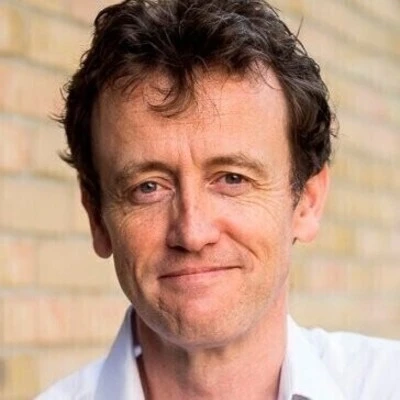
Francine Lacqua, anchor and editor-at-large at Bloomberg TV, and host of a new podcast, Leaders, joins us to look ahead at Day 1 and the rest of the week, as the Annual Meeting 2026 opens in Davos.
Catch up on all the action from World Economic Forum’s Annual Meeting 2026 at wef.ch/wef26 and across social media using the hashtag #WEF26.
Related podcasts:
Una actualización semanal de los temas más importantes de la agenda global

Simon O'Connell
3 de marzo de 2026


