


Transcripción del podcast
Robin Pomeroy, host, Radio Davos: Do you remember your first time?
Michael Bruter, Associate Vice President for Research, Director of the Electoral Psychology Observatory and Professor of Political Science, London School of Economics: More people compare their first vote to, say, their first sexual experience or their first kiss than they do to their first drive or their first job, which means that sometimes voting, being part of democracy, is a very intimate feeling for many young people.
Robin Pomeroy: Welcome to Radio Davos, the podcast from the World Economic Forum that looks at the biggest challenges and how we might solve them. This week we look at the psychology of voting. This expert says that our early experiences of voting can shape how we participate in democracy for life.
Michael Bruter: People voting in one of the first two elections of their lives will make them lifelong participants. If we miss one of those first two opportunities, it's going to be very difficult to bring them back to democracy.
Robin Pomeroy: How and where we vote, he says, can have a surprising impact on the outcome of elections
Michael Bruter: If they vote remotely, from their kitchen table, they are twice more likely to vote for extremist parties than if they go to a polling station.
Robin Pomeroy: This professor has examined why so many societies appear to be more politically polarised than ever.
Michael Bruter: Young people are not polarised. They are hostile. And what it means is that they are very negative towards people who vote differently from them. But they are almost as negative towards people who voted for the same political parties and candidates as them.
Robin Pomeroy: Follow Radio Davos wherever you get podcasts, or visit wef.ch/podcasts.
I’m Robin Pomeroy and with this look at the psychology of voting...
Michael Bruter: The most effective way to actually avoid those problems is to ensure that people talk in real life with people who are different from them and people who believe things which are different from them.
Robin Pomeroy: This is Radio Davos
Yes, welcome to Radio Davos. On this episode, we're talking about democracy and the importance of voting in democracies. And I'm joined by my colleague, Kateryna Gordiychuk. Kateryna, how are you?
Kateryna Gordiychuk: I'm good Robin, how are you?
Robin Pomeroy: I'm very well, thank you. Now, this is a very relevant interview all about democracy and voting. Who was it you spoke to?
Kateryna Gordiychuk: So during this interview, I spoke with Michael Bruter. He is the professor of political science at the London School of Economics. He wrote a book called Inside of a Mind of a Voter, which is why I wanted to talk to him about voting. And essentially, it explores that there is much more to voting than the mere act of casting a ballot, that it's about the environment you're in, it's how the place where you vote is designed, and all of these factors can really impact the way that a person votes.
Robin Pomeroy: So he's looking at the psychology.
Kateryna Gordiychuk: In fact, he developed a concept called electoral ergonomics. He's explaining how psychology and voting are interlinked. All kinds of feelings that people have, not just about democracy, not just about voting, but also about different generations, about whether it matters if you're voting for the first time, if you are voting again. What was your first vote like? Will that determine how you will vote again? So all of these really interesting factors that I was super curious about.
Robin Pomeroy: He gets quite technical at some points. I know he talks about this issue of negative mirror perceptions. Tell us what that means.
Kateryna Gordiychuk: So this concept comes from the idea that every generation disagrees with those who are older or younger than them. So let's say you're an older person and you might think, oh, these youngsters, they don't know what they're talking about. And vice versa, if you're a young person, you might thing that your parents' views are not fashionable anymore. But this is not actually grounded in real disagreements. It's about the feeling that we have about others.
Robin Pomeroy: And this idea of mirror perceptions, isn't it something to do with you think the other person dislikes you?
Kateryna Gordiychuk: Absolutely.
Robin Pomeroy: So if I'm the young person talking to an older person I'm thinking oh you don't like me because you think I'm a young snowflake whereas you've been around the world, whereas, in fact, the other person might be thinking oh, you don t like me for x and y reasons so it's often that it's not necessarily my view of you. It's my view of what you think of me.
Kateryna Gordiychuk: Absolutely. And this feeds onto each other. So then you're not starting from a place where you're neutral about each other, you already have a preconception which will for sure influence the way that you'll talk to that person.
So Michael is talking about how in this very difficult time that we are in, in this world we might be able to tackle this as more and more of this appears.
Robin Pomeroy: He talks about the actual physical activity of going to vote in a polling station.
Kateryna Gordiychuk: Michael's research really goes into that quite deeply, and they've looked at the different ways that the polling booths are designed. For me, the interesting part was when he said, nobody actually designs a polling booth. We use a hospital, we use a school, but nobody's thinking intently about designing a polling booth.
But if we were, how would we actually design it to make a person comfortable and to put them in a certain head space?
And he says that that changes the way that you vote. For example, young people, he says, are more likely to vote for an extremist party if they're voting at home, versus if they are voting in a polling station or in a communal environment.
And the way he explains it is this relational or social component to voting, that you are a part of a community, you are responsible for making a choice that would not just impact you, but also your community, your family, etc.
Robin Pomeroy: So did he leave you with hope at the end of the interview?
Kateryna Gordiychuk: He is a very hopeful interviewee, so he definitely did.
He says that for him, he started working on this because he wanted to focus on the right thing. He wanted to discuss how it is people perceive democracy, because it's not very clear. We participate in democracy, but it's clear how we actually experience it.
And for me, thinking back, I grew up in a country that just started entering the democratic era post the Soviet Union, which is Ukraine. And when he was talking about, you know, we look up to parents and how they vote, how they voted and as kids, we have very clear memories of that, I don't have any memories of personally. And I think a lot of people who didn't grow up seeing the right to vote might also have those questions. So I was hoping he would be able to answer some of that for me.
Robin Pomeroy: Let's hear the interview then. This is you speaking to London School of Economics Professor Michael Bruter. Thanks very much, Kateryna.
Kateryna Gordiychuk: Thank you.
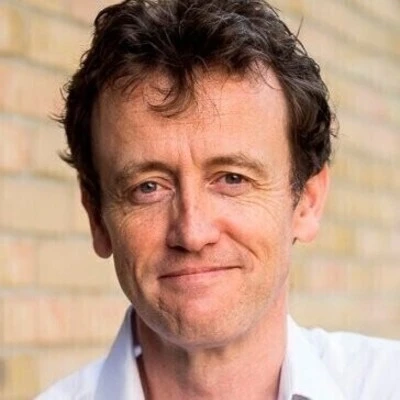
Michael Bruter: Hello, I'm Michael Bruter, I am Director of the Electoral Psychology Observatory and Associate Vice President for Research at the London School of Economics.
Kateryna Gordiychuk: How did you get interested in this work of connecting psychology of voting and our engagement in electoral process?
Michael Bruter: So I think the reason why I've become so interested in understanding the psychology of voters and how voters simply experience democracy is because I think that in my field, which is the field of political behaviour and electoral behaviour, we've asked the wrong questions for a long time.
And we've had the wrong questions because we've been very institution centric. And we've assumed that the only thing that mattered in election is whether people vote or not and who they vote for. But those are the questions that really are of interest to political parties and politicians. They always want to know if they are going to win elections or lose elections.
But for individuals, there are a lot more things that matter when it comes to democracy. For instance, can it enable us to live together? Can it resolve issues that we have with people who think differently from us? Can democracy make us happier? Can it actually intrude with our personal life and create some big disagreements or fights within families and between friends, for instance?
So, all our work is about trying to take a very people-centric vision of democracy and elections and it enables us to actually ask some very different questions.
Kateryna Gordiychuk: An important concept that you developed in your book, Inside the Mind of a Voter, is electoral ergonomics as well, which explains this relationship. Can you tell me a little bit about it? What is important to know about this term?
Michael Bruter: So in our book, Inside the Mind of a Voter, Sarah Harrison and I have developed one concept which is particularly relevant here, I think, which is the concept of electoral ergonomics.
And the concept of electoral economics is a slightly different take from what people think of electoral administration. What I mean by that is that we work with a lot of electoral commissions and international organisations like the European Union, Council of Europe, United Nations and so on. And very often, institutions think of elections as a process, and they are only worried about it as a self-contained process.
And we think of it as an experience instead. And so we think that the small details of the way in which democracy is organised will actually trigger different memories, different personality traits, different emotions that people have, but which are buried at the back of their minds.
What we mean by that is that a lot of us have memories of democracy and elections when we were little children. We were not even able to vote, but we'll remember watching election night with our parents, or going to the polling station with our parents. Many of us deep inside will remember our first vote.
And those things get triggered in different ways, depending on the way you design a ballot paper, depending on the way you design the polling station.
Let me take the example of designing a polling station, for instance. Well, the reality is that nobody, no country, designs polling stations. What they do really is that they use schools, churches, public buildings. And once every four or five years, they transform them into a polling station. Well, my brother is an architect. He would never design a hospital in the same way he designs a school. And so we started asking the question of, what if you were to design an ideal polling station? What if you are trying to actually understand the functions that democracy plays in people's lives and actually design a polling stations in a way that works best for those people?
And so, we realised that, for instance, if you actually have polling booths with a view, or if you have polling booths which are soundproof, people will actually behave in very different ways than if you just give them a curtain and a blind polling station or if there is a lot of noise around them. If you open polling stations for more hours, if you actually vote on a different day, if you design ballot papers in different ways, you are going to modify how people relate to the act of voting and to democracy.
Kateryna Gordiychuk: Michael, that's so interesting that you talk about the environment, right? Because very often the environment, we don't think about that the environment in which we vote or make such important decisions matters. We think that it's only a rational choice that we've made an advance and we've given it a lot of thought and nothing else matters. Why is that not a very helpful way of thinking about voting?
Michael Bruter: So when we think about voting, we forget indeed to think about the environment in which people vote.
And that's particularly relevant today as well because in many countries, in the face of declining levels of turnout. A lot of states have decided that maybe it's become too rigid to vote in the traditional ways because people are more mobile, they may live in different places, they might not be available on election day, and so they've encouraged. The development of various forms of remote voting, so we think of remote voting as being able to vote on a different day, in a different place or on a different medium.
And the reality is that for instance when you allow geographical remote voting, in other words, when people can vote on the kitchen table, that's going to be a very different experience from going to a polling station where you are surrounded by other voters.
Your sense that you're doing something important is very different. Your sense you're being connected with the rest of society during the election is very different as well. And as a result, people are more likely to feel alienated and to be less projective in the way they vote.
One of the concepts we've developed inside the mind of a voter is the concept of societal projection and the concept empathic displacement.
And what it means is that when people vote, they don't only conceive their vote as an individual decision, but they try to understand how they relate to the rest of the country which is voting at the same time as them.
A helpful way to think about it is what we call, you know, if you think about when you were a kid, and you might throw a chewing gum wrapper on the street, and your parents would say, well, you can't do that, you have to pick it up, and, you know, many kids will say, it's only a piece of paper, it doesn't matter. And your parents will say well, imagine if everybody does the same. And really people are capable of that level of projection, they are capable of actually articulating how our individual action within a democratic context is going to interact and be either amplified or modified or moderated by the action of other people around us.
And that's the reason why the environment matters so much because the environment will give us a very direct understanding of how the act of voting, our individual contribution to that democratic movement is articulated, if you want, with what millions of other people are doing at the same time, and also with the people around us in our district, in our family, our friends, our neighbours, are doing it at the time.
Kateryna Gordiychuk: So then is it fair to say that voting is very relational? We're thinking about how will my vote not only affect the result of the vote, but also how are my neighbours voting, are my parents voting, and how will I contribute to this specific election, for example, with my contribution?
Michael Bruter: So voting is eminently relational. It's both a very individual decision and a participation in a very collective moment.
And we need to stop thinking of those two things are contradictory because they are not, it's both very intimate and very collective as well.
The articulation between the two takes place fully within the human mind. We're able to actually think of both the individual and collective dimension of the vote.
And one of the consequences of that, if you want, is when it comes to remote voting, for instance, a lot of the literature has been to try to understand does enabling people to vote on the internet or by post bring more people to the vote or not?
The way we ask the question is do people vote differently or experience elections differently depending on whether they vote remotely or in person?
And a very concrete example is that we found in our research that in the context of 18-24-year-olds, for instance, if they vote remotely from their kitchen table, they are twice [as] likely to vote for extremist parties than if they go to a polling station after you control for their voting intention three weeks before the election.
So it's not about people self-selecting, it's about the fact that when you go to a polling station, you feel a sense of duty, a sense of importance, the weight of doing something which matters for society as a whole. You sense a responsibility on your shoulders, if you want, which you do not necessarily experience in the same way if you're only filling something on the internet or on a piece of paper in your living room.
Kateryna Gordiychuk: So you cannot take the social out of the voting basically, right?
Michael Bruter: You can't take neither the social nor the individual out of the voting process and out of democracy.
When you try to reduce people to groups, you are missing the very emotional and individual reality of the vote. But when you actually try to uproot voters and pretend that they are disconnected from how they perceive the rest of society, you're actually missing the meaning that they actually try to infuse in their democratic actions and in their votes.
In other words, people when they vote will have at the back of their mind the impression that they're part of a collective movement or on the contrary that they will be doing something which is going to alienate them from a large number of people who are either different from them or even similar to them. And that will actually modify, if you want, their perception of what they're actually doing and what their contribution is to democracy.
Kateryna Gordiychuk: Michael, during your conversation earlier, you mentioned first time voters as kind of a separate, I had a feeling, category. And in your book as well, you talk about first time voters as a very important group that we should be paying more attention to. Actually, I was listening to a podcast, and you gave an analogy of a bungee jumper and helping first time voters in a similar manner. Why does it matter? Why should we help first-time voters get used to this reality of electoral processes.
Michael Bruter: So a lot of research focuses on the age of people and understand that young people tend to vote differently from old people.
We do focus a lot at EPO [Electoral Psychology Observatory] on first time voters and that's because we think that beyond the question of age, beyond the question generations, one of the elements of age effects, one of elements of that is experiential and that somebody who votes is going to behave and think differently from somebody who doesn't.
One of the analogies we use in Inside The Mind of the Voter and that I use sometimes is the analogy to bungee jumpers. What I'm saying is that I've never bungee jumped in my life, but if I was going to do it for the first time, then I would like the people around me, the people who organize the bungee jump, to know that I'm a first-timer because I might have different questions and I might feel silly about asking them. And there might be other people in the room who are exactly my age and my profile, but are experienced bungee jumpers, and as a result, their relationship to that particular experience is going to be very different.
So what we say is that when it comes to first-time voters, we need to actually create space where they feel that they are welcome as citizens, fully competent citizens really.
And that's very different from, you know, they should be treated differently in a way from you and I who have actually voted many times in our lives, because in a ways their questions will be different.
The importance of the movement will be very different to them. And we can't have societies which at the same time tell people voting is important, democracy is important. You need to do it. You are reaching 18 or 16 or whatever it is, and this is a big day in your life. And at the time when they actually go to you know, cast their vote for the first time, treat them as if nothing important was happening, because that can create a sense of disillusionment and disappointment, which can be very long lasting.
One of the findings we have in first in inside the mind of a voter is that people voting in one of the first two elections of their lives will make them lifelong participants. If we miss one of those first two opportunities, it's going to be very difficult to bring them back to democracy. So that's why the first vote and the second vote for that matter are so unique and so important.
Kateryna Gordiychuk: That is such an interesting finding. So having that beginning really, really matters and having the involvement at the beginning is the commitment. It's kind of almost, it's not a guarantee, I guess, but it's helping people feel a part of a bigger whole and continues thoughout life.
Michael Bruter: So, you know, the way we study, in our current projects, the first vote is to think of the first vote as a first time.
And when you're a young person, teenager or young adult, and you want to know about what does it feel like to kiss someone for the first time, or to have a job for the first time or drink your first beer or drive for the fist time or whatever.
You've got a lot of testimonies and impressions and sharing experiences with other people. You might also not always ask your parents or your teachers, for instance. Very often you'll prefer to ask your siblings or your friends. And we see that it's exactly the same with the first vote.
And surprisingly enough, more people compare their first vote to, say, their first sexual experience or their first kiss than they do to their first drive or their first job, which means that sometimes voting, being part of democracy, is a very intimate feeling for many young people.
And what we say is that we need to actually understand the excitement that many young people feel before going to vote for the first time, and we need respond to it a lot better as societies than we do at the same time.
At the moment, when we try to make people vote more, young people vote, we try to guilt them into it, that doesn't work. Or we try to teach them as part of civic education. But the reality is that people will become knowledgeable about elections not because you teach them but because they have the right to vote. So we shouldn't wait for them to know, you know, the human mind is lazy by nature, so people only start learning things when they matter and they matter because you are giving them the right to vote.
And one of the findings we have, which is very important in many Western countries in particular, is that when you actually lower the voting age to 16, you increase the proportion of young people who vote and you give people the right vote at a time when they are much more likely to actually be aware of what matters in an election and much more willing learn about it and discuss it with the parents, the families, the teachers and their friends.
Kateryna Gordiychuk: As you were describing sort of how voting can be emotional I was thinking also about how more than ever social media is now becoming a huge part of getting knowledge maybe about the election but also getting information for young people, right? What have you learned about the way that social media, psychology, emotion and voting are interacting right now in the world?
Michael Bruter: So a lot of people are very conscious of the fact that young people, even more than other generations, are very involved with social media and very involved as well with new technologies, including artificial intelligence. And that worries a lot people.
Recent research to some extent has been dispelling a number of important myths, including on the so-called silo effects. We're very worried about people living in silos. The reality is that people don't necessarily live in as siloed a way as we thought they did.
And when it comes to social media or young people on social media, sometimes we exaggerate how gullible they are. I mean, the reality is young people are actually quite critical.
And that comes notably in one important difference across generations, which has to do with the question of polarisation. Polarisation is what we hear about all the time.
But one of the big findings of our research at EPO is that effective polarisation, which is really people disliking people who vote differently from them because they actually feel that they are really a big part of a camp, is yesterday's problem or an old person's problem.
Young people are not polarised. They are hostile. And what it means is that they are very negative towards people who vote differently from them. But they are almost as negative towards people who voted for the same political parties and candidates as them.
This doesn't matter anymore because they really don't have a very strong sense of in-group political identity, they think of themselves as very unique, independent, different thinkers.
And that actually means that many of the solutions that people have developed against effective polarisation, things like deliberative democracy, for instance, do not work when it comes to hostility and do not really work when it comes young people because really they don't want the replacement of the individuality and universality of the vote.
Kateryna Gordiychuk: Kind of going back to our point about being part of a bigger whole and being part the social group, then that becomes more challenging, right? Because then young people maybe see themselves more individualistically, and they're not as, they don't tend to consider themselves as part of the social environment as much. So what are some of the solutions to this?
Michael Bruter: So I wouldn't say that young people are individualistic. In fact, you know, there is a big prejudice among older generations like mine that young are selfish and young people are pathetic. The reality is that they are neither of those things. Young people are not selfish and young are not pathetic.
And they are not even very individualistic, but they feel that they're unique, but they want to be part of something global.
So in a way, we need to understand that what they refuse is to be pigeonholed, if you want. They don't like it. When you say young people think this or, you know, young people think that, and so on. What they want is to be able to make their own individual contribution, but to something very collective and social as well. And that's the nuance.
So in a way, they are collective, they're very projective, they care about others, they care the world, they about different generations as well, but one of the big findings of our research is that the problems in our societies do not come from negative perceptions but from negative mirror perceptions.
In other words, young people claim that they like the old, they like generations of the grandparents, they feel very close to them. All generations say that they like young people, that they would like to do everything they can to improve the life and situation of young people. But everybody feels that other generations are negative towards them.
And we identified four big dimensions of that negativity which are indifference, prejudice, aggression and humiliation.
And what we are really fighting as democracies which try to keep people together is to dispel those perceptions of negative mirror perceptions.
Because on the one hand, it sounds like a good thing, right? I mean, when you have negative mirror perceptions, but no negative perceptions, you could say, well, nobody is really aggressive towards other generations, that's a good think.
The reality is the opposite, because negative mirror perception are very disinhibiting. Because if somebody was negative towards a different group than them, they would have to fight their own moral consciousness, thinking, well, you know, maybe it's not good that I'm actually being mean or negative towards people who are different from me.
But when people are actually acting on the basis of negative mirror perceptions, they just feel that they are barely defending themselves against a ghost enemy. And that's very disinhibiting because nobody could actually blame you from defending yourself, right? That's the most natural thing in the world.
So we need to actually dispel that particular mirror perception. And we can only do that by being highly empathetic and actually proving to people across generations that we do not dislike them, that we don't want to alienate them, that we're not humiliating them, that we respect and value their contribution to society, even when they are very different from us, because that's the only way in which we can actually make people comfortable in feeling that they have their own space within democratic relationship.
That's a very difficult thing to do, but it's a very important thing to as well because, and the funny, you know, the interesting thing really is that we tend to do that very well within intimate spheres, right, within families, people from different generations, they might argue and so on, but usually they manage to actually understand that differences do not matter, that it's okay to disagree and we can come to resolutions within our family or intimate circles. But when it comes to social circles, it's much harder to articulate.
Kateryna Gordiychuk: So if we imagine a dinner party or kind of an engagement where differently opinionated people come together, I suppose what you're describing is that they wouldn't even start talking to each other because they immediately assume that the other person thinks negatively or judges them or he wants to humiliate them, right? So where do we begin? Is it about trying to put our guard down and trying to really just have those difficult conversations? How do we start here? Thank you very much.
Michael Bruter: So one of the problems we face nowadays is that a lot of people are worried, afraid of talking about politics, because precisely they worry that if people disagree with them, they are going to be indifferent to what they have to say, so it's going to serve no purpose, or even worse, they're going to aggressive, for instance, or humiliating.
And those things happen. You know, the reality is that in real life we do meet people who actually don't how to talk about politics.
But the reality is that the best way to avoid prejudice against one another, to correct, if you want, distorting mirror perceptions, is to talk to people who are very different from us.
And one of the things I've been doing is to work with various institutions when it comes to the impact of deepfakes. AI manipulation and so on. So I've advised the state of Arizona and some electoral commissions across the world and so. And what we found is that the most effective way to actually avoid those problems is to ensure that people talk in real life with people who are different from them and people who believe things which are different.
And when it comes to intergenerational differences I think that as older or middle-aged generations in particular, we need to remember what it felt like when we were young and for the first time we started having a voice. And some of us felt that when we started having that voice within our family or within school and so on, we were not taken seriously. We were not treated with respect.
Because chances are that when we speak with young people today, our reactions might be giving them the same impression. That's what we call the cycle of alienation in one of the pieces of work I do with Berlin, and the cycle of alienation is based on interviews we did with old German voters who were actually telling us about how frustrated they feel that young people are not respecting them, don't think that what they have to offer has any value while they want to really share their experience. And then they took to us about their first experience of electoral hostility when they were very young and they spoke to their father or they spoke their teacher and they not taken seriously. And really what was very obvious to us is that this was exactly the same situation described from the two sides of the table.
And the problem we had, the problem that we have as societies, is that there is a certain lack of empathy and we forget to remember what it feels like to be on the other side of the table when we are on our particular seat at one given point in time.
Kateryna Gordiychuk: I find it fascinating just how much empathy is required for all of us to be able to bridge this generational gap it seems.
Michael Bruter: So a lot of empathy is needed, but a lot of empathy also needs to be expressed.
And I think that one of the issues we have when it comes to understanding and actual hostility and tensions within societies, including intergenerational tensions, is that many of us paradoxically think that we are unique because most of us, if we think about it carefully, we'll think that really want to appease things, right? That we want to talk with people who are different from us, that we want to talk to people who are older than us or younger than us and make things work, or we even think that really within our family things are not that bad.
But then when we think about the same questions at the societal level, we expect the worst from people. We think that others are prejudiced, that others are humiliating or aggressive in their demeanour towards others.
The reality is not like that. The reality is that most people within democracies, even people who vote for political parties we don't like or people who prioritize things that we don't care about, are trying to be their best selves.
That's one of the constant findings of our work. We've worked in 27 different countries recently. We've observed hundreds of elections. And we always have that same impression that most people, when it comes to elections, when it comes to democracy, are genuinely trying to do the right thing.
And empathy needs to start from that change of assumption.
We need to stop assuming that people are more biased than us, more selfish than us, more pathetic than us. We need to give them the credit that they might be as good and well-intending as we are and then the solutions will start replacing the problems.
Kateryna Gordiychuk: Thank you so much, Michael, for your time. It's a pleasure. Thank you.
Robin Pomeroy: Professor Michael Bruter was speaking to Kateryna Gordiychuk
This episode of Radio Davos was presented and edited by me, Robin Pomeroy with studio production by Taz Kelleher.
Radio Davos will be back - wherever you get podcasts - next week, but for now thanks to you for listening and goodbye.
Our first experiences of voting can colour our participation in democracy for life, according to political science Professor Michael Bruter.
The director of the Electoral Psychology Observatory at the London School of Economics reveals other surprising findings about voter behaviour, and explains why societies appear to be more polarised than ever, and what can be done to counter that.
Related podcasts:

Una actualización semanal de los temas más importantes de la agenda global


