

Transcripción del podcast
Doug Smith: There was a big debate between the people we knew who was the crazier. Him for going with a person who doesn't know how to sail, or me going with the blind person.
Hiro Iwamoto: I always say In this world once you start saying the biggest or big dream there are two groups. One group called the dream killer: no, you cannot do that, you cannot see, so stop it, even stop thinking. The other team I call dream supporter: wow, that's an incredible challenge. Let's think together how you can do it.
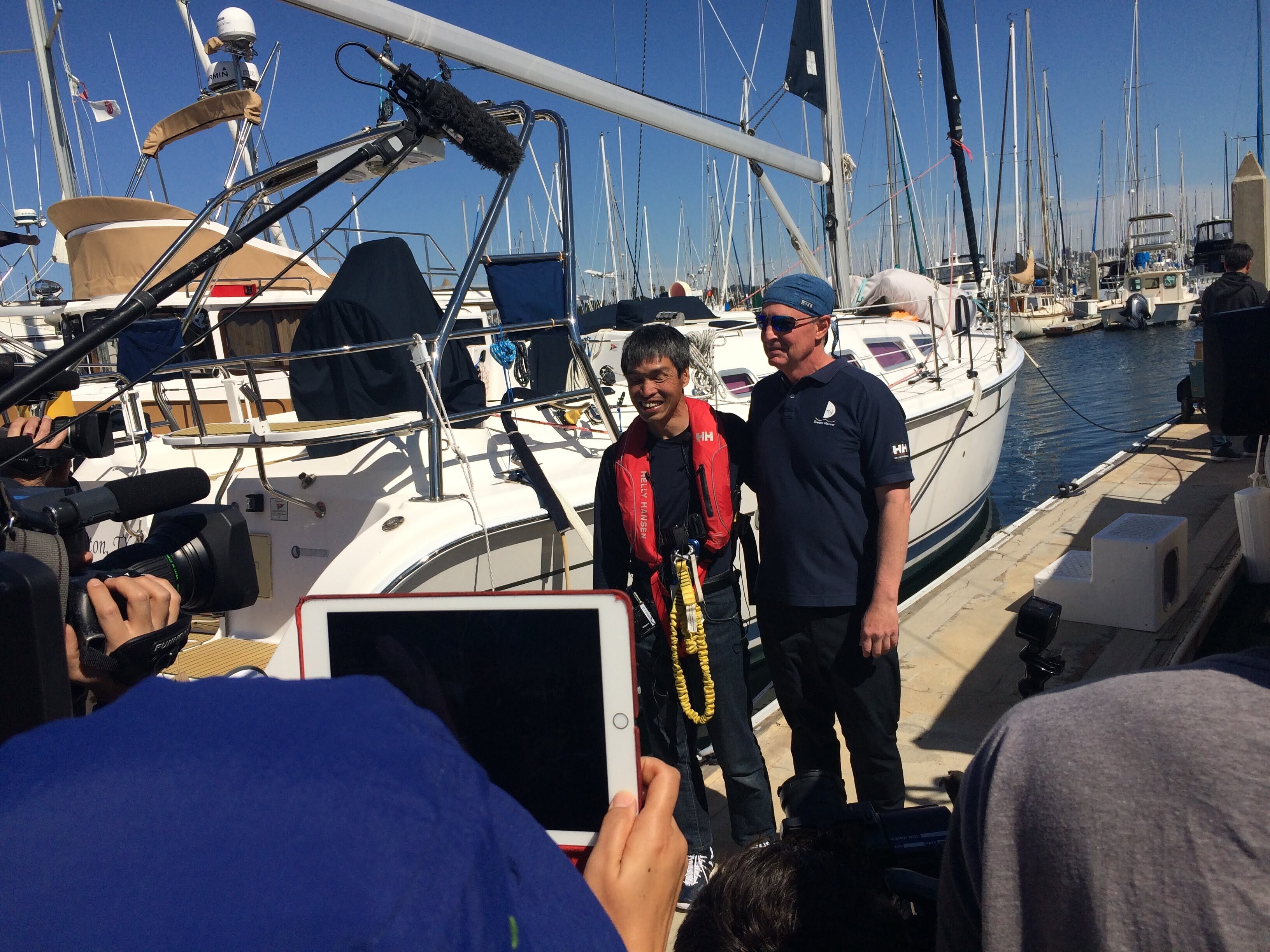
Robin Pomeroy, Meet the Leader: Welcome to Meet the Leader, a podcast from the World Economic Forum. I'm Robin Pomeroy, and I'm joined in the studio by Hiro Iwamoto, who is an adventurer. And we're going to hear the extraordinary experience he's had. And he's joined by Doug Smith. Let me start by saying hello to Hiro. Hi Hiro, how are you?
Hiro Iwamoto: Hi, thank you very much for having us here.
Robin Pomeroy, Meet the Leader: I just described you as an adventurer. Is that how you describe yourself?
Hiro Iwamoto: Yeah, or oceanic adventurer. And the first totally blind person to sail across the Pacific.
Robin Pomeroy, Meet the Leader: So we should explain, if you're listening to this, Hiro is blind.
Hiro Iwamoto: Yes, totally blind. I cannot even see light.
Robin Pomeroy, Meet the Leader: Maybe we can go back before we get to your adventures. Can you talk a little bit about how you became blind, because you weren't born blind? Can we go through that? Because I think it'd be very interesting for people to try and understand, to put themselves in your shoes. You know what I mean? It happened to you around 16, I believe, right?
When I was 13 years old, I started losing my sight. I realized when I was playing baseball. I couldn't hit the ball, and my teammate was laughing at me: Are you trying to help the other team?
”Hiro Iwamoto: When I was 13 years old, I started losing my sight. I realized when I was playing baseball. I liked baseball. I wanted to be a baseball player. When I couldn't hit the ball, should have been home run. So my teammate was asking me, laughing at me: Are you trying to help the other team? And I realized I was losing my sight. But I didn't want to accept my blindness or losing my sight. Then one day I fell down on the stairs and I scraped my knees and went back to home and my mom was there: “What happened?” I said nothing. I didn't say I fell on the stairs, because I didn't want to say I'm losing my sight.
Robin Pomeroy, Meet the Leader: You're trying to hide it.
Hiro Iwamoto: I tried to hide it. I didn’t want to accept it.
Robin Pomeroy, Meet the Leader: And then at that point, had it been diagnosed? No, I guess it was just you who knew you were losing your sight. But then at some point a doctor would have said to you …
Hiro Iwamoto: We visited the eye doctors, but they didn't know the reason why I was losing my sight. So that was, you know, four years ago. So I didn't want to go to the eye doctor anymore.
Robin Pomeroy, Meet the Leader: And you were in despair, you really wanted to end your life.
Hiro Iwamoto: Yes, because I couldn’t even brush my teeth by myself. No worth. So I wanted to end it all. So I tried to commit suicide, jumping off from the bridge to the ocean. I liked the ocean when I had sight. So I ended up trying to jump in there.
Robin Pomeroy, Meet the Leader: Did you jump?
Hiro Iwamoto: No, I couldn't jump because I tried to put weight on my hands, but I couldn't put my weight on the right foot, so I couldn't jump off. So, luckily … I tried, I was thinking I would try after taking a nap. And during the nap, I had a message from my late uncle: there is meaning, there is meaning in your blindness. Through your challenges, you will give courage and hope to others. But I woke up, I didn't understand; you know, blind people cannot put their toothpaste on their toothbrush. How can I give courage, and hope, to sighted people?
I tried to commit suicide by jumping from a bridge into the ocean. I took a nap first, and I had a message from my late uncle: there is meaning in your blindness. Through your challenges, you will give courage and hope to others
”Robin Pomeroy, Meet the Leader: This was a dream you had as you were on the bridge at the time.
Hiro Iwamoto: Right, right. But I woke up and I thought, you know, I don't understand that message. But one thing, I should not do this. And I went home. There might be something. Then slowly but surely, I started challenging things. And when I climbed Mount Fuji, the highest mountain in Japan, I realized the message was true at the summit. And my guide was explaining: wow, sunrise, we can, I can see from the, you know, below. And that's unusual. And I felt the warmness. And someone came and you said: “You don't see and you came up here, you have given us courage.”
Robin Pomeroy, Meet the Leader: So I know your story as a sailor, but before you did that, you actually were a mountaineer then.
Hiro Iwamoto: Yes. Then after that, yes, I can do more and more challenges. And when I sailed one time, the first time, I realized with wind, this sailboat can go very far. So let's try to sail across the Pacific, the biggest ocean in the world. I started having the dream.
Robin Pomeroy, Meet the Leader: So you're living in Japan, you grew up in Japan right on the Pacific Ocean and it just seemed to you always, that's a massive challenge. Is that how it dawned on you? Just because it was there?
Hiro Iwamoto: Yes, that's why, yeah. I was thinking, you know, I grew up surrounded by ocean. Always thinking, what's beyond this ocean? So let's try to sail across the Pacific. That's the biggest challenge, sailing across the Pacific, from Japan to California. I started thinking and I started telling my dream. And I always say: in this world, once you start saying the biggest or big dream, there are two groups. One group called the dream-killer: no, you cannot do that, you cannot see, so stop it, even stop thinking. The other team I call dream supporter: wow, that's an incredible challenge. Let's think together how you can do it.
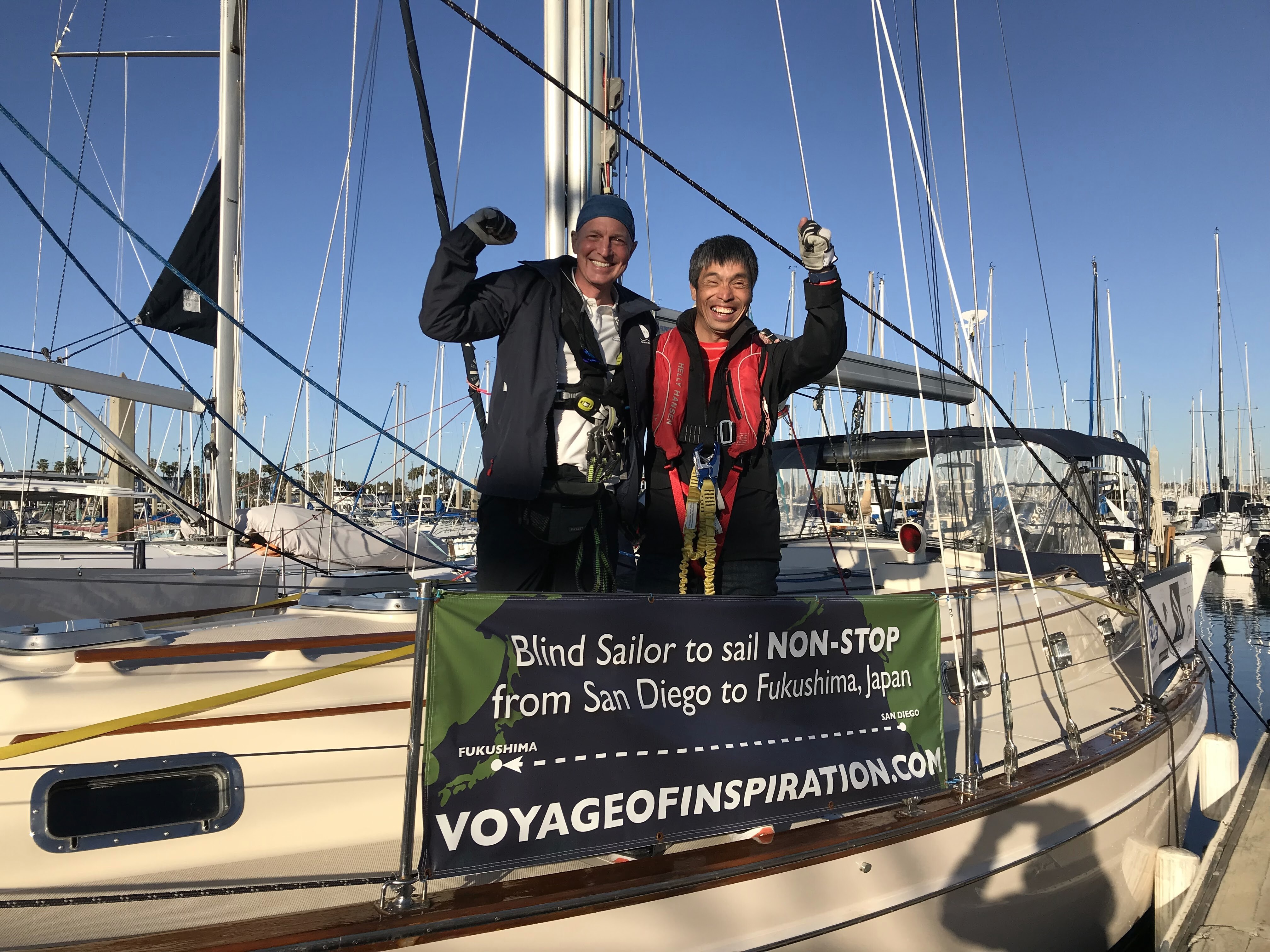
Robin Pomeroy, Meet the Leader: And how did you do it? What was your first, you know, big voyage?
Hiro Iwamoto: After, I had a lot of good supporters and I tried one time in 2013 with a newscaster, Mr. Shinbo, and we tried leaving from Fukushima because I wanted to encourage the kids there after the tsunami. Because they had resentment and hatred towards the oceans because the tsunami wiped out their parents or beautiful, cute sisters and brothers. So I wanted to send a message: the ocean is still waiting for you, let's go out sailing to be friends with it. So we left there and we sent a message and I did the charity, so that I could send two sailboats, small sailboats to them. And excellent when we left, beautiful weather … Six days after we left, we had a collision with a whale. Seven in the morning, I heard three crashes: boom, boom, boom. After that sound, I felt that was a whale. That's instinct, sixth sense. Because I'm blind, I feel, you know, I have different sense.
Once you start sharing your dream, there are two groups. One is the dream-killers: 'No, you cannot do that, you cannot see, so stop even thinking about it.' The other is the dream-supporters: 'Wow, that's an incredible challenge. Let's think together how you can do it'
”Hiro Iwamoto: And I thought we had a big crack or damage. So I was listening carefully: there you go, something different, water coming in. So I took the floorboard out and stuck my hand there. There you go. Just as I thought, water was coming in. So I woke him: “Shinbo, boat is sinking!” And he woke up and he started putting the life raft on while I was picking up stuff that should go into the life raft. So after that: “Shinbo, calm down!” Yeah, I was telling that, and we transferred ourselves into the life raft with the emergency bag we prepared. And floated around for 11 hours with the storms, five-metre waves. And luckily we prepared that emergency bag containing the important thing: Handy GPS and satellite phone. So longitude, latitude we are calling and telling the Japanese maritime self-defense force, and that's why they could find us.
Robin Pomeroy, Meet the Leader: Did the boat just sink?
Hiro Iwamoto: Yeah, the boat sank and then the airplane, seaplane came and they're circling. The first airplane couldn't land because the ocean was too rough. They can land within three meters, but they went back because they are running out of fuel. But the captain said, in the evening the sea might be calmed down a little bit, so please send the second one. And the Japanese government decided to send the second one, which circled; they landed and then their rubber boat came. And because we are floating around, so this big ship cannot follow us. So the rubber boat came and picked us up and they left.
Robin Pomeroy, Meet the Leader: Were you terrified?
Hiro Iwamoto: I was very, very calm.
Robin Pomeroy, Meet the Leader: Why?
Hiro Iwamoto: Because at night before the whale hit our boat and the sea was rough. So more and more, you tip sideways and the highest is more than five metres, 15-foot waves. So I started worrying about the future: if these waves break this sailboat, what will happen? If this inflatable life raft doesn’t inflate automatically, what will happen? Even inflated, how can we transfer ourselves? Can we do that? My teeth were shaking, making sound.
Robin Pomeroy, Meet the Leader: You'd already been thinking about this the day before, but you were calm when it actually happened.
Hiro Iwamoto: My late uncle sent a message again. Are you saying arigato, thank you, to Aeolus the sailboat? She is going through this storm to save your life. Say arigato. And I started saying arigato, arigato, arigato. And started living now instead of thinking, thinking, future. Right. That calmed me down. Next day, even after the whale hit a boat, I was calm. That's why I'm telling, I was telling Shinbo, my sailing partner, calm down … he is in a panic, right? So even in the life raft, I will be fine. I was so calm because I was living now. So that message helped me a lot.
My late uncle sent me another message: say thank you to your sailboat, who is going through this storm to save your life. So I started saying arigato, arigato, arigato. Starting living now, instead of thinking about the future. That's why I was calm when the whale hit the boat
”Robin Pomeroy, Meet the Leader: I mean, the message is useful because panicking and being scared is not going to help you, is it? No, no.
Hiro Iwamoto: No, no. Be now – that’s the power word.
Robin Pomeroy, Meet the Leader: That's quite a lesson. Now a lot of people … you decide to do this crazy adventure in the first place, a lot of people wouldn't choose to do that. Then you end up in five metre waves, hit a whale, are bobbing around in a rubber dinghy and get saved. Most people think: maybe I'll give up sailing. But you decided to do this again. And this is maybe where Doug comes into the story. Doug, how did you find out about Hiro's antics?
Doug Smith: Well, a mutual friend. I wasn't really a sailor, I was the one sitting on the deck enjoying a cold beer. But I'd heard from a mutual friend of Hiro and his story. And I said, well, it would be interesting to meet him and talk, because I was interested in maybe getting into sailing, and thought it would be interesting to hear his story. It wasn't my intention or expectation going into our lunch meeting, but basically after we had a lunch together after an hour, it ended with me saying: “I can see you can sail, let's give it a go again.”
I wasn't really a sailor, more the one sitting on the deck enjoying a beer. But after going to lunch with Hiro and hearing his story, I agreed to cross the Pacific with him
”Robin Pomeroy, Meet the Leader: Was that already let's cross the Pacific again, or was it something more modest?
Doug Smith: Across the Pacific, because from the context of a conversation he was saying, “I want to try the challenge again.” And I thought if he's willing after the experience he's had to try again, especially in the context of trying to encourage others and give hope to others, it’s, like, yeah, I want to help facilitate that.
Hiro Iwamoto: Yeah, so when I heard that message he mentioned: I have a sight, but no sailing experience, you have sailing experience, but not sight. If we can support each other, our dream can live again.
Robin Pomeroy, Meet the Leader: So it didn't bother you, Hiro, that he wasn't a sailor?
Hiro Iwamoto: No, because I knew he would pick up the sailing skills quickly. I was asked by three other semi-professional sailors or professional sailors to do it again. But when I heard the message from him, that was it: I will do with him.
Robin Pomeroy, Meet the Leader: Why though? What was it about Doug?
Hiro Iwamoto: It's a more challenging one. With professional sailors, you might have been just a passenger. And not only that, but also that spirit he had. So I will be your “seeing eye Doug”.
Robin Pomeroy, Meet the Leader: Right.
Hiro Iwamoto: I can tell you just visual things, you should be captain and you should decide.
Doug Smith: There was a big debate between the people we knew who was the crazier. Him for going with a person who doesn't know how to sail, or me going with the blind person. But you know, the point was we knew somehow from our lunch meeting, there was a chemistry. And if you're going to do something like that and risk your life, the most important thing is to go with the right person. And of course they have the right boat and go at the right time, but we just had that chemistry, you know, that we knew there was kind of a mutual trust. If things went bad, we knew we could work together
Robin Pomeroy, Meet the Leader: Were you aware Doug of Hiro’s … I don't know if, Hiro, you would say it’s a spiritual thing but twice now you've mentioned getting a message from your late uncle? Did you talk to Doug about that?
Hiro Iwamoto: No, no.
Doug Smith: For me, the motivation was just: here he is having had that experience and wanting to challenge again. And me just feeling, yeah, that should be done. I mean he hit a whale, what were the chances, right, of being hit by lightning? And in some ways I wanted to … after that experience, the press was very harsh and the public reaction in Japan was very harsh: are you guys crazy? What are you trying to do, sailing across the ocean? Part of me wanted to help him prove people wrong. That he could do it and last time was just some very bad luck.
There was a big debate between the people we knew about who was the crazier. Him for going with a person who doesn't know how to sail, or me for going with the blind person
”Robin Pomeroy, Meet the Leader: Just for background then, you're a bit American, a bit British, but you've been living in Japan for a long time.
Doug Smith: Yeah, so most of my work career for 30 years has been in Japan, so it’s been home for more than 30 years.
Robin Pomeroy, Meet the Leader: OK, and so how did this second attempt to cross the Pacific go? Hiro, you went the other way this time. You went over to California to try and sail home, is that right?
Hiro Iwamoto: Right, right. I live in San Diego now, 20 years, so we decided to leave there and try to land in Fukushima, the same place. Because in my mind, it was very painful. I tried to encourage them, tsunami victims, especially kids, but we left and we had a collision with the whale. I felt so painful, I gave them more severe trauma.
Robin Pomeroy, Meet the Leader: You felt you let them down.
Hiro Iwamoto: Yeah, let them down. So I felt bad and so that's why I couldn't go back to sailing even after we had a collision with a whale. Yeah, but this time this challenge came and [he had to decide] where to land. And someone said: the Tokyo Olympics are a year later, so why don't you land in Enoshima? The sailing races will be going on. Good publicity. But I wanted to go back to Fukushima so that I can encourage them again.
Robin Pomeroy, Meet the Leader: And how long did the journey take?
Hiro Iwamoto: It was 55 days. We were expecting 60-75 days so we landed a little bit earlier. But the middle of the traveling and sailing was very, very hard. The first seven days, no wind. People think storms might be harder for sailors, but can you imagine 10,000 kilometres ahead, no wind? Today, we didn't move, and next day, hoping for wind, no wind. Still, we haven't gone.
Doug Smith: Well, especially because our departure out of San Diego Bay, we had the most beautiful wind ever. We didn't need to tack, we just changed the sail to come out of the harbour. And people who wanted to follow us out couldn't even keep up. So we started the journey, saying, “Oh, we'll be in Japan next week at this rate.” And then the next day came and the wind was gone.
Hiro Iwamoto: Shut off, yeah.
Robin Pomeroy, Meet the Leader: What's the hardest thing about being on a boat for 55 days and all the difficulties that might come with that? I mean, Hiro, is there anything you've noticed about being blind that makes it more difficult in some ways?
Hiro Iwamoto: More difficult because of being blind?
Robin Pomeroy, Meet the Leader: Yeah … because I want to come to both of you, maybe you have different perspectives? What did you find? You said being in a place where there's no wind is very, very frustrating. Are there other things? I'm thinking you've got to think about food and water and there's maybe a bit of loneliness or you've gotta really get on with your partner. There's lots of challenges. Is there one challenge that you remember that was very difficult during that journey?
Hiro Iwamoto: Not taking a shower. I cannot take a shower, but I wanted to. But other than that, just trusting yourself, keeping motivated and trusting Doug – those are good. And I started making an image in my brain and the feeling with five senses, you know, when I learned that the moving time will be waiting for you. That's why I motivated myself that way. So everything is okay, you know? But yeah, a lot of challenges, of course. And one time, everything shut off, electricity. And the autopilot stopped working, and that time I was a little bit concerned. But: I'm fine, I'm still alive. Again, I went back to that message. Calm down, and calm him down, and there you go: everything is okay.
It was good time to have a dialogue with yourself and with the universe. Asking: why does this world have war, polarization or the climate crisis? In the middle of the Pacific, I felt this Earth is one thing
”Robin Pomeroy, Meet the Leader: What was the hardest thing for you, Doug?
Doug Smith: I mean, in some ways it wasn't … in some ways, it was liberating. I mean we were on a boat and you didn't have the constant ding, ding, ding of your phone and the messages coming in. Everything you need was there on the boat. Someone asked me: “Didn't you feel lonely or scared in the middle of the ocean?” I think both of us said no. We felt more connected. And in our course took us where there was not a lot of boat traffic, or any traffic, I mean the closest people on Earth, they weren't on Earth. They were probably in a space station above. So I think we both found it kind of liberating to you, feeling to be out there, to be self-sufficient, to be separated from the world and not have the constant noise of news or your device dinging at you.
Robin Pomeroy, Meet the Leader: It sounds glorious. I want to do it.
Doug Smith: Of course there were times when you have big storms and things happen, things break and they get repaired. But that was expected, so it wasn't …
Hiro Iwamoto: So step-by-step, right? When something happens, definitely, on the sailing across the Pacific, but step-by-step you figure it out. And good time to have a dialogue with yourself and with the universe – excellent. And feeling: why does this world have war, polarization or climate crisis? In the middle of the Pacific, I feel this Earth is one thing. Yeah, so feeling very well. So instead of those difficult times, excellent times are what I remember the most.
Robin Pomeroy, Meet the Leader: You talked about the space station maybe being closer to you than humans on Earth. You seem to have had an experience, both of you, similar to what astronauts have when they look down on Earth. This feeling of it's this precious place and we forget about it all too often.
Doug Smith: And it felt like we were, because we're sailing in the trade winds, so you go for a long time, the sun is rising behind you in the morning, setting in the afternoons, so you’re continually sailing into the sun. And you get this feeling, it's like, well, this could have been 10,000 years ago, or 100,000 years ago or 10,000 years from now. You felt like you were, in some ways, stepping out of time.
Hiro Iwamoto: Yeah, so after landing, I was shocked when I went to the big stores and supermarkets. Things are everything, and too many things, and how materialistic this world has become. What we needed is what we put on our sailboat. That's it. 55 days. We could have gone 90 days, 100 days, you know. So this was the different way of seeing we had because of sailing of the Pacific.
Robin Pomeroy, Meet the Leader: Hiro, you do motivational talks.
Hiro Iwamoto: Yes, keynote speaker, I've been working on that.
Robin Pomeroy, Meet the Leader: Yeah. So what other … because it strikes me you've had at least two remarkable … well, already, we've talked about three remarkable experiences just in the few minutes we've been talking. You went blind as a teenager and it almost ended your life. You tried to cross the Pacific Ocean, the boat sank because it hit a whale. And then you did cross the Pacific Ocean. And we're going to talk about your next adventure in a moment. But I'm just thinking you must have a lot of lessons – maybe both of you do. People who are listening to this are often listening for advice for leaders, you know, dealing with change. This is something you're saying: you're expecting change on a sailing boat. But dealing with all those challenges, what are some of those keynote pieces of advice or wisdom that you share with people?
Hiro Iwamoto: I think courage is not absence of fear. It's your choice to move forward. So sometimes people get fear and stuck there on the uncertainty. They wait until they get 100% information, or so they think. But how I can get 100% information about my sailing across the Pacific 55 days ahead? I left anyway. We prepared well, did as much as possible. But after that, you know, out of your control, right? Just let everything … ask the universe or other supernatural thing, you know? What you are seeing is not everything. Seeing the unseen is a skill I have, and I have been coaching that way. And I want leaders have that skill of seeing the unseen and don't stuck when you get fear. So courage is not absence of fear, it's your choice to move forward.
Courage is not absence of fear. It's your choice to move forward. So sometimes people get stuck on the uncertainty. They wait until they have 100% information, or so they think. But how I can get 100% information about sailing across the Pacific, 55 days ahead? I left anyway.
”Robin Pomeroy, Meet the Leader: I had the psychologist Adam Grant in this booth. I don't know if you're familiar with him. And he said he had almost exactly the same piece of advice. And he used to be a springboard diver. He was terrified of heights and terrified of diving. But it taught him to get that courage. And his advice to people is don't be held back because you don't know everything, or you can't be completely prepared. I think that's what you're saying as well. Can I ask you then: you're going to leave Doug behind at the next adventure?
Hiro Iwamoto: It doesn't mean he did a bad thing to me.
Robin Pomeroy, Meet the Leader: It seems very cruel. What is your plan for that?
Hiro Iwamoto: Well, I'm going to try it by myself next year, completely alone. I'm planning to leave San Diego mid-February because I want to land in Japan before the typhoon season comes. So we are going to leave around 14 February, maybe, we land sometime in May. I'm going to use a smaller boat. We used a 40-foot boat with Doug, but by myself I need a smaller boat. So it takes longer. And my challenge is I decided to use the same kind of boat that sunk. So mentally, yeah, I have to gain myself to have strength. That's the challenge.
Robin Pomeroy, Meet the Leader: Do you think you'll get kind of flashbacks to that time?
Hiro Iwamoto: Yes, I will. But that's my challenge, right? Yeah, I will be fine. I will be fine.
Robin Pomeroy, Meet the Leader: What are the additional challenges then doing it on your own? I mean, I can imagine for a sighted person, it's very lonely. You've got to rely on yourself. But what were you using Doug and your previous partner for that you won't have now?
Hiro Iwamoto: I'm going to use, nowadays technology helps me, the app called Lina – my daughter's name actually – Furuno made just for me, for this voyage. So it reads all data from their system into iPhone and that reads … so I say, “Heading”, it reads the boat is heading 230 degrees. Meaning the right direction. After I leave San Diego, I want to go southwest to get to the trade winds, so go through Hawaii. And I say, Lina, “Wind speed through.”
Robin Pomeroy, Meet the Leader: Right. Yeah, like that. It's a sailing version of an app.
Hiro Iwamoto: So, and Starlink, you know, we put the camera on, and through Starlink the shore crew supporters from all over the world can be my supporters, so collective eyes. So I want you to join us.
Robin Pomeroy, Meet the Leader: So we'll be able to follow you live.
Hiro Iwamoto: And help me. So please visit hiros-choice.com for my new challenge, so you can follow me. And you can be my support.
Robin Pomeroy, Meet the Leader: We definitely will. And so Doug, what's your answer to that question? What were the lessons learned?
Doug Smith: I think people said, “Weren't you scared or weren't you uncertain about arriving successfully?” And we never had that concern. And part of it was, I think, if you go with the right person, with the right boat at the right time, you know you're going to get there. Things are going to break along the way. The wind is going to change. Things are gonna be not exactly as you expect, But, you know, if you just keep your eye on the goal, keep moving forward, adjusting as you need to, you will get to your goal. And we've managed to do that across the world's biggest ocean. And people said, well how is that possible? Again, the lesson was you go with the right person, prepared in the right way at the right time, you will succeed even though obviously you'll have challenges along the way.
If you go with the right person, at the right time, you know you're going to get there. Things are going to break along the way. The wind is going to change. Things are gonna be not exactly as you expect. But if you just keep your eye on the goal, keep moving forward, you will get to your goal.
”Hiro Iwamoto: Because of him, I'm here, right? If I hadn't met him, I wouldn't be here. So I'm very appreciate of Doug and all supporters who helped me on the 2019 voyage. And I'm looking forward to appreciate the supporters, a lot of supporters now already helping for my voyage in 2027, Hiro’s choice.
Robin Pomeroy, Meet the Leader: Doug, what will you be doing while Hiro’s out there on the waves?
Doug Smith: I'll be following along being virtual eyes with him, and again I'm sure he will be successful because he'll make the right preparations. Again, it'll be encouraging to everyone. And just going back to the last voyage, we didn't want it just to be about sending the message to the people in Fukushima, or for Hiro to prove it could be done. We also were raising money for some charities like the Challenged Athletes Foundation that's important to Hiro, Cure Blindness project, Carter Center, Trachoma Center. So we wanted to use it as a way to not only improve what's possible and inspire people, but also kind of support causes that were important to us.
Hiro Iwamoto: Yeah, so I'm not doing this single-handedly to prove what I can do. I want to expand what we believe is possible for humanity as a whole.
Robin Pomeroy, Meet the Leader: Hiro Iwamoto and Doug Smith, thanks for joining us on Meet the Leader.
We've been recording lots of great interviews here in Davos, both for Meet the Leader and for Radio Davos. You can find them wherever you get podcasts or at wef.ch/podcast. I'm Robin Pomeroy at the World Economic Forum. Thanks to you for listening and watching. You can see this on our YouTube channel. Goodbye for now.
How can leaders move forward when pressure and uncertainty is high? Blind adventurer Hiro Iwamoto and his ‘seeing eye Doug” Doug Smith sailed across the Pacific in 55 days, from San Diego to Fukushima. The two share key strategies in taking action despite uncertainty and what’s needed to pick the right partners to make impossible projects a reality. Hiro also shares how he stays calm in moments of extreme adversity, like when whale sank his boat during an earlier attempt leaving him in a life raft for 11 hours amid five-metre waves.
Key takeaways:
Hiro is an adventurer, keynote speaker and the first totally blind person to sail across the Pacific. Doug has worked in Japan for more than 30 years and became Hiro’s sailing partner after saying, “I can see, you can sail.” Their lessons on crisis leadership, teamwork, overcoming fear and innovation can motivate any leader during difficult moments.

Una actualización semanal de los temas más importantes de la agenda global

Wanjuhi Njoroge
23 de marzo de 2026


