Being “Born Digital” isn’t enough anymore, the best entrepreneurs need to be “Born Global”, says author and research fellow at the MIT Sloan School of Management Michael Schrage.
In an article for the Harvard Business Review, Schrage explains that innovators in today’s world don’t “go global”, they start global.
“’Born Global’ is becoming the new ‘Born Digital’. Social media and digital platforms giving local start-ups global reach increasingly facilitate ‘born global’ start-ups,” he writes.
“The ‘two guys in a Silicon Valley garage’ paradigm is surrendering to cross-border collaborations between ‘two guys in a Noe Valley garage, three female coders in a Pune office park, and a machinist of indeterminate gender with a 3D printer cluster in Nanjing’.”
With globality integrated from the beginning, entrepreneurs are sourcing the best talent from across the world.
Schrage notes that people with ideas are becoming more “comfortable and confident acquiring essential talent and capital from around the world as they do from across the country.”
A start-up is no longer constrained by geological boundaries as cross-border collaborations allow new businesses to grow and develop.
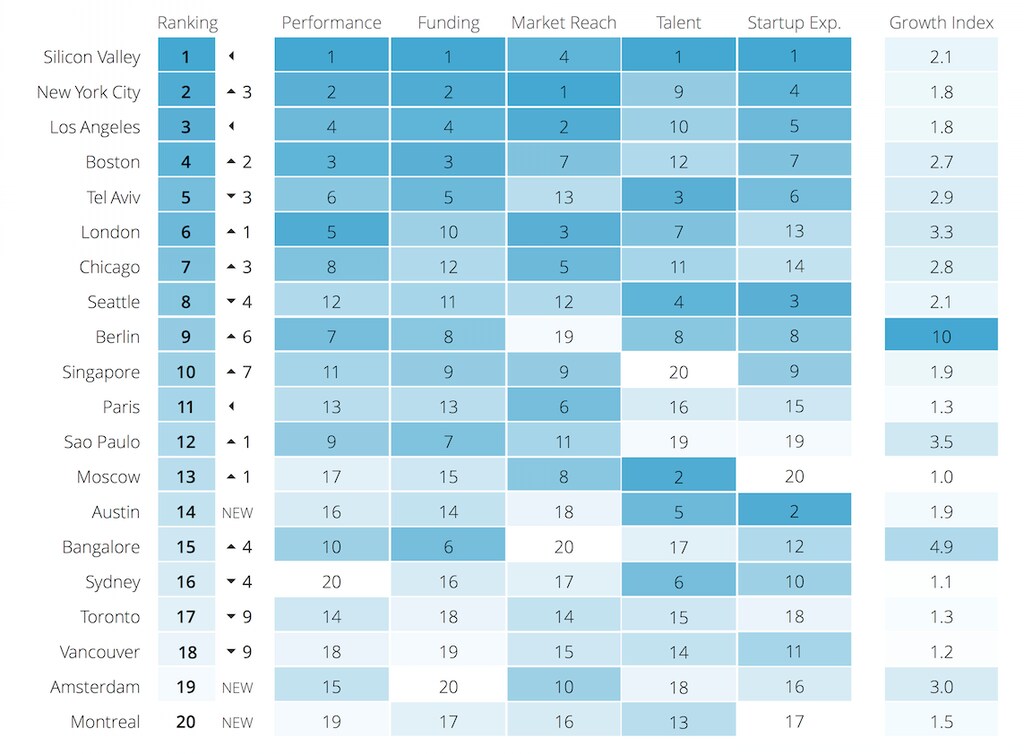
A global research survey found that “ecosystems have become more interconnected and start-up teams have become more international.” With 37% of all funding in the top 20 ecosystems having at least one investor from another ecosystem.
Employing the best talent is now a global hunt, with start-ups having on average 29% foreign employees. For Silicon Valley this proportion rises to 45%.
With digital tools such as Google, LinkedIn, Skype and Slack, communicating with people across the world is no longer a problem. Plus, they make organizing a global project faster, simpler and cheaper.
“These informal international innovation improvisations are less exception than expectation,” Schrage says.
The need for entrepreneurs to think globally has become so necessary that assessing an innovator’s GQ – Globality Quotient – has become a standard market test.
Schrage notes that: “Almost without exception, the most compelling innovators reflect and respect a ‘born global’ ethos.”
Have you read?
10 lessons from leaders: social entrepreneurs tell all
Enhancing Europe’s Competitiveness: Fostering Innovation-driven Entrepreneurship in Europe
The 9 countries with the most entrepreneurs