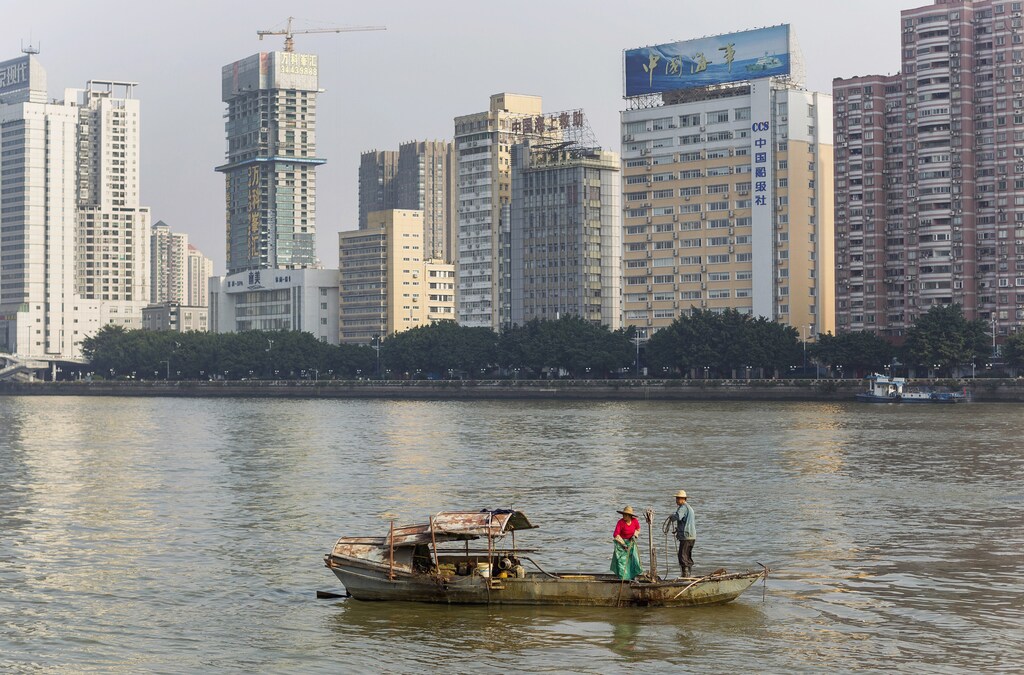
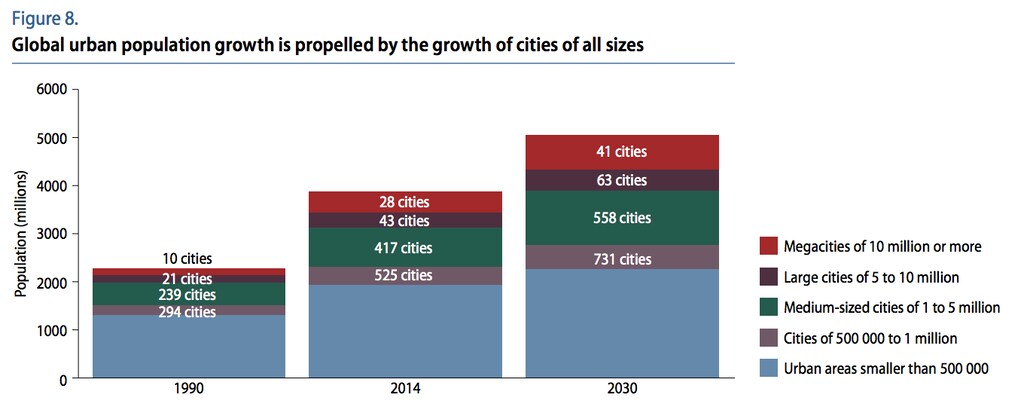
The growth of megacities, urban areas with a population of over 10 million, is a reflection of the rapid pace of urbanization in countries across the world.
In 1990, there were just 10 megacities across the globe. By 2030, this is expected to rise to 41, according to the UN.
Guangzhou, Guangdong in China tops the list of the world’s fastest growing megacities between 2010 and 2015.
The fastest growing megacities
The Pearl River port city of Guangzhou, located in Guangdong province, grew at an average rate of 5.2% every year between 2010 and 2015. Its population reached 12.5 million last year.
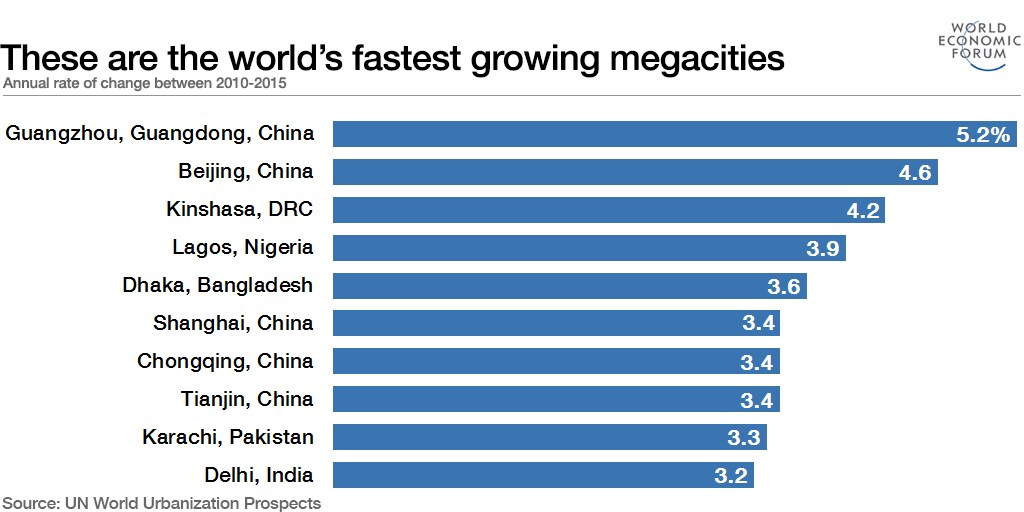
Guangzhou is one of five Chinese cities in a top 10 dominated by urban areas in emerging and developing economies. Karachi, Delhi and Kinshasa all feature, alongside Dhaka and Lagos.
This reflects the ongoing growth in urbanization in Africa and Asia. According to the UN’s World Urbanization Prospects, India, China and Nigeria alone will account for over a third of urban growth between 2014 and 2050.
_____________________________________________________
Have you read?
You knew China's cities were growing. But the real numbers are stunning
These are Africa’s fastest-growing cities – and they’ll make or break the continent
_____________________________________________________
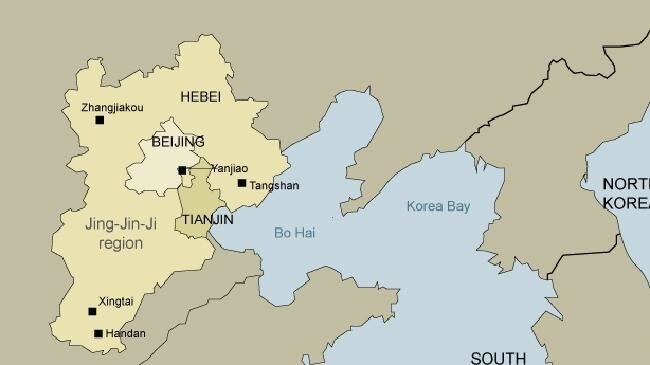
The Chinese government is planning to create even bigger megacities, including combining nine cities in the Pearl River delta, and creating the massive megacity of JingJinJi.
With a current population of over 130 million, the planned link-up of Beijing, Tianjin and Hebei would be bigger than Japan by population, and larger than Uganda by area.
The challenges – and opportunities – of urbanization
By 2050, two-thirds of the world’s population is expected to be urban. This brings with it opportunities and challenges.
Cities are important drivers of development, and poverty reduction. They are also associated with longer life expectancy and increased geographic mobility.
However, rapid and unplanned urbanization can lead to sub-standard living conditions, pollution and environmental destruction.
Adequate planning is vital to ensure sustainable development and growth in the world’s cities, as highlighted by the World Economic Forum’s Inspiring Future Cities & Urban Services (pdf) report.