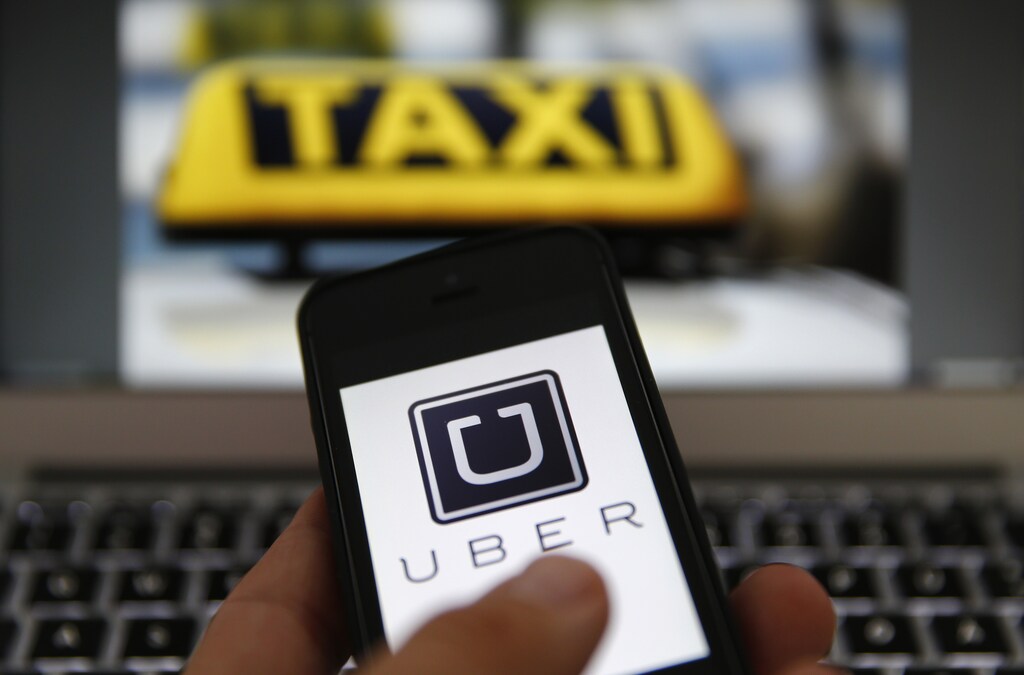
Is your Uber driver going too fast? Or are they slamming on the brakes? Should you find fault with your chauffeured experience, the texi service is now able to check your claim's validity by analysing smartphone data.
Uber revealed in a blog post recently that it is monitoring some drivers’ movements in a trial programme in Houston, Texas, in an effort to verify user feedback and improve the safety of passengers.
Using the GPS and accelerometer in drivers’ mobile phones, Uber can determine the overall speed of the vehicle, as well as whether the driver is accelerating too quickly or braking too hard. The gyrometer can be used to detect whether a phone is being picked up or moved around during rides, indicating that the driver’s attention isn’t fully focused on the road. In these cases, drivers may be offered a mount to hold their phones, Uber said.
This convergence of transportation and connectivity is part of what is being hailed as the Fourth Industrial Revolution, a technological shift that is bringing together advances in artificial intelligence, the internet of things and big data.
Insurers are already able to track some vehicles through on-board systems that provide data on speed, acceleration, braking and the deployment of airbags. Motorists can also download apps that rate their driving ability by detecting sudden braking, rapid acceleration, speeding and cornering. Drivers have the option of sharing their score with insurers, who can then issue quotes based on more accurate risk assessments.
It’s not only companies that are interested in driver data. Last year Uber announced it was sharing information about its trips with city planners to help with traffic congestion and urban development, including typical dates and times of travel, zip codes and distances.
The major car manufacturers are investing heavily in hardware and software to connect drivers to the internet. General Motors is expanding 4G high-speed wireless technology to its 2016 models, while BMW and Audi are enhancing their fleet to be as digitally enabled as a smartphone.
Meanwhile, tech giants such as Google and Apple are showing interest in the potential revenue from connected cars, and are experimenting with both software and hardware through Android Auto, self-driving cars and Apple Car Play.
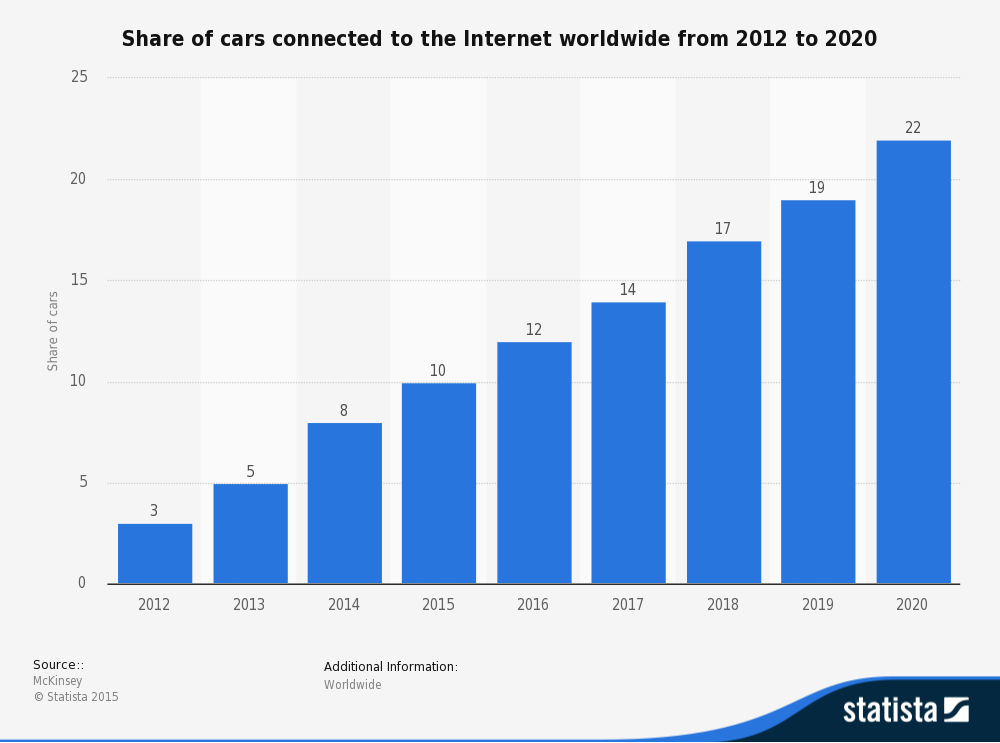
By 2020, about one in five vehicles on the road worldwide will have some form of wireless network connection, which in total will amount to more than 250 million connected vehicles.
Have you read?
10 best and worst countries for drivers
Is this the next revolution in the car industry?
Are we ready for self-driving cars?