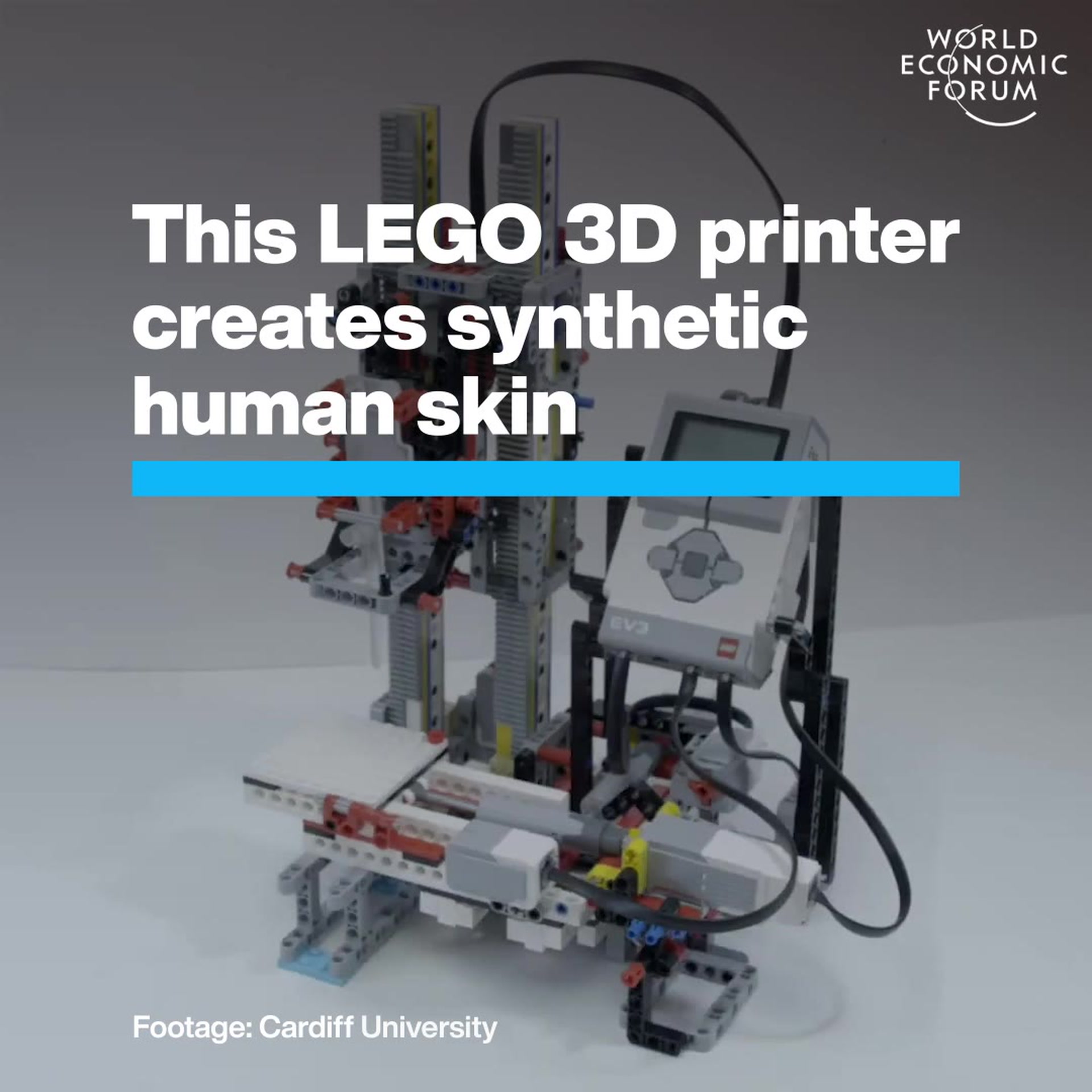
Expulsa sobre una placa un gel con células vivas en un proceso que suena extraño, pero que resulta útil en medicina. Un pequeño ordenador LEGO Mindstorms controla la impresora y mueve la placa hacia delante y hacia atrás mientras la boquilla sube y baja. Así, la impresora puede crear capas de piel que reproducen la estructura del tejido humano.
Una impresora 3D LEGO crea piel humana sintética. Expulsa sobre una placa un gel con células vivas. Es un proceso que suena extraño, pero resulta útil en medicina.
Cómo funciona la impresora 3D de Lego
Un pequeño ordenador LEGO Mindstorms controla la impresora. Mueve la placa hacia delante y hacia atrás mientras la boquilla sube y baja. Así, la impresora puede crear capas de piel que reproducen la estructura del tejido humano. También puede incorporar células enfermas a la piel, lo que podría ayudar a los científicos a estudiar enfermedades cutáneas e incluso a diseñar nuevos tratamientos.
El coste de la impresora
La impresora fue diseñada por científicos de la Universidad de Cardiff y costó solo 630 dólares. Es una fracción del coste de la mayoría de las bioimpresoras. Los científicos que la inventaron han compartido los planos gratuitamente, ya que querían diseñar una bioimpresora 3D asequible como alternativa a máquinas que pueden costar miles de dólares.
Los posibles beneficios de la piel bioimpresa
La piel bioimpresa puede utilizarse en lugar de los dolorosos injertos de piel o para tratar quemaduras. El primer tejido humano se bioimprimió hace 10 años, cuando la empresa estadounidense Organovo bioimprimió tejido hepático. Desde entonces, las bioimpresoras han creado productos que van desde chuletas de ribeye hasta una oreja humana que se trasplantó con éxito en Texas el año pasado. Mientras tanto, la empresa emergente india NBIL bioimprime piel en la que se pueden probar cosméticos y productos farmacéuticos de forma segura y ética.
El futuro de la ingeniería de tejidos
La industria de la ingeniería de tejidos está creciendo rápidamente. El año pasado tenía un valor de 16.100 millones de dólares y se prevé que alcance los 50.000 millones de dólares en 2030. La piel bioimpresa es solo uno de los muchos productos que los ingenieros de tejidos podrían crear en el futuro.