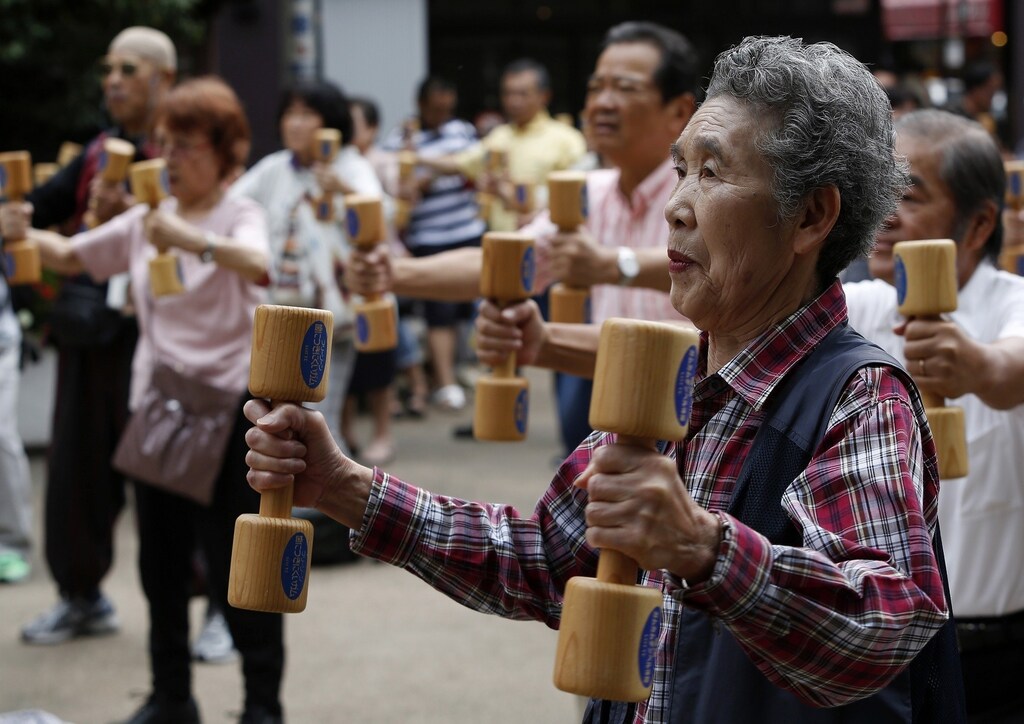
Japan has a greater percentage of people aged 100-plus than any other country -- 61,000 centenarians or 0.048% of the population, according to UN data for 2015.
The US may have more – nearly 72,000 – but its much larger population means it doesn’t even make the top 10.
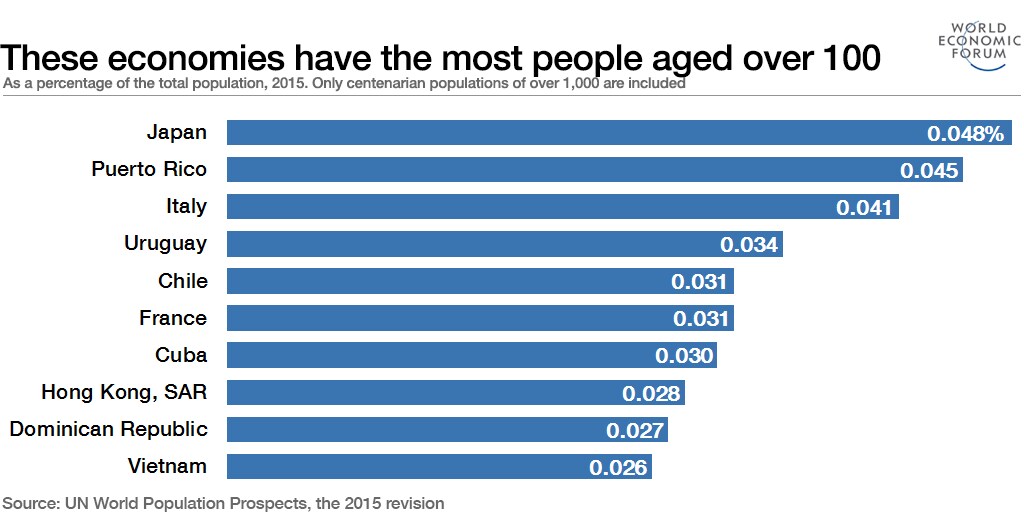
Puerto Rico at number two is one of five Latin American nations in the top 10. This phenomenon -- why people from central and south America age so well -- is known as the 'Hispanic paradox' and is attracting more and more interest.
The data highlights that ageing populations are not just a challenge for developed economies, but for economies around the world.
The challenge of ageing populations
The UN predicts that by 2100 there could be nearly 2.5 billion people aged over 65. This will present a series of economic challenges, especially as the number of working-age people falls for every older person – the so-called old-age dependency ratio.
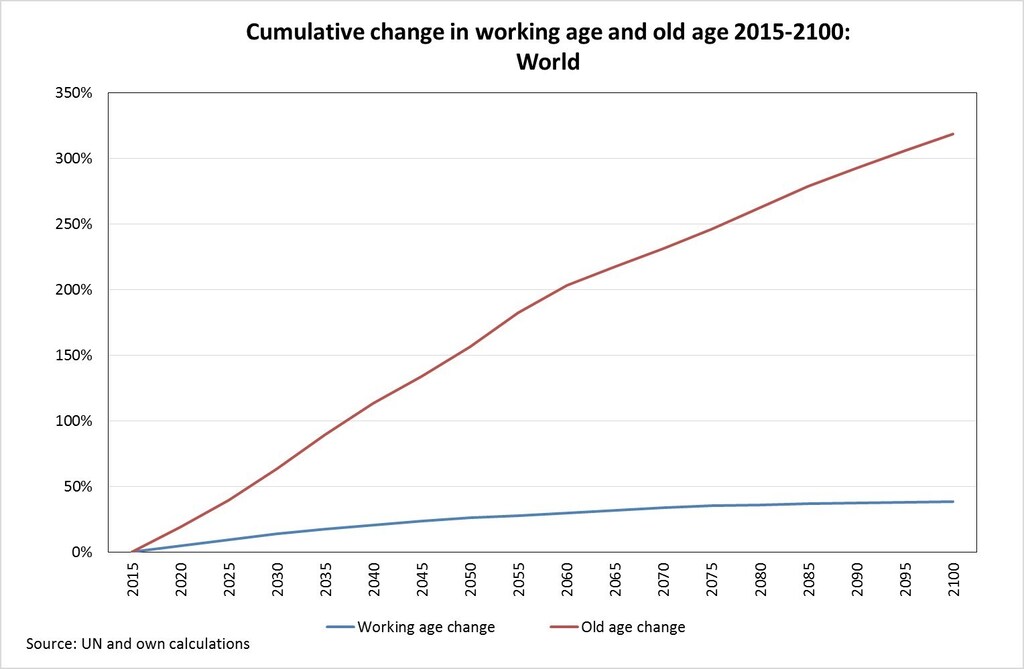
This changing ratio will likely see age-related health spending increase quicker than tax revenues.
Other challenges also exist when caring for an ageing population. The Japanese Ministry of Labor, Health and Welfare estimates that the country will need an extra 1 million care workers by 2025.