People living under lockdown are getting up later, data from fitness devices suggests.
Extra-vivid dreams are more likely, with stress the probable cause.
Many people are struggling to sleep altogether, and prescriptions for insomnia have risen.
How have you been sleeping lately?
The answer is likely to depend on how much the COVID-19 coronavirus pandemic has upturned your life.
Data from sleep scientists, pollsters, social media and even electricity meters all point to the same thing: we are sleeping differently – often for longer, but often poorly, too. Many people are also experiencing strange dreams.
Here are five ways COVID-19 has affected our sleep.
1. We’re sleeping for longer
While sleep during the pandemic has typically not been top quality, we are generally sleeping for longer, according to health device maker Withings.
Its data shows that French people have seen the biggest average increase in sleep – with over 20 minutes extra each night – while Germans have seen the least change, at around eight extra minutes.
2. We’re not setting an alarm
Rising later chimes with a finding by DNA-testing company 23andMe. It has found that a third of Britons are no longer setting an alarm in the morning, mainly because the morning routine of getting family ready for work, school and commutes has been eliminated. 7.06am has replaced 6.18am for waking up.
Sleep researcher Neil Stanley tells the UK’s Daily Mail newspaper that this could be positive for our health as it is closer to our natural genetic wake-up time.
3. We’re going to bed later
Ditching the alarm could be partly down to later bedtimes, according to Christoph Meinrenken, a physicist from Columbia University.

He’s been looking at electric meter data from New York apartments and tells The New York Times that residents are using up to 25% more energy – including more at night. Lengthy late-night TV binge-watching sessions could be one cause.
4. We’re having strange dreams
When we do finally get to sleep, our dreams are more likely to be vivid and strange. National Geographic reports that research institutions around the world are now studying the phenomenon. These include the Lyon Neuroscience Research Centre in France, which has recorded a 35% increase in dream recall and a 15% rise in negative dreams.
Those two findings hint at a likely cause: neuroscientists say increased stress makes our dreams more vivid, while dream recall is increased by frequently waking – as is common in stressful situations.
Another theory is that because of often-repetitive and tedious days, the brain digs deeper into the subconscious for imagery, and often delivers surprises.
5. Some of us are struggling to sleep at all
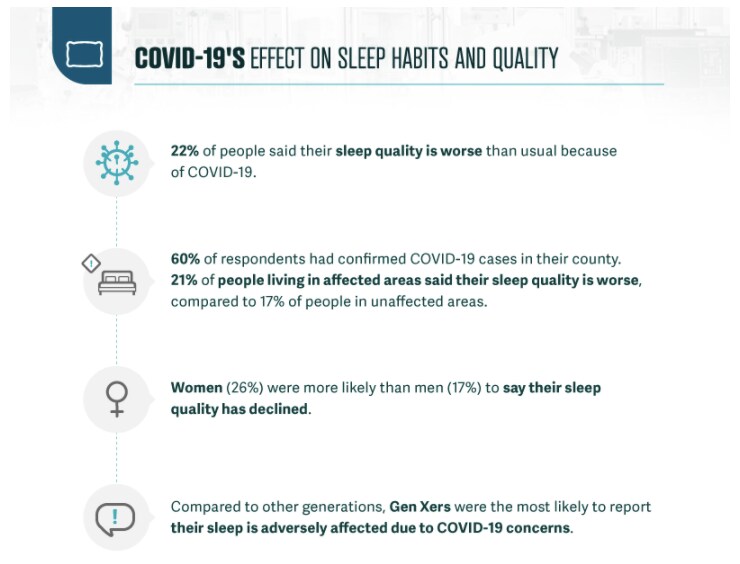
For some, the stress of lockdown and the uncertainties of the pandemic are simply too much, leading to little or no sleep. In the UK, pollster Ipsos Mori has found that 38% of those surveyed have slept less or less well than normal.
Meanwhile US company Express Scripts, a provider of prescription plans, reports that the number of prescriptions filled for sleep disorders jumped by almost 15% between February and March. The increase follows five years of declines.
Brandon Peters-Mathews, a sleep specialist, tells Health.com the insomnia spike could be due to increased levels of stress hormone cortisol.