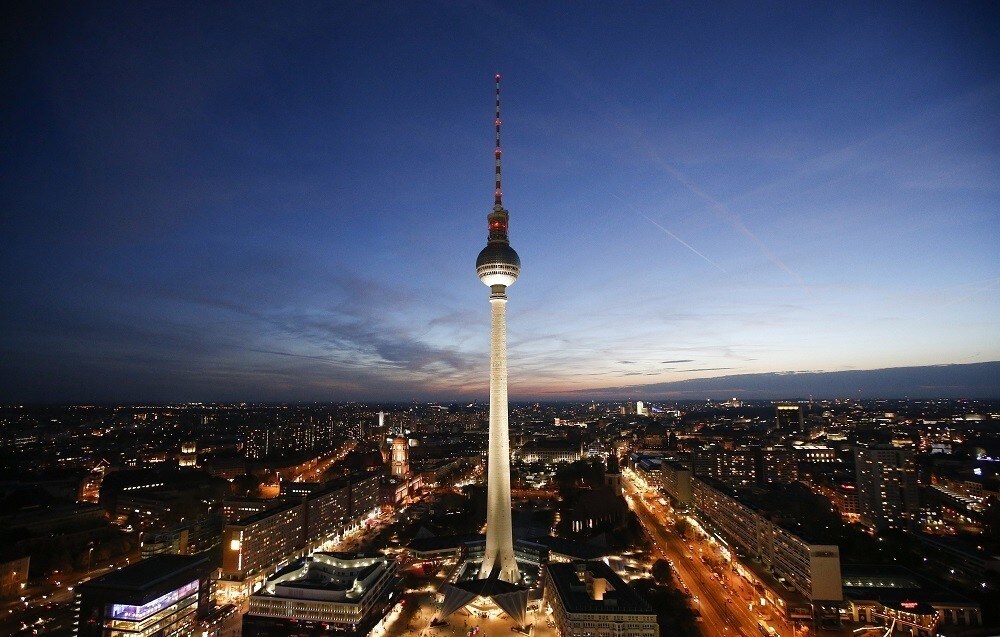
Former Berlin mayor Klaus Wowereit famously called Germany’s hip capital “poor but sexy.” Indeed, according to a new study, Berlin is the only major capital city in Europe that depresses its country’s per capita GDP.
The Cologne Institute for Economic Research set out to see how GDP would be affected if a country had to cope without its capital city (link in German). Without London, Britain would be 11% poorer on a per capita basis. France would lose 15% of per capita income if it didn’t have Paris, where its biggest companies, like Total, Renault, and Peugeot have their headquarters. Greece would take a 20% hit without Athens.

But Germany, the biggest economy in Europe, could do without Berlin, from a financial point of view: the average German would be 0.2% wealthier if they didn’t have to support the relatively poor—but sexy!—city.
Berlin has struggled to recover since the Wall came down in 1989 and the richer western half of the city combined with the poorer east after the collapse of communism. Unemployment in the capital is higher than the national average and Berlin, a city-state, received more government subsidies than any other German state last year.
Although Berlin has reinvented itself as a tech startup hub and is a major tourist draw, Frankfurt remains the financial heart of the country, and the majority of Germany’s mighty industrial giants have their headquarters elsewhere, like Bavaria, home to the likes of BMW and Siemens.


