The U.S. Bureau of Economic Analysis unveiled its latest data release on revised U.S. Gross Domestic Product for the third quarter alongside the initial release of data on corporate profits for the same period. The revised numbers for economic growth look pretty good: GDP grew by 3.9 percent, which is faster than the first estimate of 3.5 percent, largely driven by higher consumption and investment. One of the most interesting parts about today’s release, however, is what the revised GDP data may tell us about corporate profits, investment trends, and economic growth.
Corporate profits rose last quarter by $43.8 billion, with about half of that accrued by financial corporations—even though financial corporations make up only about a quarter of corporate profits overall. Nonresidential investment also rose by about $43 billion last quarter, mostly due to growth in equipment and intellectual property.
So what’s the connection of these two corporate trends to economic growth?
A few weeks ago Paul Krugman published a blog post comparing corporate profits to investments, where he noted a strong disconnect between the two. Corporate profits have been high, but investment has been relatively low. Krugman suggests this could be the result of monopolistic power over access to capital enjoyed by corporations. Because profits and investment rose roughly by the same amount, the gap that Krugman highlighted stayed about the same this quarter.

The latest corporate profit and investment numbers do not fully make the case for or against the trend that Krugman noted, but the rapid growth of profits among financial corporations may provide some more evidence in support of his hypothesis. We should be careful about building up or tearing down narratives about the state of the economy based on a single data release. It may take several more quarters of data to figure out if the patterns that Krugman found are real.
Published in collaboration with Equitable Growth
Author: Carter C. Price is a Senior Mathematician focusing on quantitative analysis of U.S. economic policy at the Washington Center for Equitable Growth.
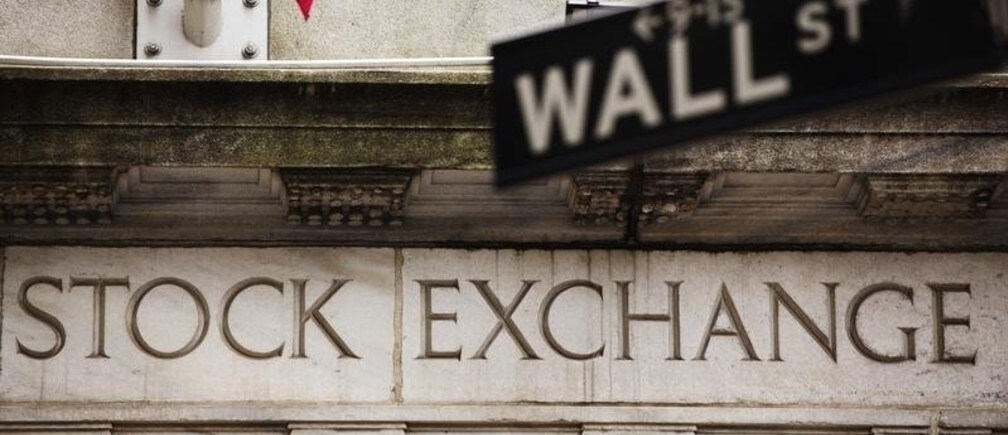
Image: A street sign for Wall Street hangs in front of the New York Stock Exchange May 8, 2013. REUTERS/Lucas Jackson