
When it comes to family earnings, it would appear that secondary earners – the half of a couple who earns less, and who is usually female – bear a higher tax burden than primary earners in many countries, according to the OECD’s latest study, Taxing Wages 2016.
In a special feature, the OECD looks at the potential impact of tax systems on the decision to enter (or re-enter) the workforce. This is particularly relevant for secondary earners who find themselves juggling potential childcare costs, out-of-work income and tax.
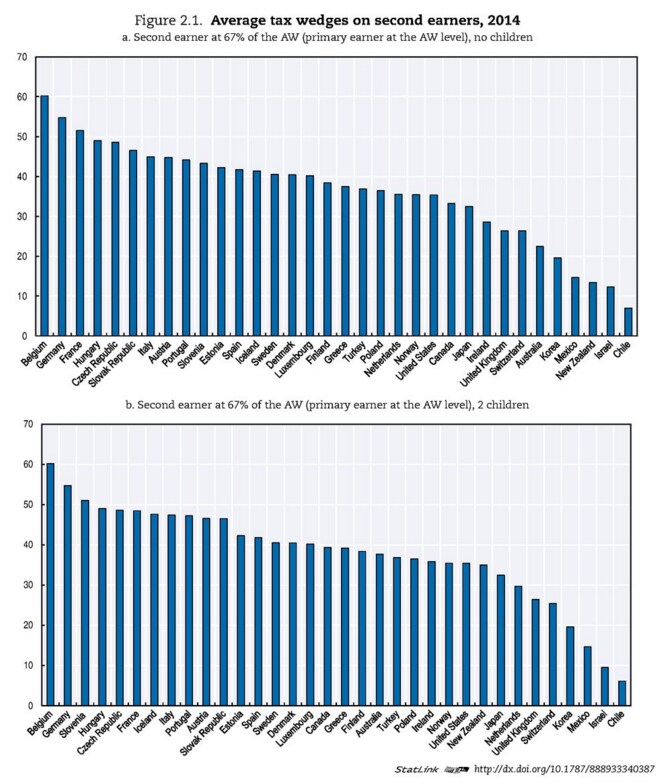
The following charts show the average tax wedges faced by secondary earners, who earn 67% of the average wage. The primary earner in these examples is earning the average wage.
Why do secondary earners pay more tax?
The charts indicate that in many countries the average tax wedge for a secondary earner is higher. For example, in Belgium in 2014, for a couple with no children, the secondary earner’s average tax wedge was 60.2%. For the same period, a married couple with only one earner faced an average tax bill of 40.6%.
The OECD suggests a number of reasons for this. It argues it is “driven not just by the underlying personal income tax (PIT) and social security contribution (SSC) rates, but also by a number of design aspects of PIT systems”.
It might be that a primary earner’s allowance, or tax credit, through having a dependent spouse is lost when the second earner enters the workforce. This is the case in both Slovenia and Canada.
In other countries, the use of family rather than individual taxation increases the tax wedge for the second earner. Under such family-based systems, the secondary earner is effectively paying their tax at a higher level on their country’s income-tax ladder. This is because the primary earner’s income has gained the benefit from the lower levels. The OECD argues that this applies even when tax thresholds are higher for a family.
For example, in Switzerland the average wage of the primary earner, CHF90,000 (or US$93,168), sees the first franc received by the second earner – once their basic allowance is exhausted – taxed at 18.3% as opposed to the zero rate.
Is this making women worse off?
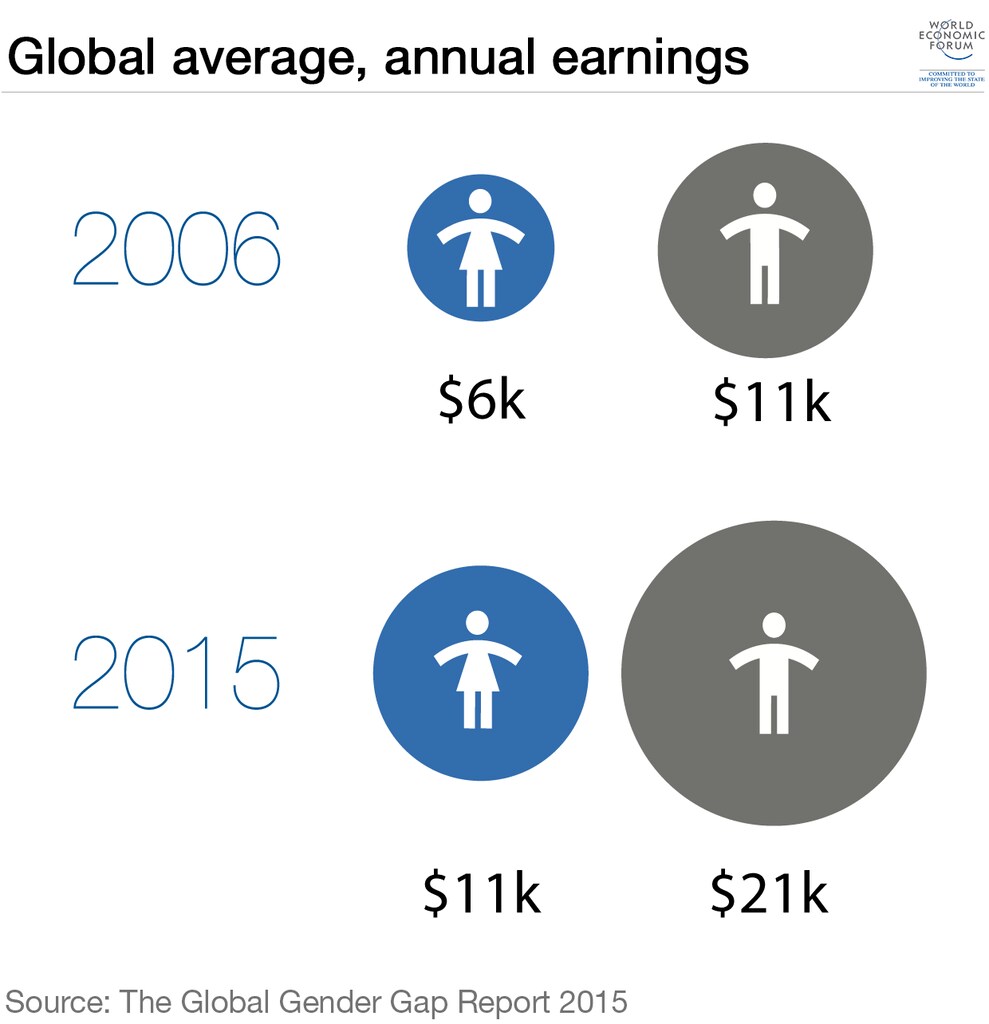
As the Global Gender Gap Report 2015 highlighted, average female earnings continue to lag behind men’s.
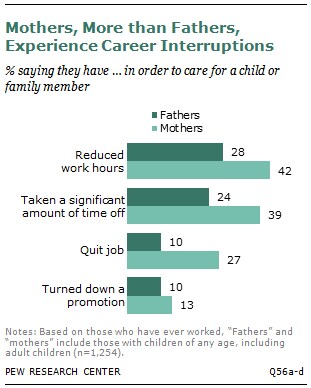
Around the world, women are also more likely to take extended time off work to raise children. According to Pew Research into millennials, 39% of mothers say they have taken a significant amount of time off work to care for a child, compared with 24% of fathers. The same research also suggests that women are more likely to reduce their hours or work part time.
All this suggests that secondary earners are more likely to be women. They are also more likely to be looking to return to the workforce, and therefore more likely to be affected by decisions involving tax, childcare costs or other benefits.
Have you read?
The Global Gender Gap Report 2015
Do women work longer hours than men?
Where do workers pay the most tax?