
Global GDP is expected to increase by 2030, but the gap between the richest and poorest economies is set to stay almost the same.
This visualization by Aron Strandberg uses data from the ERS International Macroeconomic Data Set to show the change in global GDP distribution between 1970 and 2030 looking at the United States, China and India.
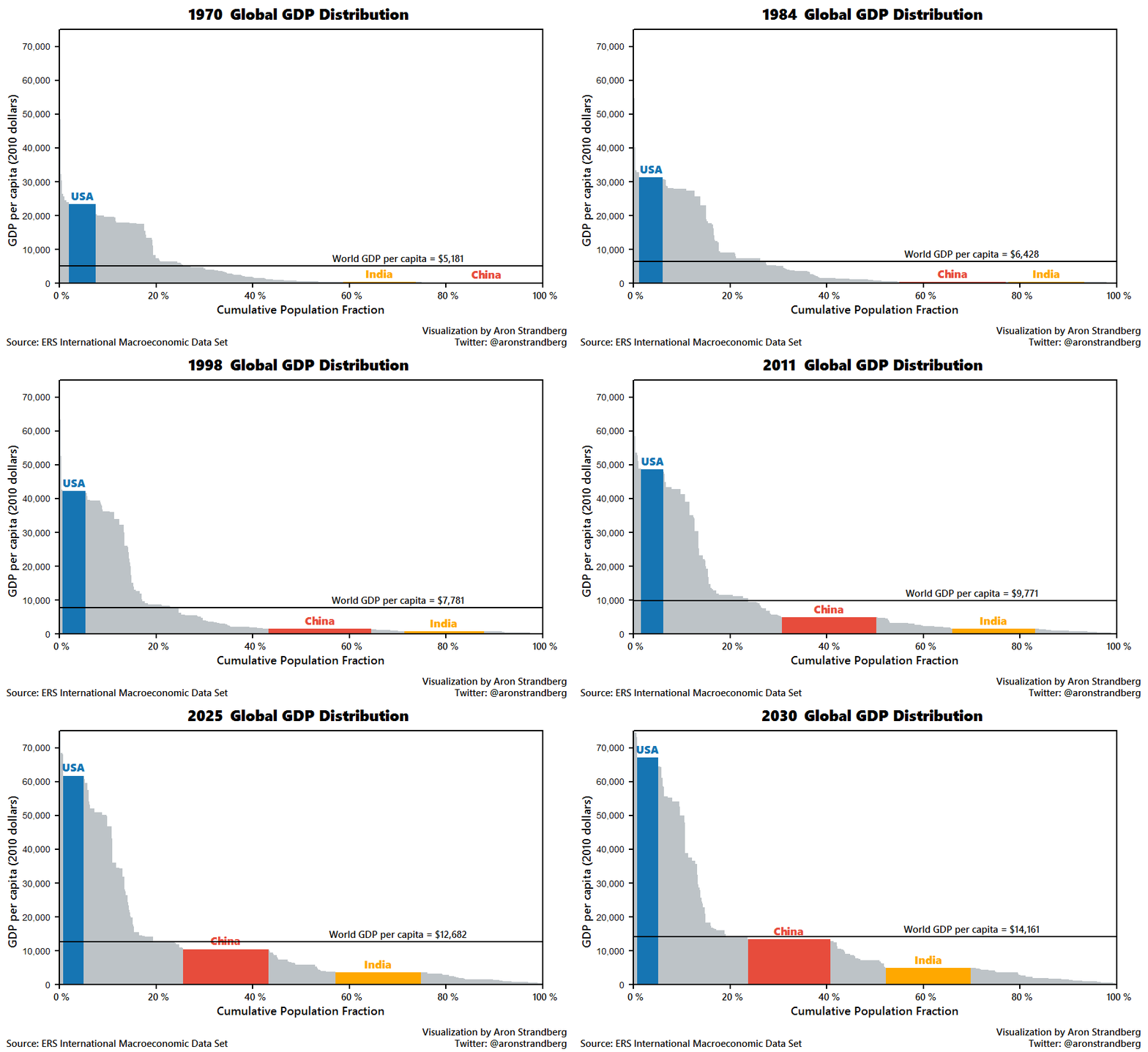
The comparison between 1970 and 2016 shows that global growth has almost doubled, with average world GDP, per capita, growing from around $5,000 to over $10,000. The projected growth for 2030 sees world per capita GDP growing to around $14,000.
The United States continues to grow, consistently well above the global average, maintaining its status as one of the world’s largest economies.
What the visualization also shows is the rapid development of China’s economy, starting behind India in the 1970s, overtaking in the mid 1980s and thereafter consistently growing into a more dominant global economy.
The data predicts China will continue growing, but by 2030 it will still be below the world average. India’s growth has been much slower than China’s, meanwhile, but is predicted to increase over the next 14 years.
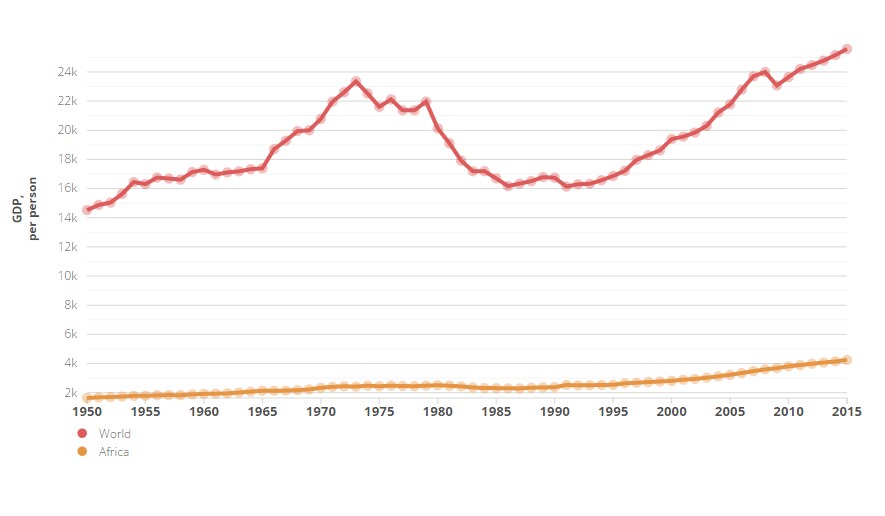
This visualization highlights the overall growth of global economies, with the poorer ones continuing to lag behind. Africa, for example, sees steady but considerably slower growth than the rest of the world, with much lower levels of per capita GDP across the continent.
Source: humanprogress.org
In 2015 in Africa, the average GDP per person was $20,000 less than the global average, at around $4,000. The ERS International Macroeconomic Data Set shows that the average GDP per person in the United States for 2015 was more than $50,000.
Have you read?
The map that shows you how prosperity is changing
This will change the way you see the US economy
What's really happening in the global economy?