
A list of some of the week’s most interesting stories on economic growth and social inclusion.
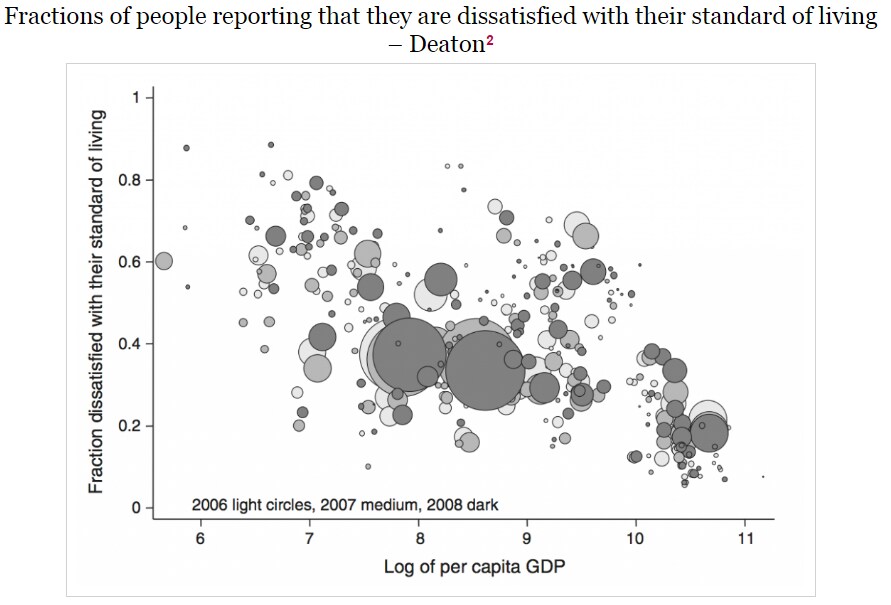
1. Facts and figures. People living in poverty report lower levels of satisfaction with their life. Economic prosperity is an important contributor to greater levels of happiness. (Our World in Data)
2. A nice, easy read on the productivity puzzle. (The New Yorker)
3. This article makes the case that GDP growth has been discredited too much. Higher growth is a sine qua non of improved living standards. (Financial Times)
4. The Greek economic crisis has inspired several books on the issue. Here’s an overview of how some of the main protagonists saw it. (The New York Times)
5. These five opportunities could generate greater economic prosperity in India. (McKinsey Global Institute)
6. How will technology influence inequality – for better or for worse? (World Economic Forum)
7. Sometimes well intended policies for more inclusive economic practices can back-fire and lead to unintended outcomes. Here’s an example of such a policy that prohibits employers from inquiring about criminal histories prior to job interviews. What went wrong? (The Economist)
8. Is the global retirement system heading for a ‘Titanic’ moment? (BloombergView)
9. The US presidential debate this week focused on economic policy plans. Here’s a summary. (The Atlantic)
10. This paper tests Thomas Piketty’s much discussed theory of the drivers of inequality and finds no empirical evidence that supports the dynamics Piketty suggests. (International Monetary Fund)