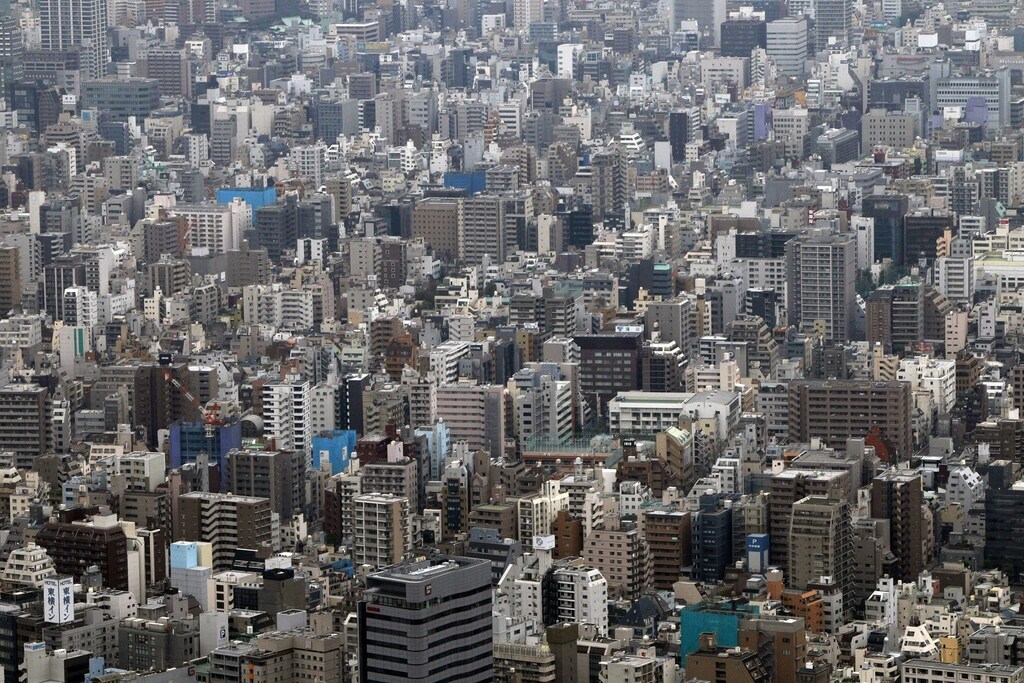
In 1950 it was New York. Today, it’s Tokyo. By 2030? It will be a much bigger Tokyo.
Sixty-five years ago, a population of 12 million was enough to see the Big Apple take the world’s biggest city crown. In just 14 years’ time, Tokyo’s population is forecast to reach 37 million, according to the United Nations.
This would make it the equivalent of the world's 55th biggest country, if you were wondering.
2030’s biggest cities
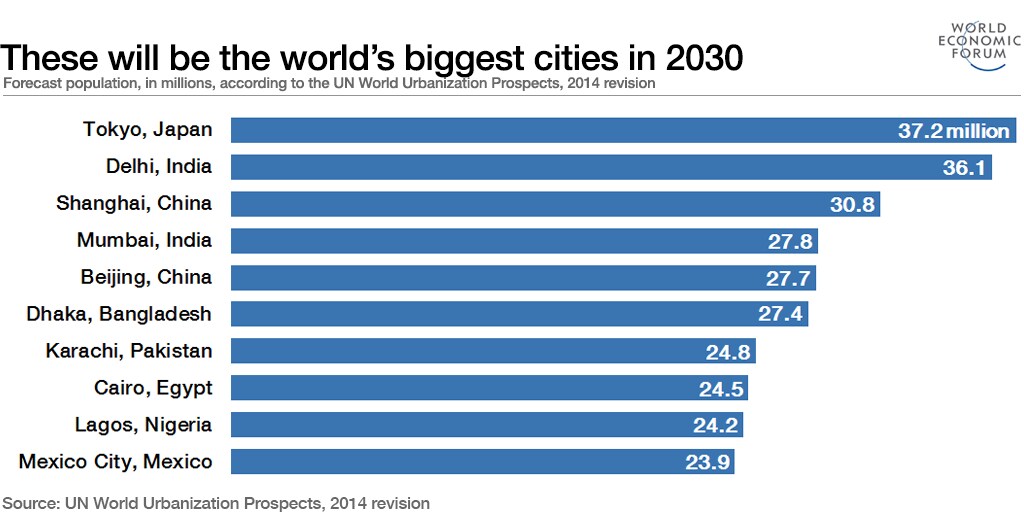
Delhi is in second place. The Indian city’s population is forecast to top 36 million come 2030. It’s population in 1970? Just 3.5 million.
Shanghai completes the top three, with a predicted population of nearly 31 million.
______________________________________________
Have you read?
These are the world’s most liveable cities
These are Africa’s fastest-growing cities – and they’ll make or break the continent
_____________________________________________
With the exception of Tokyo, the top 10 is dominated by cities in emerging and developing economies. A remarkable change from 1950, as the following chart shows.
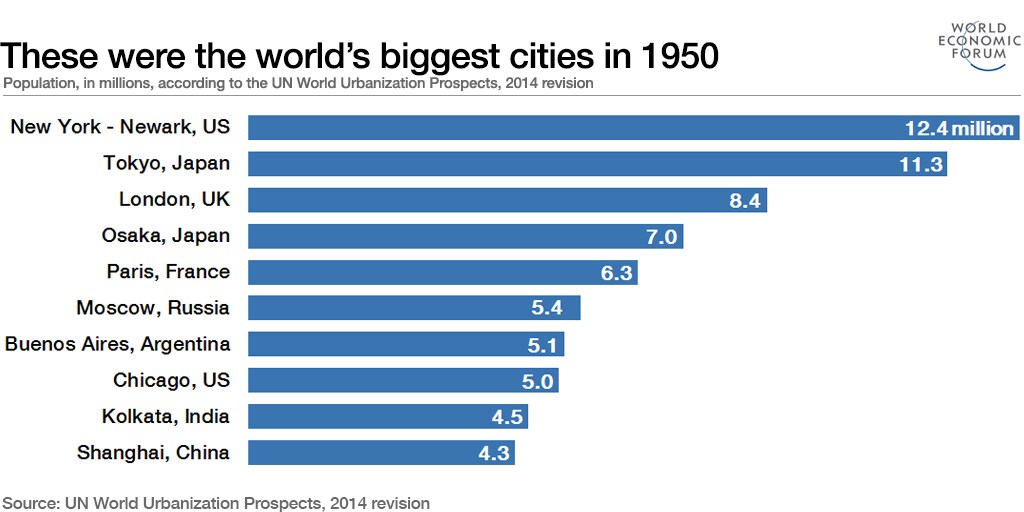
Whereas 12.4 million got you the top spot in 1950, by 2030, this would only be good enough for 30th place.
An urbanizing world
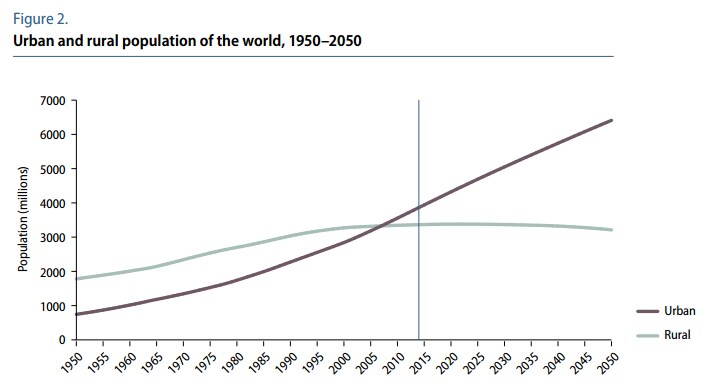
The latest UN World Urbanization Prospects reflects the trends seen in the two charts above.
The world’s urban population has grown rapidly since 1950, increasing from less than 750 million to 3.9 billion in 2014. A further 2.5 billion are expected to be added to this by the middle of the century.
The epicentre of this growth? Asia and Africa. These two regions are urbanizing more rapidly than other regions of the world, according to the report.
All of this now means that a majority of the world’s population live in urban areas.