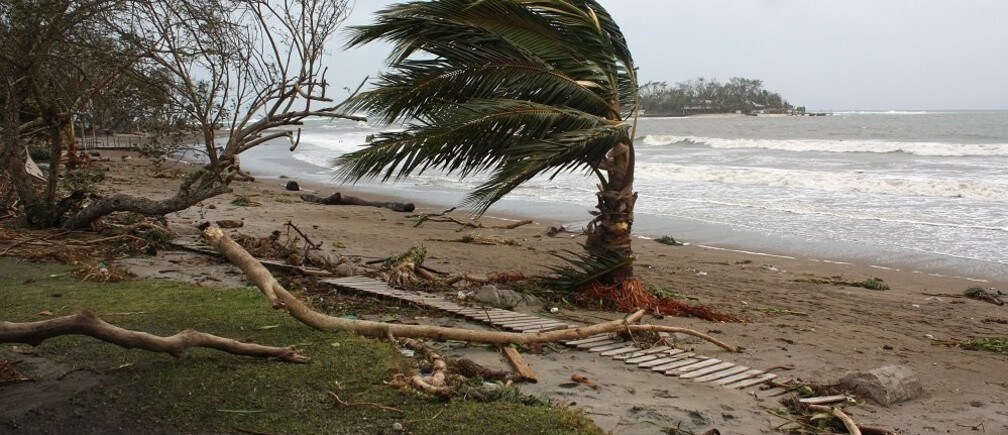
In the last 20 years, storms have killed more people than any other weather disaster.
A joint report from the UN Office for Disaster Risk Reduction and the Centre for Research and Epidemiology of Disaster has outlined the impact of weather-related disasters between 1995 and 2015 around the world. In total, over 600,000 people were killed by weather-related disasters across this period.
The following infographic shows the total number of people killed by each disaster type from 1995 to last year.

Source: UN/CRED
Nearly 250,000 people were killed by storms from 1995 to 2015 – representing some 40% of total deaths. Extreme temperatures caused the second highest number of deaths – 164,000 people. The most frequently occurring natural disaster – flooding – caused the third highest number of deaths at 157,000.
By far the highest number of fatalities were in lower-middle income countries with 89% of global deaths occurring in this bracket. The report does however acknowledge that underreporting in lower income countries skews this result.
The report argues that deaths as a result of storms could be reduced through the use of more effective early warning systems – particularly in poor rural communities. The continued use of cyclone shelters and wind-resistant buildings can also help those at risk.
To keep up with the Agenda subscribe to our weekly newsletter.
Author: Joe Myers is a Digital Content Producer at Formative Content.
Image: A palm tree is damaged on a beach near Port Vila, the capital city of the Pacific island nation of Vanuatu, March 2015. REUTERS/Kris Paras.