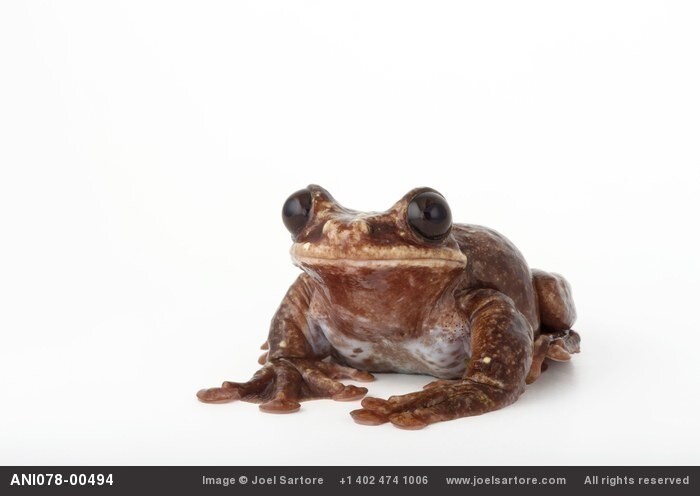
When the Rabbs' fringe-limbed treefrog in the video below dies, the entire species will be gone for ever.
He is the last known surviving member of the species (the last female died in 2009), and when he breathes his last, Ecnomiohyla rabborum will fade into memory.
But the Rabbs' treefrog is just one of many critically endangered species around the world, and the list is growing at an alarming rate. This is all part of what is known as the "Sixth Mass Extinction", a massive die-off of both plants and animals worldwide.
This has led to the creation of The Photo Ark, a multi-year documentary project which captures portraits of the world’s most endangered species before they disappear – and hopefully inspires people to save them. Our lonely Rabbs' fringe-limbed treefrog was photographed as part of the project.
Photographer Joel Sartore, the founder of the project, says he was inspired by the works of artists like John James Audubon, who painted now extinct birds during the 19th century. "We wouldn't know anything about these birds, really, if he hadn't been around," Sartore explained to participants at the World Economic Forum's Annual Meeting this year. Borrowing from Audubon and early photographers who documented Native American cultures in the face of European colonialism, Satore has set out to document endangered species on the brink of the Sixth Mass Extinction.
The Photo Ark, sponsored by National Geographic, aims to document every captive species on Earth. It is estimated that half of those will disappear entirely within the coming decades. "The goal," Sartore says, "is to get the public to care and be moved to save species while there's still time."
Why should you care?
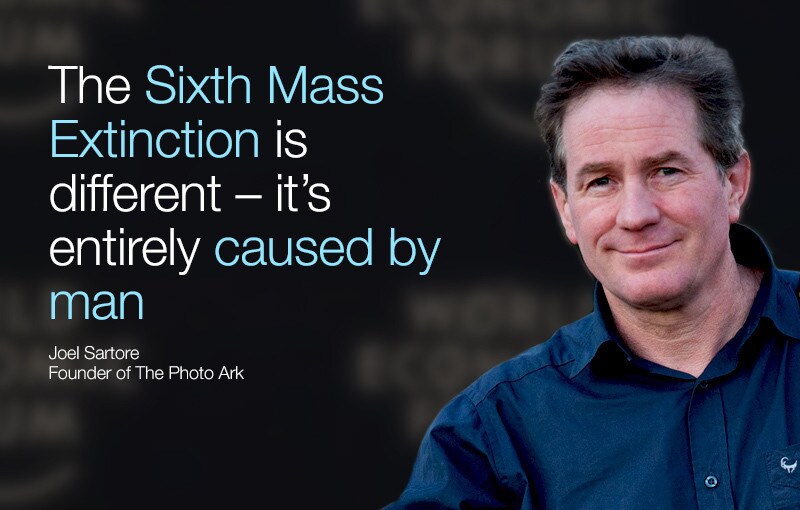
While it is of course true that there have been five other mass extinctions in our planet's history, this one is different.
"It’s entirely caused by man," says Sartore. Through climate change, pollution, poaching, over-consumption and habitat destruction, mankind is placing a burden on the planet that other species can simply no longer endure. If there is no reversal of this trend, Sartore warns, we could possibly eliminate half of all life on the planet by the end of the century.
What can you do to help?
It's not too late to change things. Expanding tracts of wilderness can help to keep the planet in balance, while transitioning to sustainable forms of energy will be key to halting the pollution and destruction of our ecosystems. These are massive goals and it will take global cooperation to achieve them. But there are things we can do as individuals, and our power lies in our pockets.
"The power of the dollar is real, and it moves mountains if enough people pay attention," Sartore says. "Know that every time you break out your purse or your wallet, you’re saying to a retailer: 'I approve of what this was made from, the distance it was shipped to me, and I want you do to it again and again.'"
If you care about endangered species, meanwhile, you should visit them.
"If you want to save mountain gorillas, go see them ... If you love lions, go see them. Ecotourism brings real dollars to local people." During Davos, Sartore explained how ecotourism was creating a shift away from destructive employment. People who once had jobs cutting down forests or as cattlemen who would poison lions are today being hired as guides. By participating in ecotourism, we are encouraging this transition. "In our capitalistic world, things that pay, stay."
Have you read?
The Sixth Mass Extinction is upon us. And it's our fault
How many species face extinction from climate change?
Which country has the most endangered animals?