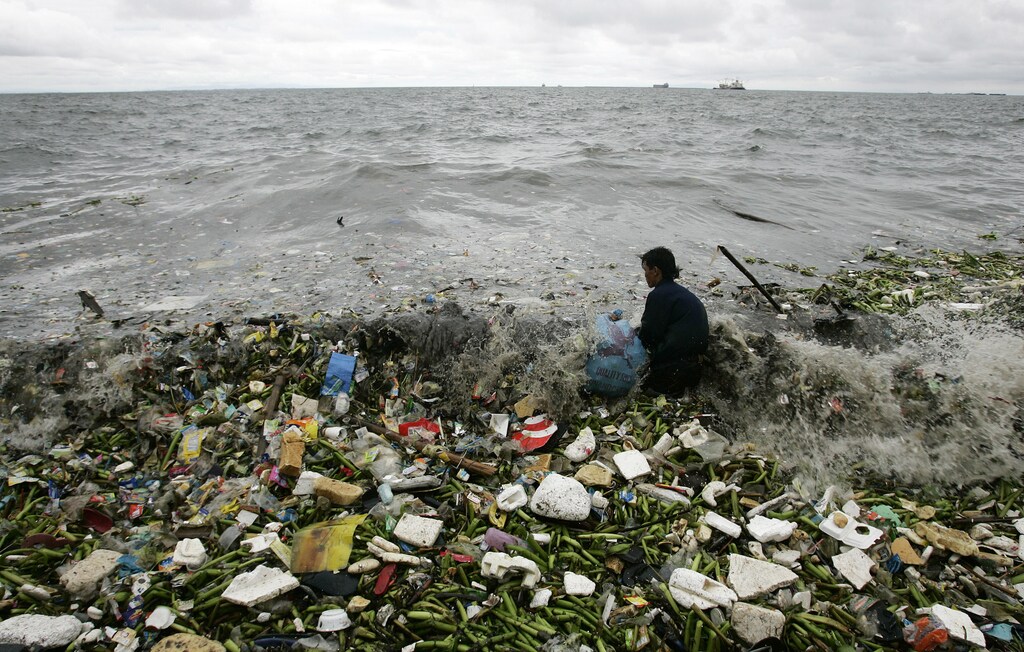
Five trillion individual pieces, weighing a total of 268,000 tonnes. When the numbers are so big, it’s difficult to take in the full scale of the problem of plastic waste in the world’s oceans.
But this map created by data visualization firm Dumpark makes it crystal clear.
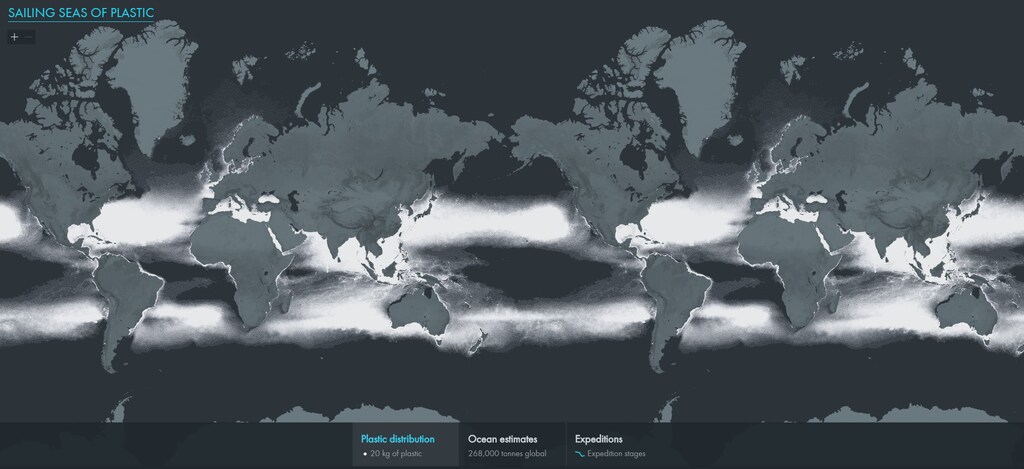
Each white dot represents 20 kilograms of plastic – and when you zoom in on the original interactive version, you can see just how many dots there are.
The map was created using data from a 2014 research paper by Marcus Eriksen. Of course, coming to an exact figure on the amount of plastic polluting our oceans is not easy. Previous research on the topic has used data from smaller areas to make global projections – with results that have been called into question.
Eriksen spent six years travelling the world taking samples to estimate the overall amount of plastic floating in the water. The most common type he found were so-called “microplastics” – tiny fragments that have broken off from larger items, and "microbeads" from beauty products. These made up more than 90% of the plastic floating in the sea.
But he also came across larger items. “We found an astonishing number of those little balls in deodorant roll-ons,” Eriksen said in his report. “The bigger items tend to be solid plastic: toothbrushes, army men, bouncy balls, milk jugs, buckets …”
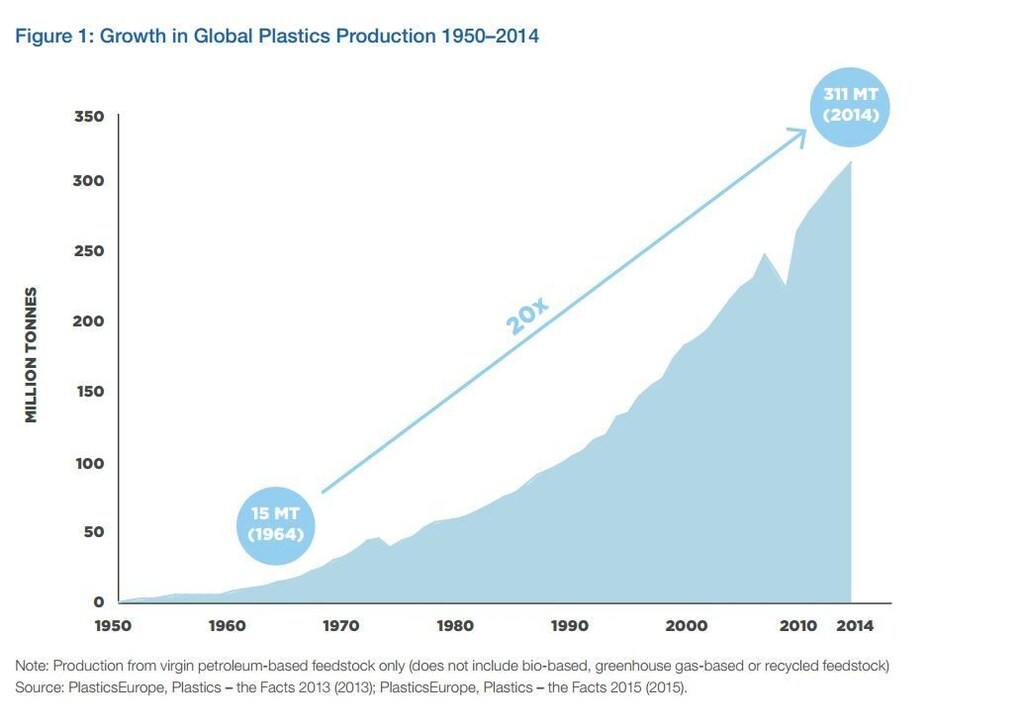
Even a quarter of a million tonnes might be a dramatic underestimate of the total amount of ocean plastic. Marcus Eriksen’s report only examined surface waste; up to 70% of rubbish sinks to the ocean floor, according to one study.
Have you read?
7 compelling reasons to clean up the sea
Have our oceans reached a tipping point?