In a circular economy, waste is reduced, reused, recycled or remade.
If the world adopts a circular economy approach, by 2050, the volume of municipal solid waste could reduce from more than 4.5 billion tonnes a year to less than 2 billion tonnes, according to a new UN report.
The World Economic Forum’s circular economy initiative Consumers Beyond Waste aims to free the world of plastic waste by driving the adoption of reusable packaging.
Waste from homes and businesses, including food waste, packaging, electronics, furniture and clothing, is growing.
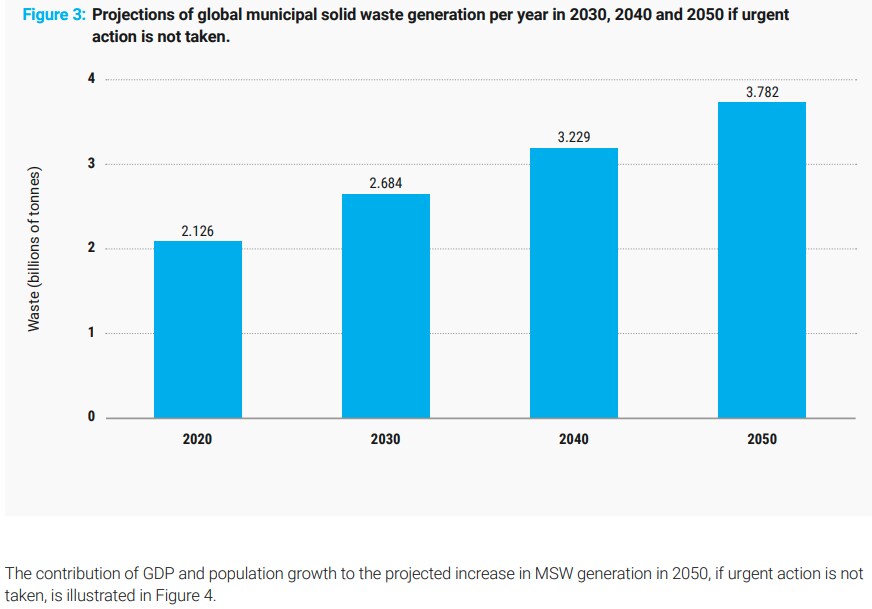
Every year, more than 2 billion tonnes of municipal solid waste like this is generated globally – an amount that would stretch to the moon and back, according to a new report.
And as economies and populations grow, this waste is predicted to grow more than 50% to 3.8 billion tonnes a year by 2050.
This is bad news for Earth – because waste contributes to the “triple planetary crisis” of climate change, biodiversity loss and pollution.
And it’s why a circular economy is so essential.
What is a circular economy?
In a circular economy, products and materials are designed to be reused, recycled, recovered or remade, to keep them in the economy for as long as possible. Waste is avoided or minimized. Greenhouse gas emissions are cut as a result, along with unsustainable use of the planet’s resources.
The Global Waste Management Outlook 2024, published by the United Nations Environment Programme (UNEP) and the International Solid Waste Association (ISWA), underlines the critical role of this circular economy approach in minimizing waste.
The report looks at three scenarios:
1. Continuing with current waste generation and management practices.
2. Improving management and reducing waste.
3. Moving to a fully zero waste circular economy model, where 60% of all municipal solid waste – the rubbish local authorities collect from homes and businesses – is recycled and the rest is managed safely.
How the circular economy can help to cut waste
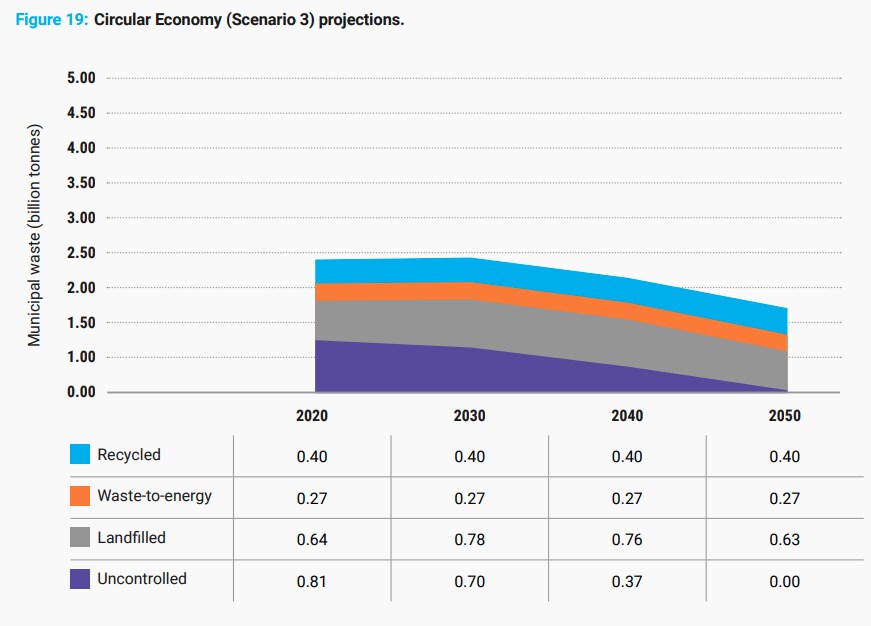
If the world adopts the third scenario, by 2050, a circular economy approach could reduce the volume of municipal solid waste from more than 4.5 billion tonnes a year to less than 2 billion tonnes, the report finds.
The same scenario also eradicates uncontrolled waste – waste that is dumped or burned in open fires – and cuts landfill waste by more than 40% to around 630,000 tonnes by 2050.
This would not only help tackle the climate crisis, but would improve human health, too.
The heath case for a circular economy in waste
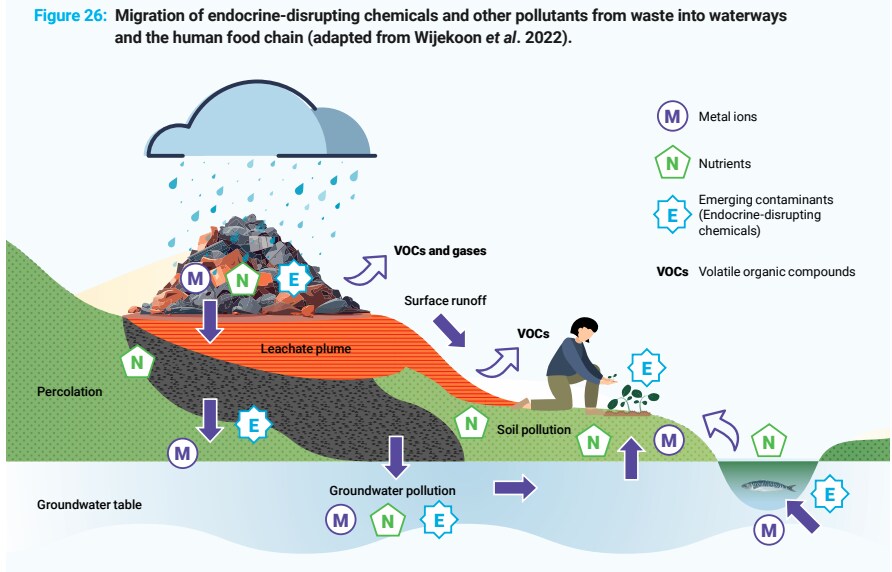
Waste consumer products such as toys, pharmaceuticals, personal care products, food additives and plastic debris can contaminate the environment with toxic compounds that get into waterways and the human food chain.
These contaminants include compounds that mimic, block, or interfere with the body's hormones, known as endocrine-disrupting chemicals, the report says.
Endocrine-disrupting chemicals, such as cadmium, asbestos and arsenic, increase health risks including cancer, cognitive conditions, obesity and reproductive impairment in both women and men.
Circular waste practices cost less
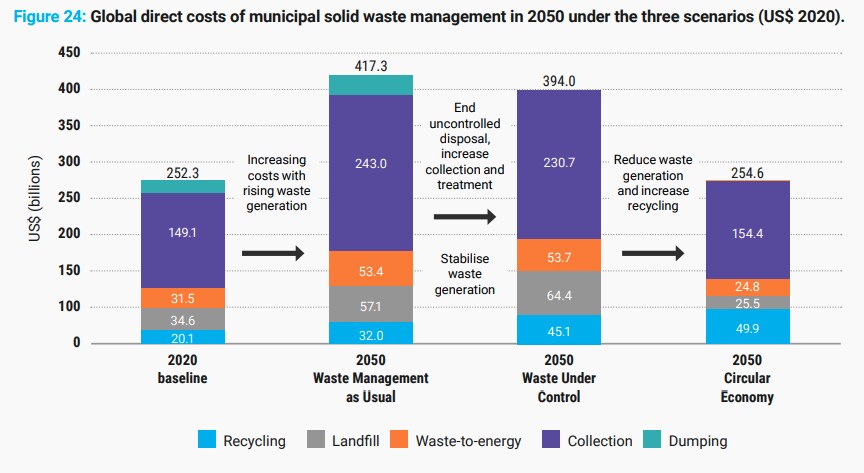
A circular economy approach to the management of municipal solid waste would also bring big cost savings, the report finds.
Continuing with current waste management practices would cost more than $417 billion a year by 2050 – a rise of $165 billion from 2020 costs.
In the circular economy scenario, which includes reducing waste and increasing recycling, the estimated costs would be less than $255 billion a year.
This circular approach would prevent “runaway waste management costs” and also deliver a “vastly better environmental performance,” the report’s authors say.
World Economic Forum projects are helping to drive circular economy change
The World Economic Forum has various circular economy initiatives underway, including the Circular Transformation of Industries Initiative, which looks beyond waste management to wider systems change across industry.
Partnerships are key to driving circularity in industry, the Forum says. This includes collaborating to share circular economy knowledge, case studies, products and materials.
Another Forum circular economy initiative is Consumers Beyond Waste. This aims to free the world of plastic waste by driving the adoption of reusable packaging.
The Consumers Beyond Waste initiative is supported by a community of consumer companies, start-ups, non-profit organizations and governments, including Coca-Cola, Greenpeace, Walmart and the United States Environmental Protection Agency.


