
The gender gap in Silicon Valley is well documented, but by no means is it universal.
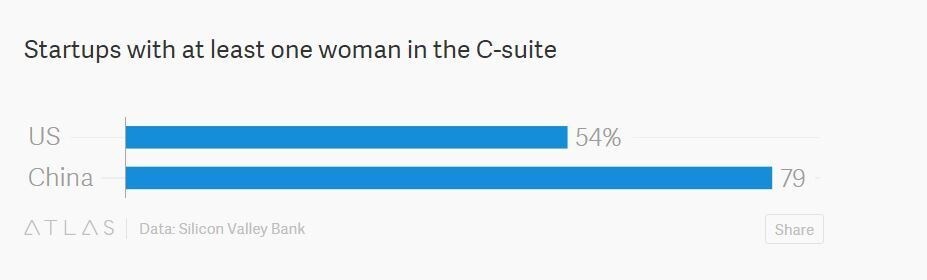
Take China, for example. According to a new report from Silicon Valley Bank (pdf) released March 10, 79% of Chinese startups have at least one woman in the C-suite. In contrast, only 54% of startups in the US have any female representation among its most senior leadership. More than 900 startups were polled for the survey.
One-third of the founders of Alibaba, one of China’s, if not the world’s, most successful startups, were women.
Though it can be tough for women to advance to senior positions in China, technology is one of the industries with the highest representation of female leaders, according to a 2014 report from PricewaterhouseCooper’s Strategy&. In an interview with Shanghai Daily, the firm also noted that many women choose to strike out on their own and become entrepreneurs precisely because opportunities for advancement are limited.
The report from Silicon Valley Bank highlights another major difference between startups in the US and China. Among the US startups that were polled, more than half said their long-term goal was getting acquired by another company while only 17% aimed to go public.
In contrast, 62% of Chinese startups said they hope to seek an initial public offering in the long term and only 5% wanted to be acquired.