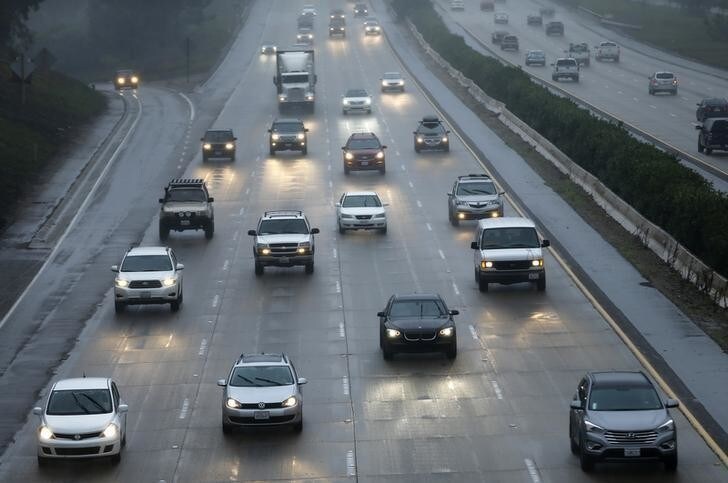
Self-driving cars tend to spur the selfish parts of our imagination. When we read the latest article about Google’s or Tesla’s self-driving experiments, we picture quiet naps on the commute home from work as the steering wheel turns in front of us: An idyllic moment in the future of personal transport. But despite our earnest pipe dreams, the biggest and most profitable changes of the self-driving revolution will likely start not with sedans, but with semi-trucks.
A group of former employees from Google, Tesla, Apple, and other big Silicon Valley hitters want to bring self-driving technology to the trucking industry, but building a whole new truck is not in their plans. The people behind Otto Motors, a San Francisco-based transportation company, hope that self-driving technology can become an integral part of the trucking business, and they believe that the right way to accomplish that goal is to develop technology that can be built into ready-made trucks.
Otto Motors already sells a number of small, self-driving commercial transport products that can move materials around pre-mapped private facilities like warehouses or storage centers. The company hopes self-driving truck technology will expand the same kind of convenience and efficiency onto public roads.
Techonomy CEO David Kirkpatrick appeared on Bloomberg News opposite Otto co-founder Lior Ron earlier this week to discuss Otto’s potential future. Watch the video here.