Crossing fields
Artificial intelligence is one of the greatest goals of the 21st century. Major developments in AI do astound, machines learning how to turn words into images and how to beat world class players in Go.
Who would have known AI can also spot cancer?
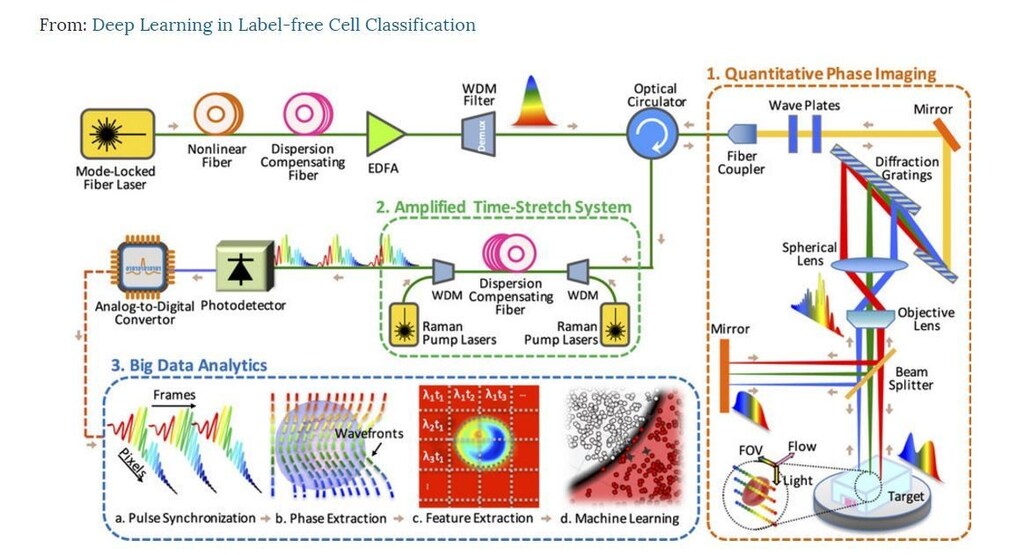
A new microscope, developed by researchers from UCLA, uses AI in helping detect and spot blood samples with cancer cells. Faster and more accurate than its contemporary techniques, it can analyze 36 million images every second without damaging the blood samples.
The new microscope features something called “photonic time stretch”. Essentially, the microscope takes pictures of blood cells with the help of flashing lasers. Alongside optics that boost clarity within images, the new microscope can track information not possible in the past. Then, the AI uses deep learning to distinguish the difference between healthy and cancer riddled white blood cells.
The photonic time stretch microscope images cells without causing them harm and can identify over two dozen physical characteristics, including: biomass, granularity and size.
A cut above the others
Other cancer-spotting techniques go one of two paths. First one is through markers that are added to blood samples, attaching biological labels to damaged cancer cells. This allows instruments to see things easier and clearer. However, this process also destroys the sample, since the markers damage the cells they attach to. Retesting is impossible with this method.
The other method is without markers, where cells are identified without labels. While this does not damage cells, it has a lower success rate, since misidentification (normal cells flagged as damaged) occurs more.
The photonic time stretch method promises a much better chance of pinpointing cancer cells early on, allowing for quicker treatment to stop the spread. A data-driven diagnosis improves the availability of new treatments and diagnosis.
The study was published in the journal Nature Scientific Reports.