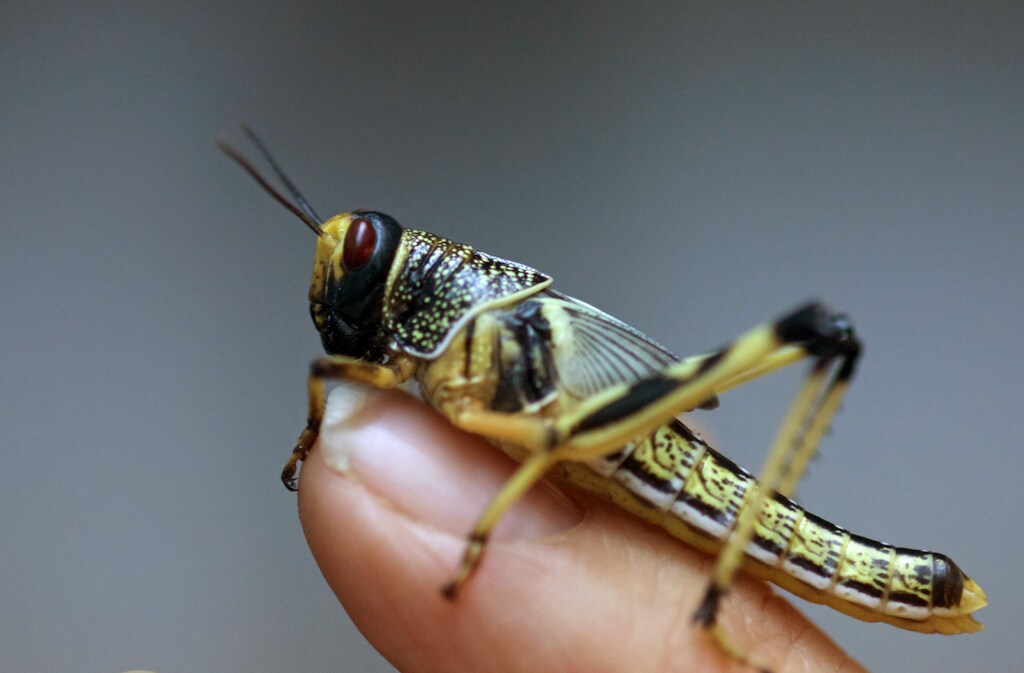
Researchers at Washington University in St. Louis hope that in the future, cyborg locusts could play an important role in defense in national security.
Baranidharan Raman, assistant professor of biomedical engineering, and his team are actually biologically engineering locusts to be able to detect the scent of explosives and let us know.
The project is being done under a 3-year grant funded by the Office of Naval Research.
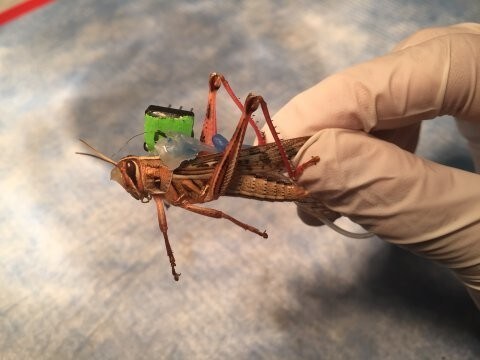
Because locusts detect smells through their antennae, the researchers will implant electrodes into the locusts’ brains to read the electrical activity passing through their antennae. To transmit this electrical activity data, each insect will be equipped with a tiny backpack that acts as a transmitter.
The scientists are also experimenting with adding silk to the locusts' wings to convert light into heat. This would allow the operators to control the flight of the insects, effectively turning them into little remote-controlled drones.
Why locusts?
Nature still has the upper hand over technology when it comes to detecting smells.
“Biological olfactory systems are still the gold standard for chemical sensing — think sniffer dogs," Raman told Business Insider. "The idea here is to use a simpler biological system, hence, the choice of insects for this study.”
Raman's team previously had been working to understand the insect's sense of smell when they discovered that locusts can be trained to detect specific scents, even when there are other distracting smells around them.
The size of locusts also part of the reason they were chosen. “These insects are an engineering marvel, as they have so much functionality packaged into portable, miniaturized sizes," Raman said.
And unlike some other insects, locusts can survive this type of procedure. “They are sturdy and robust," he explained. "[They are] one of the few insect species that can survive the surgery to implant electrodes in their brain.”
Raman said his team hopes to reach the initial prototype testing phase with their cyborg locusts in 1-2 years. So it will still be a while before we find out if these creatures can be integrated into the future of this country’s defense.
Read more:
New York City is bringing out new kinds of bomb-sniffing dogs ahead of July 4th weekend