Ethiopians consider religion most important to who they are, according to Pew Research Center data.
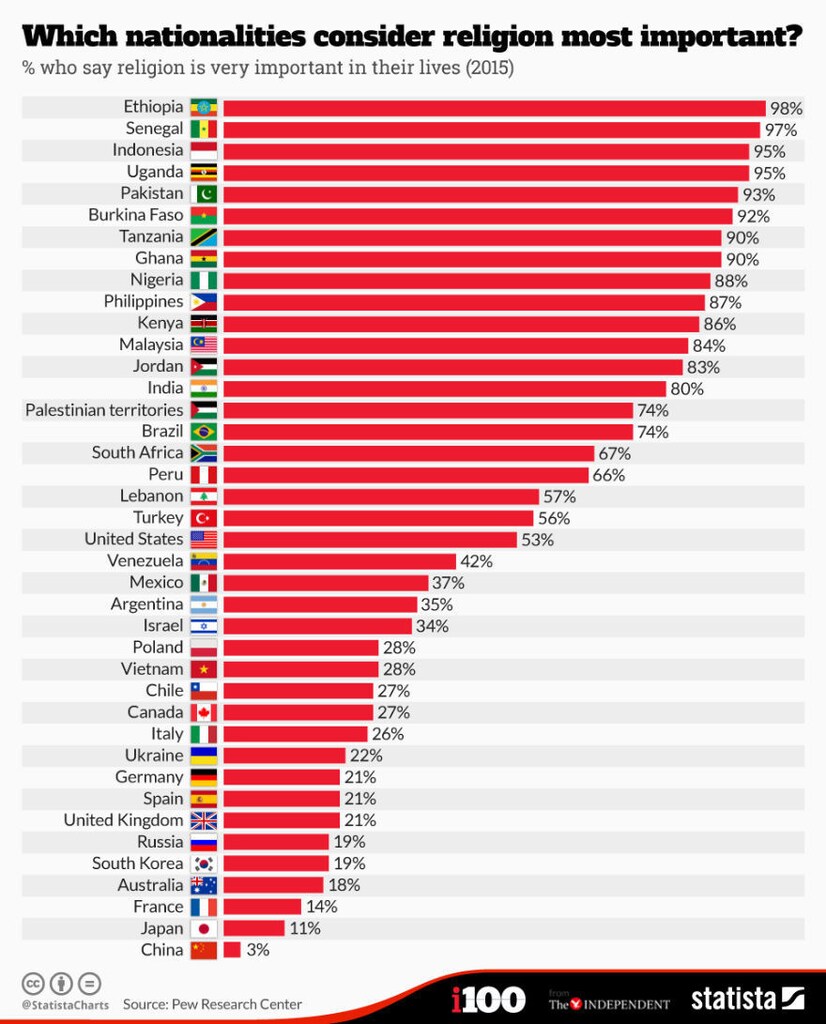
The 2015 Global Attitudes survey looked at how people around the world feel about religion. The survey found that 98% of Ethiopians consider religion a very important part of who they are.
Source: Statista
In Ethiopia, nearly all of those questioned said that the Ethiopian Orthodox Church was a very important part of who they are. Another African nation, Senegal, follows in second place. In the predominantly Muslim nation, 97% of the population consider religion an important part of who they are.
Other nations where more than nine in 10 people feel strongly about religion include Indonesia, Pakistan and Burkina Faso.
The bigger picture
Overall, religion is more important to people in the developing world, with the world’s major economies returning much lower percentages. The United States is an exception to this – over half of Americans consider their religion important to who they are.
In many of the world’s economic powerhouses, the number of people who consider religion important is around 20% or less. For example, in the United Kingdom and Germany only around one in five people said religion was very important in their lives.
The Chinese feel least strongly about religion by some distance – fewer than one in 20 people said it was very important.
The future of global religion
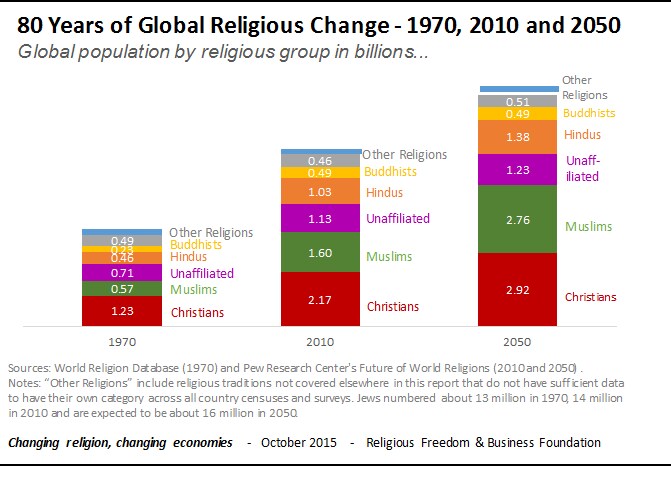
Changing global demographics and populations will see the global religious landscape change significantly by 2050.
By this time the global Muslim population will have nearly caught up with Christians, according to Pew research. Conversely, the number of people who are unaffiliated with any religion will increase much more slowly. This will result in them representing a much lower percentage of the global population.
Have you read?
How religious will the world be in 2050?
How religion can make economic growth fairer
Religion holds women back. Or does it?