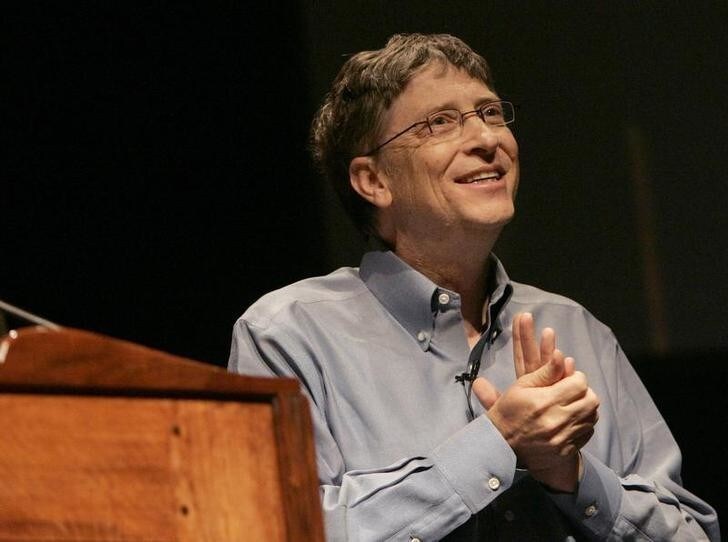
Bill Gates se ha convertido en una poderosa influencia en el mundo editorial. Un respaldo del filántropo y cofundador de Microsoft puede provocar picos de ventas tangibles, similares al boleto dorado que antes conllevaba ser elegido para el club de lectura de Oprah.
Entonces, ¿qué lee Gates? Quartz recopiló manualmente los 186 libros recomendados en su blog, que se remonta a enero de 2010, y los organizó por temas. Hemos incluido todos los títulos, incluso aquellos de los que Gates fue en su mayoría crítico, como The Rational Optimist. Pero esto es relativamente raro; Gates normalmente solo escribe en su blog sobre libros que recomienda.
No hemos incluido los libros que Gates ha recomendado en entrevistas pero no en su blog, como los dos libros que considera esenciales para entender la IA: Superintelligence de Nick Bostrom y The Master Algorithm, de Pedro Domingos.
Gates lee poca ficción, como admite abiertamente, pero ocasionalmente se acerca a la literatura juvenil, las memorias humorísticas y las novelas gráficas. Como copresidente de la Fundación Bill y Melinda Gates, suele recomendar en su blog libros sobre desarrollo, pobreza, enfermedades y educación.
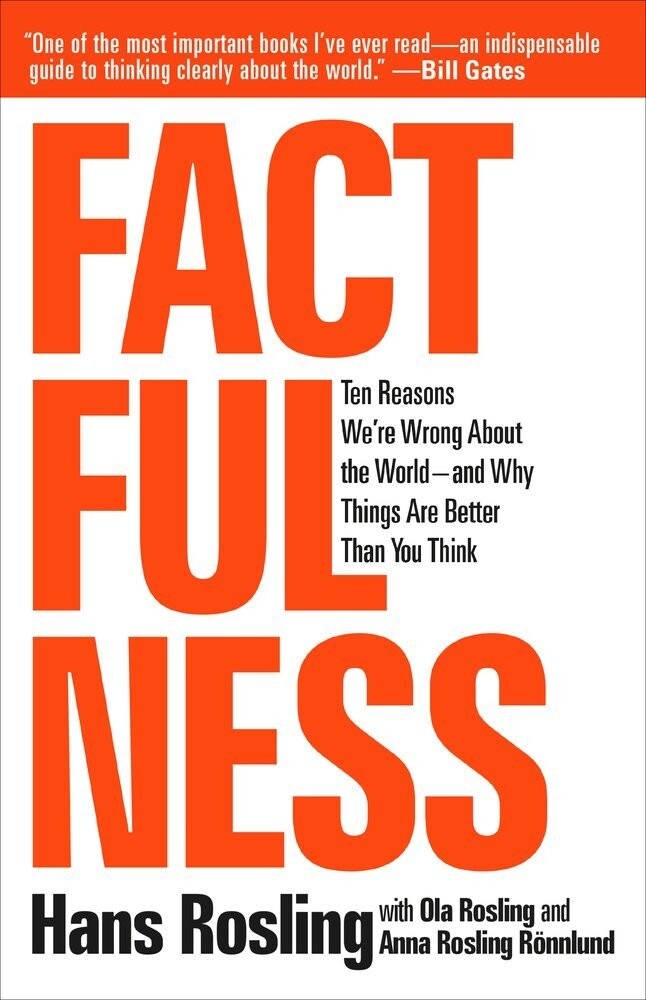
Gates, por supuesto, lee libros sobre temas científicos como la biología y la física, pero también es un gran aficionado a los libros que ofrecen un marco científico o matemático para entender el mundo, como What If? Serious Scientific Answers to Absurd Hypothetical Questions, de Randall Munroe, de xkcd. Muchos de los libros que respalda Gates, especialmente los que se centran en el largo arco de la civilización humana, tanto en su pasado como en su futuro, defienden una perspectiva optimista. Factfulness: Ten Reasons We’re Wrong about the World—and Why Things Are Better than You Think, libro del fallecido Hans Rosling, su hijo y su nuera, hace ambas cosas: defiende un optimismo sobre el mundo a través de de principios de un pensamiento científico sólido, y Gates lo respaldó con firmeza este año.
Vaclav Smil es el autor que Gates más ha mencionado en su blog. Smil es un académico emérito muy prolífico de la Universidad de Manitoba, en Canadá, que escribe, entre otros temas, sobre energía y política pública. A lo largo de los años, Gates ha recomendado tantos libros de Smil que justifican su propia categoría.
En el conjunto de las cosas, sorprendentemente Gates no recomienda con frecuencia libros sobre el éxito empresarial ni sobre tecnología digital.
Estos son todos los libros, con la clasificación de Quartz:
Historia política y biografía
Evolución humana y civilización
Gran tecnología e invención
Pensamiento matemático y científico
Negocios
Biografía
Memorias
Ficción
Libros de Vaclav Smil
Desarrollo y ayuda exterior
Educación
Ciencia
Cambio climático y energía
Economía y desigualdad de la riqueza
Enfermedades y salud pública
Liderazgo y gestión
Felicidad, psicología y propósito
Tenis
Varios
Historia política y biografía
A Full Life: Reflections at Ninety, de Jimmy Carter
Being Nixon: A Man Divided, de Evan Thomas
The Bully Pulpit: Theodore Roosevelt and the Golden Age of Journalism, de Doris Kearns Goodwin
Deng Xiaoping and the Transformation of China, de Ezra Vogel
A Nation of Wusses: How America’s Leaders Lost the Guts to Make Us Great, de Ed Rendell
Titan II: A History of a Cold War Missile Program, de David K. Stumpf
Evolución humana y civilización
Homo Deus: A Brief History of Tomorrow, de Yuval Noah Harari
Sapiens: A Brief History of Humankind, de Yuval Noah Harari
The Vital Question: Energy, Evolution, and the Origins of Complex Life, de Nick Lane
Enlightenment Now: The Case for Reason, de Steven Pinker
The Better Angels of Our Nature, de Steven Pinker
The Sixth Extinction: An Unnatural History, de Elizabeth Kolbert
The World Until Yesterday: What Can We Learn from Traditional Societies?, de Jared Diamond
Collapse: How Societies Choose to Fail or Succeed, de Jared Diamond
Guns, Germs, and Steel: The Fates of Human Societies, de Jared Diamond
Abundance: The Future Is Better Than You Think, de Peter Diamandis y Steven Kotler
Big History: From the Big Bang to the Present, de Cynthia Brown
Origin Story: A Big History of Everything, de David Christian
Limits to Growth: The 30-Year Update, de Donella Meadows, Jorgen Randers y Dennis Meadows
Gran tecnología e invención
The Grid: The Fraying Wires Between Americans and our Energy Future, de Gretchen Bakke
Sustainable Materials with both Eyes Open, de Julian M. Allwood y Jonathan M. Cullen
The Most Powerful Idea in the World: A Story of Steam, Industry and Invention, de William Rosen
The Grid: A Journey Through the Heart of our Electrified World, de Phillip F. Schewe
The Path Between the Seas: The Creation of the Panama Canal, 1870-1914, de David McCullough
The Box: How the Shipping Container Made the World Smaller and the World Economy Bigger, de Marc Levinson
Pensamiento matemático y científico
How Not to Be Wrong: The Power of Mathematical Thinking, de Jordan Ellenberg
The Magic of Reality: How We Know What’s really True, de Richard Dawkins
What If? Serious Scientific Answers to Absurd Hypothetical Questions, de Randall Munroe
How to Lie With Statistics, de Darrell Huff
Thing Explainer: Complicated Stuff in Simple Words, de Randall Munroe
13 Things that Don’t Make Sense, de Michael Brooks
Factfulness: Ten Reasons We’re Wrong About the World—and Why Things Are Better than You Think, de Hans Rosling, Anna Rosling Rönnlund y Ola Rosling
The Signal and the Noise: Why So Many Predictions Fail—but Some Don’t, de Nate Silver
Negocios
Business Adventures: Twelve Classic Tales from the World of Wall Street, de John Brooks
Shoe Dog: A Memoir by the Creator of Nike, de Phil Knight
Tap Dancing to Work: Warren Buffett on Practically Everything, de Carol J. Loomis
Poor Charlie’s Almanack, de Peter D. Kaufman y Ed Wexler
Hit Refresh: The Quest to Rediscover Microsoft’s Soul and Imagine a Better Future for Everyone, de Satya Nadella
Science Business: The Promise, the Reality, and the Future of Biotech, de Gary P. Pisano
Biografía
Einstein, de Walter Isaacson
Broken Genius, de Joel Shurkin
Leonardo da Vinci, de Walter Isaacson
Steve Jobs, de Walter Isaacson
Memorias
Born a Crime, de Trevor Noah
Lo mejor que pudimos hacer, de Thi Bui
Créeme, de Eddie Izzard
Hipérbole y media, de Allie Brosh
Sobre la inmunidad: una inoculación, de Eula Biss
Cuando el aliento se convierte en aire, de Paul Kalanithi
Todo sucede por una razón y otras mentiras que he amado, de Kate Bowler
El coste de la esperanza, de Amanda Bennett
Ficción
El corazón, de Maylis de Kerangal
El simpatizante, de Viet Thanh Nguyen
Seveneves, de Neal Stephenson
El efecto Rosie, de Graeme Simsion
El proyecto Rosie, de Graeme Simsion
Patriota y asesino, de Robert Cook
Tortugas hasta abajo, de John Green
Los juegos del hambre, de Suzanne Collins
La mesa del gato, de Michael Ondaatje
El guardián entre el centeno, de J. D. Salinger
Paz separada, de John Knowles
Lincoln en el Bardo, de George Saunders
Libros de Vaclav Smil
Energía y civilización: una historia, de Vaclav Smil
¿Deberíamos comer carne?, de Vaclav Smil
Crear el mundo moderno: materiales y desmaterialización, de Vaclav Smil
Cosechar la biosfera, de Vaclav Smil
Mitos y realidades de la energía, de Vaclav Smil
La transición alimentaria de Japón y sus impactos, de Vaclav Smil y Kazuhiko Kobayashi
Hecho en EE. UU.: auge y retroceso de la industria manufacturera estadounidense, de Vaclav Smil
Los motores primarios de la globalización, de Vaclav Smil
La biosfera terrestre, de Vaclav Smil
La energía en la encrucijada, de Vaclav Smil
Energías: guía ilustrada de la biosfera y la civilización, de Vaclav Smil
Catástrofes globales y tendencias, de Vaclav Smil
Enriquecer la tierra, de Vaclav Smil
Por qué Estados Unidos no es una nueva Roma, de Vaclav Smil
Transformar el siglo XX, de Vaclav Smil
Transiciones energéticas: historia, requisitos, perspectivas, de Vaclav Smil
Crear el siglo XX, de Vaclav Smil
Desarrollo y ayuda exterior
Malas cifras: cómo nos engañan las estadísticas de desarrollo africanas y qué hacer al respecto, de Morten Jerven
Mejorar: por qué el desarrollo global avanza y cómo podemos mejorar aún más el mundo, de Charles Kenny
Detrás de los hermosos para siempre: vida, muerte y esperanza en un submundo de Bombay, de Katherine Boo
El hombre que alimentó al mundo: el premio Nobel de la Paz Norman Borlaug y su lucha por acabar con el hambre mundial, de Leon Hesser
La última temporada del hambre: un año en una comunidad agrícola africana al borde del cambio, de Roger Thurow
Por muy larga que sea la noche: el viaje de Molly Melching para ayudar a millones de mujeres y niñas africanas a triunfar, de Aimee Molloy
En compañía de los pobres, de Paul Farmer y Gustavo Gutiérrez
Poderosos han de ser nuestros poderes: cómo la hermandad, la oración y el sexo cambiaron una nación en guerra, de Leymah Gbowee
Mil millones de hambrientos: ¿podemos alimentar al mundo?, de Gordon Conway
Economía de los pobres: una reformulación radical de la lucha contra la pobreza global , de Abhijit Vinayak Banerjee y Esther Duflo
Cómo gastar 50.000 millones de dólares para hacer un mundo mejor, de Bjørn Lomborg
La fundación: cómo la riqueza privada está cambiando el mundo, de Joel L. Fleishman
Dar con inteligencia: filantropía que obtiene resultados, de Thomas J. Tierney y Joel L. Fleishman
Jim Grant: visionario de UNICEF, de Richard Jolly (ed.)
La mesa del mañana: agricultura ecológica, genética y el futuro de la alimentación, de Pamela Ronald y Raoul Adamchak
La gran evasión: salud, riqueza y los orígenes de la desigualdad, de Angus Deaton
El idealista: Jeffrey Sachs y la búsqueda para acabar con la pobreza, de Nina Munk
Intervenciones: una vida en la guerra y la paz, de Kofi Annan
Educación
¿Por qué la universidad cuesta tanto?, de Robert B. Archibald y David H. Feldman
Una educación de categoría mundial: aprender de modelos internacionales de excelencia e innovación, de Vivien Stewart
Académicamente a la deriva: aprendizaje limitado en los campus universitarios, de Richard Arum y Joshipa Roksa
¿Por qué a los estudiantes no les gusta la escuela? Un científico cognitivo responde preguntas sobre cómo funciona la mente y qué significa para el aula, de Dan T. Willingham
Change.edu: reinicio para la nueva economía del talento, de Andrew Rosen
Desbloqueando las puertas, de Taylor Walsh
Guerra de clases: dentro de la lucha por arreglar las escuelas de Estados Unidos, de Steven Brill
¿Quién enseña a tus hijos?, de Vivian Troen y Katherine C. Boles
Estirar el dólar escolar: cómo las escuelas y los distritos pueden ahorrar dinero y servir mejor a los estudiantes, de Frederick M. Hess y Eric Osberg (eds.)
¿A dónde van los fondos escolares?, de Marguerite Roza
Aprendizaje liberador: tecnología, política y el futuro de la educación estadounidense, de Terry M. Moe y John E. Chubb
Trabaja duro. Sé amable: cómo dos profesores inspirados crearon las escuelas más prometedoras de Estados Unidos, de Jay Mathews
Medidas de valor añadido en educación: lo que todo educador debe saber, de Douglas N. Harris
Ciencia
The Gene: Una historia íntima, de Siddhartha Mukherjee
For the Love of Physics: From the End of the Rainbow to the Edge of Time, a Journey through the Wonders of Physics, de Walter Lewin
Feynman Lectures on Physics, Vol. 1: Mainly Mechanics, Radiation, and Heat, de Richard P. Feynman, Robert B. Leighton y Matthew Sands
Feynman Lectures on Physics, Vol 2: Mainly Electromagnetism and Matter, de Richard P. Feynman, Robert B. Leighton y Matthew Sands
Feynman Lectures on Physics, Vol 3: Quantum Mechanics, de Richard P. Feynman, Robert B. Leighton y Matthew Sands
The New Science of Strong Materials, de J.E. Gordon
The Hair of the Dog and Other Scientific Surprises, de Karl Sabbagh
13 Things that Don’t Make Sense: The Most Baffling Scientific Mysteries of our Time, de Michael Brooks
Modernist Cuisine: The Art and Science of Cooking, de Nathan Myhrvold
The Emperor of All Maladies: A Biography of Cancer, de Siddhartha Mukherjee
I Contain Multitudes: The Microbes within Us and a Grander View of Life, de Ed Yong
Stuff Matters: Exploring the Marvelous Materials that Shape our Man-Made World, de Mark Miodownik
Climate change and energy
The Quest: Energy, Security, and the Remaking of the Modern World, de Daniel Yergin
Sustainable Energy—without the Hot Air, de David J.C. MacKay
Unlocking Energy Innovation, de Richard K. Lester y David M. Hart
World on the Edge: How to Prevent Environmental and Economic Collapse, de Lester R. Brown
Global Warming: The Complete Briefing, de John Houghton
Beyond Smoke and Mirrors: Climate Change and Energy in the 21st Century, de Burton Richter
Hot, Flat, and Crowded: Why We Need a Green Revolution—and How it Can Renew America, de Thomas Friedman
Reinventing Fire: Bold Business Solutions for the New Energy Era, de Amory B. Lovins y Rocky Mountain Institute
Economics and wealth inequality
Hillbilly Elegy: A Memoir of a Family and Culture in Crisis, de J.D. Vance
Evicted: Poverty and Profit in the American City, de Matthew Desmond
The Power to Compete: An Economist and an Entrepreneur on Revitalizing Japan in the Global Economy, de Hiroshi Mikitani y Ryoichi Mikitani
The Rise and Fall of American Growth: The U.S. Standard of Living since the Civil War, de Robert Gordon
How Asia Works: Success and Failure in the World’s Most Dynamic Region, de Joe Studwell
Capital in the Twenty-First Century, de Thomas Piketty
Stress Test: Reflections on Financial Crises, de Timothy F. Geithner
The Bet: Paul Ehrlich, Julian Simon, and our Gamble over Earth’s Future, de Paul Sabin
The Price of Inequality: How Today’s Divided Society Endangers our Future, de Joseph E. Stiglitz
Why Nations Fail, de Daron Acemoglu y James A. Robinson
This Time Is Different: Eight Centuries of Financial Folly, de Carmen Reinhart y Kenneth Rogoff
Beyond the Crash: Overcoming the First Crisis of Globalization, de Gordon Brown
Too Big to Fail, de Andrew Ross Sorkin
The World Is Flat: A Brief History of the Twenty-first Century, de Thomas Friedman
That Used to Be Us: How America Fell Behind in the World it Invented and How We Can Come Back, de Thomas Friedman y Michael Mandelbaum
The End of Poverty, de Jeffrey Sachs
In Fed We Trust: Ben Bernanke’s War on the Great Panic, de David Wessel
SuperFreakonomics: Global Cooling, Patriotic Prostitutes, and Why Suicide Bombers Should Buy Life Insurance, de Steven Levitt y Stephen Dubner
The Rational Optimist: How Prosperity Evolves, de Matt Ridley
Disease and public health
Eradication: Ridding the World of Diseases Forever?, de Nancy Leys Stepan
The Fever: How Malaria Has Ruled Humankind for 500,000 Years, de Sonia Shah
House on Fire: The Fight to Eradicate Smallpox, de William H. Foege
Smallpox: The Death of a Disease, de D.A. Henderson
Infections and Inequalities: The Modern Plagues, de Paul Farmer
Reinventing American Health Care: How the Affordable Care Act Will Improve our Terribly Complex, Blatantly Unjust, Outrageously Expensive, Grossly Inefficient, Error Prone System, de Ezekiel Emanuel
The Checklist Manifesto: How to Get Things Right, de Atul Gawande
Global Health: An Introductory Textbook, de A. Lindstrand, et al.
Health Care Will Not Reform Itself, de George Halvorson
Dirt and Disease: Polio before FDR, de Naomi Rogers
The Making of a Tropical Disease: A Short History of Malaria, de Randall M. Packard
Priorities in Health, de Dean T. Jamison y Joel G. Breman
Vaccine: The Controversial Story of Medicine’s Greatest Lifesaver, de Arthur Allen
Tropical Infectious Diseases, de Richard L. Guerrant y David H. Walker
Mountains Beyond Mountains: The Quest of Dr. Paul Farmer, a Man who Would Cure the World, de Tracy Kidder
Polio: An American Story, de David Oshinsky
Epic Measures: One Doctor. Seven Billion Patients, de Jeremy Smith
Leadership and management
The Myth of the Strong Leader, de Archie Brown
Mindset: The New Psychology of Success, de Carol Dweck
How Children Succeed: Grit, Curiosity, and the Hidden Power of Character, de Paul Tough
The Art of Being Unreasonable: Lessons in Unconventional Thinking, de Eli Broad
Measure What Matters: How Google, Bono, and the Gates Foundation Rock the World With OKRs, de John Doerr
Change by Design: How Design Thinking Transforms Organizations and Inspires Innovation, de Tim Brown
Happiness, psychology, and purpose
The Road to Character, de David Brooks
Where Good Ideas Come from, de Steven Johnson
Awakening Joy, de James Baraz y Shoshana Alexander
Whistling Vivaldi: How Stereotypes Affect Us and What We Can Do, de Claude Steele
Outliers, de Malcolm Gladwell
Showing up for Life, por Bill Gates Sr.
Life Is What You Make It, por Peter Buffett
Tennis
String Theory, por David Foster Wallace
A Champion’s Mind, por Pete Sampras
Open, por Andre Agassi
Misc
Moonwalking with Einstein: The Art and Science of Remembering Everything, por Joshua Foer
The City that Became Safe: New York’s Lessons for Urban Crime and Its Control, por Franklin Zimring
Frank Stewart’s Bridge Club, por Frank Stewart