Cement Industry
Click here to download the Cement Industry Net-Zero Tracker →
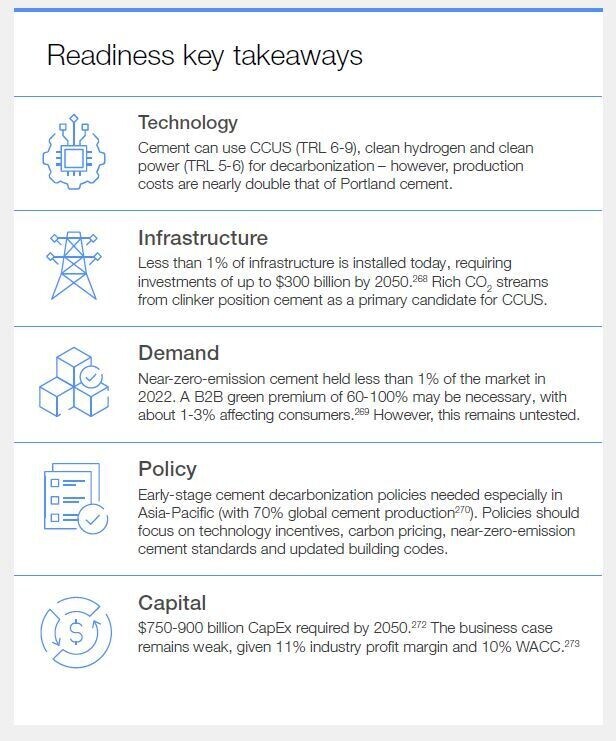
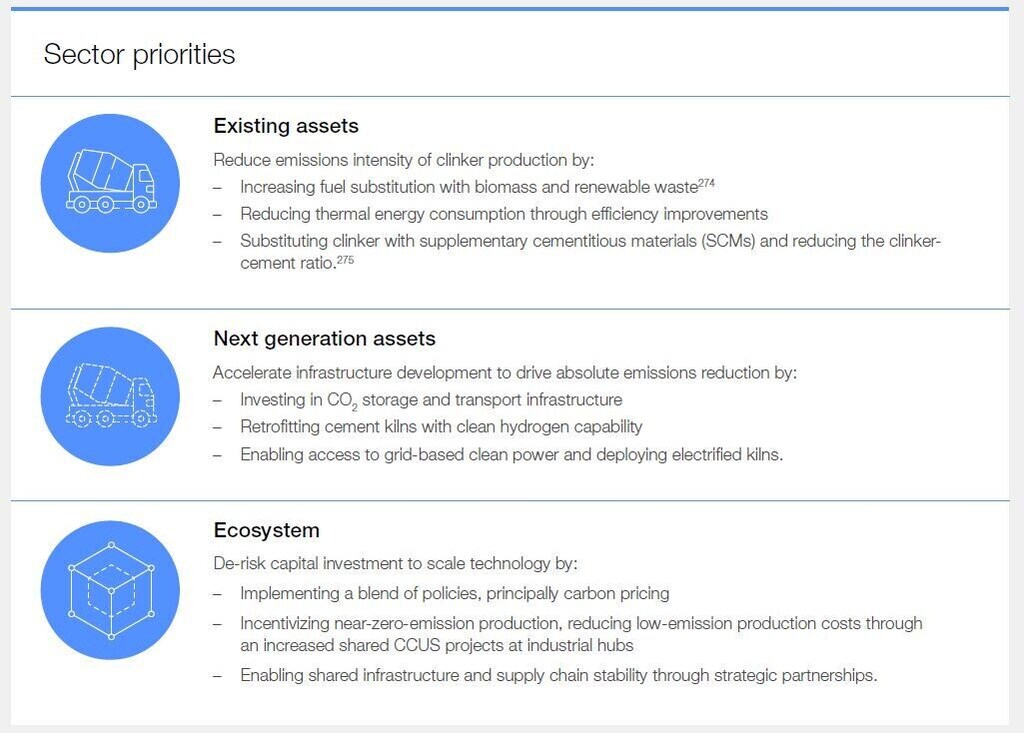
While increased use of alternative fuels is a positive signal, CCUS adoption remains critical for net zero and needs to scale from less than 1% to 90% by 2050.
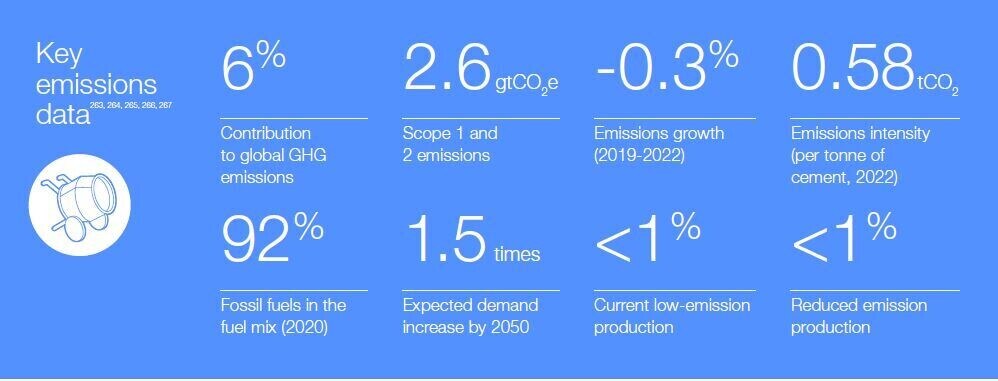
Stated energy transition goals
- Industry aims for a 25% emissions intensity reduction by 2030 and net-zero emissions by 2050. 271
- 61% of large publicly traded cement companies consider climate change in their decision-making processes.
Emission focus areas for tracker
Cement emissions can be divided into two main categories:
1. Energy-related emissions arise from fossil fuel used in kiln heating, material grinding and machinery operations. High temperatures transform raw materials into clinker, releasing CO2 and other GHGs.
2. Process emissions stem mainly from chemical reactions during raw material conversion to clinker, emitting CO2 through limestone calcination.
Los artículos del Foro Económico Mundial pueden volver a publicarse de acuerdo con la Licencia Pública Internacional Creative Commons Reconocimiento-NoComercial-SinObraDerivada 4.0, y de acuerdo con nuestras condiciones de uso. Las opiniones expresadas en este artículo son las del autor y no del Foro Económico Mundial.